Good Things, Small Package
A slim strip of land on the Atlantic, Portugal shines alongside its larger neighbors.
When listing Europe’s countries, the big names typically come quick off the tongue—England, Spain, France, Italy, Germany, Ireland, and then on to the Nordics.
It’s fair to say that Portugal is often overlooked.
Anyone who visits the country, however, will quickly realize it deserves to be recognized. While Portugal is relatively small—similar in size to Maine or Indiana, and that includes its Madeira and Azores archipelagos—this long, thin strip of land denying Spain some prime Atlantic beachfront not only competes with its neighbors in attractions and experiences but also hosts many unique surprises.
Outrageously beautiful beaches framed by granite cliffs, 17 UNESCO Heritage Sites, an underrated wine scene millennia in the making, cuisine defined by spices procured during the country’s age of exploration, and a culture that is both valued and preserved—this Iberian underdog has the whole package.
Lisbon
WHEN TO GO
Portugal is a year-round destination thanks to its mild winters. However, summers are hot, particularly in the center and south, making spring or fall vacations a better option.
CURRENCY
Euro. $1 = €0.86.
LANGUAGE
Portuguese, with English, French, and Spanish understood in high tourist areas.
COMPANIES TO CONSIDER
Viking Cruises, Kensington Tours, Avalon Waterways, Tauck
Most journeys here will begin in Lisbon, one of Europe’s oldest capitals. Built on seven hills around the banks of the River Tagus, the city didn’t so much as have a heyday as a hey-century or two. During the Age of Discovery in the 16th and 17th centuries, Lisbon was the epicenter of maritime exploration, accumulating incredible wealth that shaped the city through artistic creativity and a distinctive ornate architecture style called Manueline.
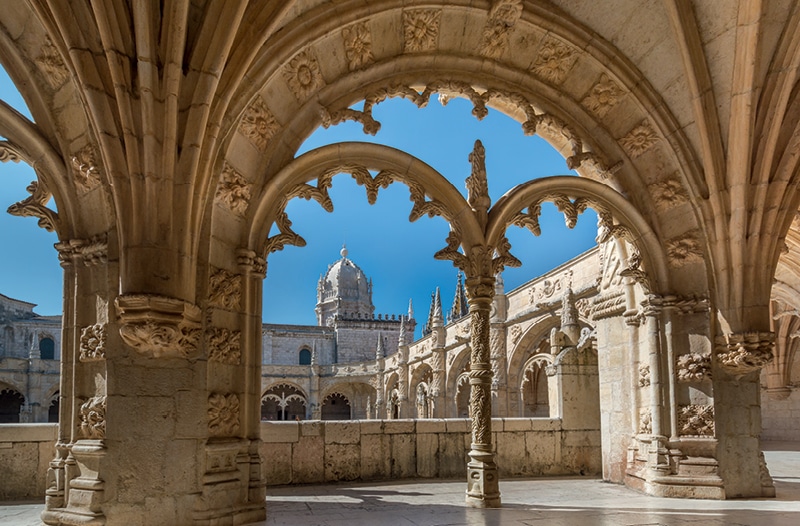
The most prominent example of Manueline style can be found at the stunning Jerónimos Monastery, the last resting place of explorer Vasco da Gama and other royalty. The UNESCO World Heritage Site was built throughout the 1500s to show off the extreme wealth of Portugal’s rulers and today stands as a work of architectural art complete with decorative sculptures and intricate maritime motifs. A 20-minute stroll takes you from the monastery to Bélem Tower, the city’s landmark monument and the starting point for many Portuguese voyages of discovery.
For modern-day explorers, the best way to see the city is on the trams that have been in use since 1873. Forty of the lines’ 58 trams are vintage yellow streetcars that chug up and down the hills and through narrow streets, shooing absent-minded pedestrians out of the way with bright, loud horns. Of these, tram 28 is a bit of a celebrity, taking travelers to some of the city’s most popular sites.
No. 28 will take you to São Jorge Castle, a historic symbol of the city sitting proudly on its highest hill. An ancient Moorish fortification taken over by the Portuguese in 1147, the castle has a long and somewhat bloody history, changing hands frequently between the Romans and Visigoths, which makes a tour here fascinating for history buffs. At the other end of tram 28’s route you’ll find Bairro Alto, a bohemian neighborhood similar to Montmartre in Paris. Artists and writers stride its winding lanes and steep, staircased alleys on the way to the city’s best fado houses, where the country’s haunting folk music echoes out over cobblestone streets.
Douro Valley
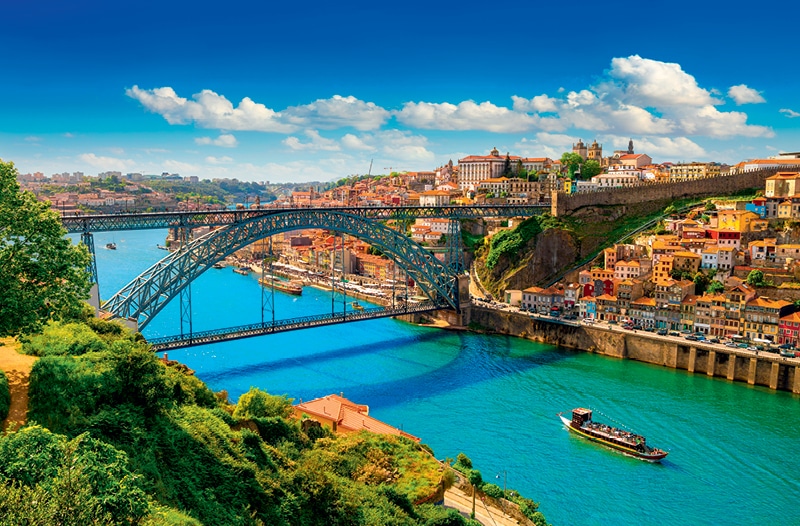
Some 200 miles north, Portugal’s second city, Porto, boasts a UNESCO-protected historic center replete with Manueline-style architecture, notably the Church of Santa Clara and its exquisite gilded woodwork. As lovely as Porto is, most travelers do not stay long, racing across the Dom Luís I Bridge (designed by a onetime partner of the towering Gustave Eiffel, no less) to the Douro Valley beyond.
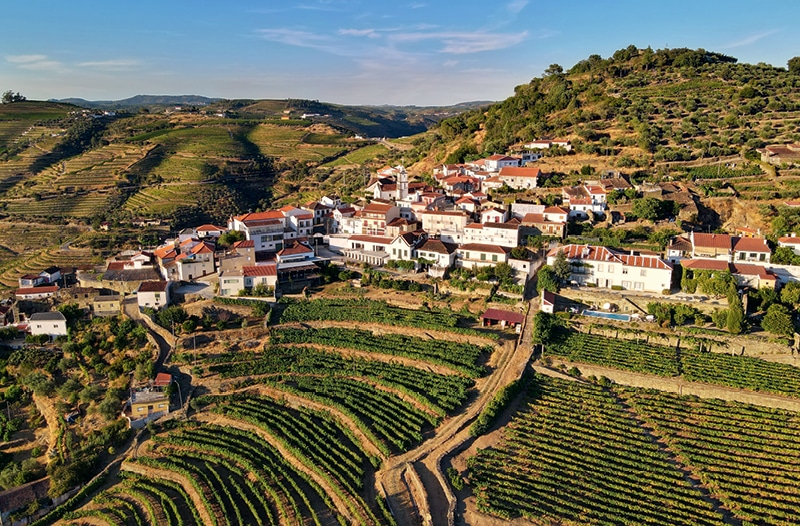
Famed for its incredibly steep banks, the Douro River cuts from northern Spain through Portugal’s boulder-filled highlands, creating a valley tailor-made for cultivating grapes. The result is the world’s oldest demarcated wine-producing district, which has been turning out legendary port wines for centuries. True ports only come from the Douro Valley, and they’re best enjoyed in their native setting: in one of the port houses or wineries peppered across the valley’s picturesque villages and hamlets.
A river cruise along this scenic waterway allows you to not only soak up the region’s serene vibe and visit its charming towns, but it will also provide plenty of opportunities to visit wine-growing estates called quintas. Alongside cellar visits and wine tastings, quintas often have a restaurant serving such local fare as caldo verde (green soup) and tripas (tripe).
A major stop on any cruise or tour is the city of Peso da Régua, where the Douro Museum showcases the region’s culture and history in vivid detail. Afterward, head 20 minutes inland to historic Lamego, once a strategic outpost for the Romans. Here you’ll find the Sanctuary of Nossa Senhora dos Remédios, which is easily accessible to those with stout legs via the 686-step, zigzagging, Baroque staircase lined with works of art. The chapel at the apex—home to panels representing the life of Clockwise from top left: Marisa López Estivill; Robin Allen Photography; Marco Bottigelli the Virgin and two gilded, wood-carved altarpieces—is worth the ascent.
Parks and Islands
Portugal’s natural assets should not be overlooked amid the cities and wineries. The country’s sole national park, Peneda-Gerês in the far north, is home to rare, wild Garrano ponies as well as granite cliffs, lush forests, and rural villages. You can easily spend an entire day here hiking the Seven Lagoons Trail, lounging in the small pools picturesquely framed by waterfall-trickling rock formations.
Stunning Ria Formosa Natural Park in the far south near Algarve is another must-see. Famous for its 38-mile stretch of sand dunes and 200 species of birds flocking within its wetlands—especially its flamboyance of flamingos—this labyrinth of canals, sandbars, marshland, and barrier islands changes throughout the day due to the tides, making it easy to find tide pools stocked with seahorses.
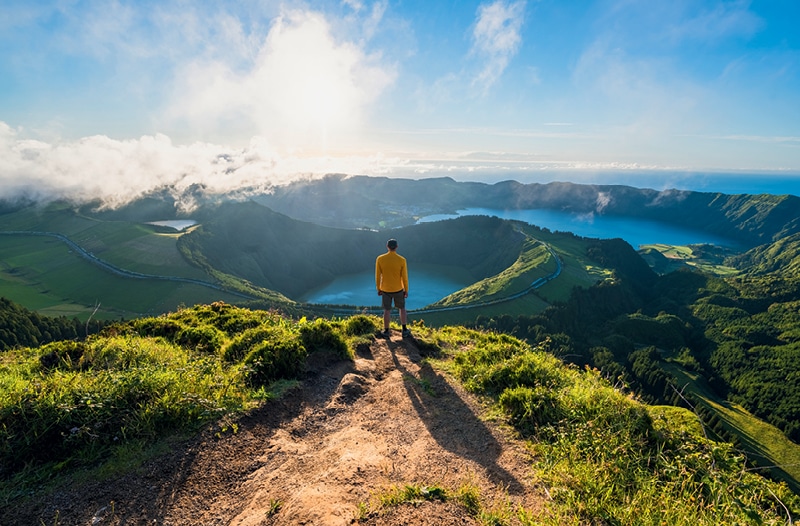
Less than a thousand miles to the west, the autonomous Azores archipelago has designated each of its nine volcano-sculpted islands a nature park. On São Miguel you’ll find Sete Cidades, a forested caldera with twin lakes at the bottom, one green and one blue due to the way sunlight reflects off the waters. The submerged craters at the Caldeirinhas Nature Preserve on Faial Island have the distinctive shape of a snowman, its head opening to the deep blue ocean beyond. And on Pico Island, you’ll find Portugal’s tallest mountain, Mount Pico, a towering stratovolcano that gives off serious Mount Fuji vibes.
Portugal packs a lot of enchantment into a small package. You can drive from the top of the country to the bottom in about five hours, but it will be difficult not to stop every 20 minutes to photograph another mountainous vista, sample another exquisite vintage, or listen to another melancholic song. However you choose to enjoy Portugal, you’ll want more.
Portuguese cuisine takes advantage of the country’s Atlantic coastline and proximity to the Mediterranean to create flavorful and fresh seafood dishes, along with regional fare based around pork. Here are some local specialties.
Bacalhau > Cod is everywhere in Portugal and can be enjoyed baked, filleted, in casseroles, grilled, or shredded with scrambled eggs, onions, and fried potatoes.
Bifana > Tender slices of pork marinated in a white wine, garlic, and paprika concoction and tucked inside a fluffy roll.
Arroz de Marisco > A hearty bowl of soupy rice filled with fresh seafood that, according to the Portuguese, is nothing like paella.
Caldo Verde > Originating in Northern Portugal, this soup is made with potatoes, kale or collard greens, smoked sausage, and olive oil.
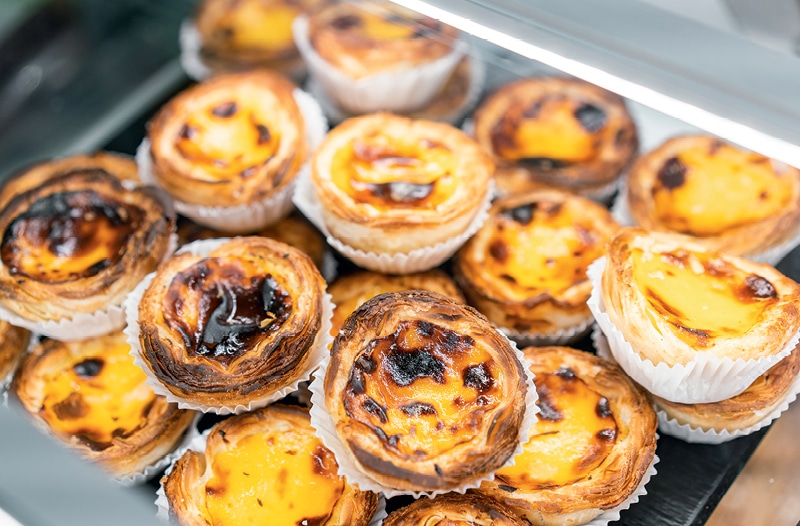
Pastel de Nata > A mouthwatering tart made from a crisp, flaky puff pastry crust filled with a rich, creamy custard.
Vinho Verde > When not drinking port, order this green wine that tastes like a mix between white wine and prosecco.