The Burdens of Desire
In Whale Fall, the trappings of modernity intrude on a quiet Welsh island, with dubious results.
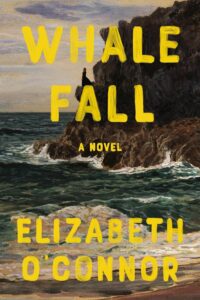
Whale Fall is the first novel by author Elizabeth O’Connor.
Based on the lyrical prose and straightforward narrative, undistracted by superfluous passages, she shows tremendous promise.
O’Connor transports readers to a remote island just before World War II. The island is 3 miles long and 1 mile wide, off the coast of Wales. There is a lighthouse on the eastern point. The island has little contact with, and subsequently minimal influence from, the outside world. News arrives via magazines and newspapers that are two or more weeks old and from the island’s lobster fishermen trading and briefly conversing with mainland partners.
Whale Fall
By Elizabeth O’Connor
Pantheon Books/PenguinRandom House
$27
The island teems with raw nature and harsh weather, setting the tone and backdrop for the story. Throughout Whale Fall we are reminded of the proximity and forces of nature and how the residents have learned to endure and make a living from these forces. “Winter: we stay near the hearth, sleep in the same bed. The sea sidles up to the door, laps at the edge of the island.” This barren environment underscores the sparsity of interactions among the residents in a culture without many of the social trappings of life on the mainland. Like the seasons, their lives follow a known pattern, year after year, with little variation.
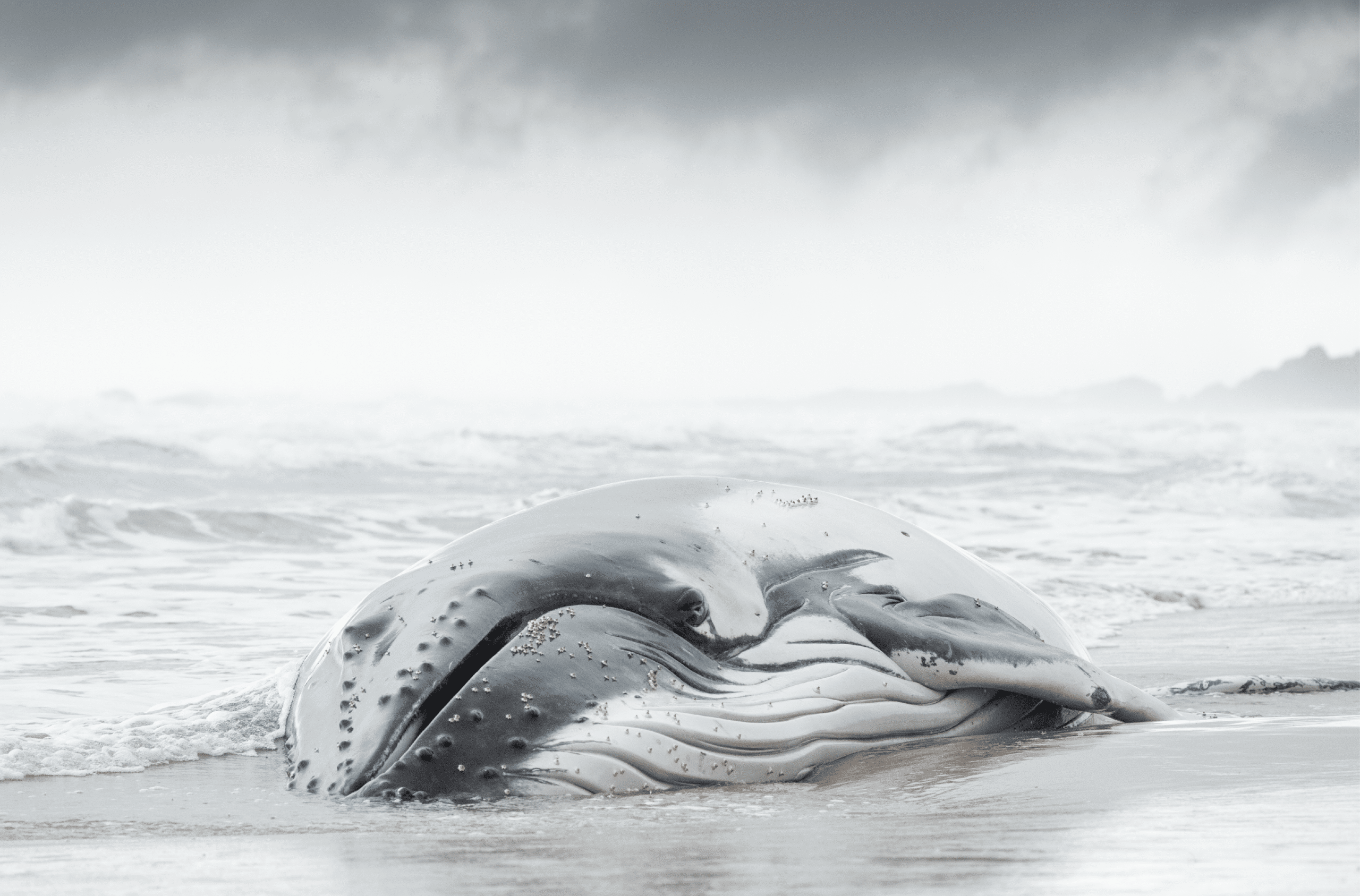
The plot of Whale Fall is set in motion when a whale washes ashore, “stranded in the shallows of the island overnight, appearing from the water like a cat slinking under a door….Under the dark water, the whale’s body glowed lightly green.” The island’s 12 families search for meaning in the beaching. Some believe it is an omen, others that an enemy submarine was involved; the island’s pastor, Rev. Jeremiah Jones, sermonizes in biblical terms.
If we view the beached whale as an outsized, blubbery metaphor for the intrusion of modernity on the island, the arrival shortly thereafter of two ethnographers drives home the point. Modernity, too, arrives on non-negotiable terms, outsized, and provoking varying points of view, both positive and negative, regarding its impacts. (The whale itself ends up cut apart by mainlanders for blubber and other profitable parts.)
The English researchers, Joan and Edward, begin recording the islanders’ stories, myths, and daily life for a planned book. They encounter a local teenager, 18-year-old Manod, on their first day and are struck by her intelligence. Since she speaks and writes English well, they hire her to transcribe and interpret the inhabitants’ stories and conversations from the Welsh spoken on the island.
Manod is our narrator. She lives with her father and younger sister following the death, possibly by suicide, of her mother. An exceptional student in the island’s small school, she dreams of a bigger life.
Manod hikes Joan and Edward around the island, explaining people’s customs and manner of dress, interpreting their songs and myths, and introducing them to the researchers. Her embroidery—of birds, lobsters, the landscape— catches the visitors’ attention, and they ask to borrow several pieces, promising to return them before leaving.
If we view the beached whale as an outsized, blubbery metaphor for the intrusion of modernity on the island, the arrival shortly thereafter of two ethnographers drives home the point. Modernity, too, arrives on non-negotiable terms, outsized, and provoking varying points of view, both positive and negative, regarding its impacts.
While the other locals appear to view life through a series of daily tasks, a performative existence, Manod provides an emotional counterbalance by incorporating that drudgery into her art, enriching and memorializing island life and the dealings between residents. She brings this same sensibility to narrating the story.
Encouraging and flattering comments from Joan and Edward kindle Manod’s desire to move to mainland Wales, or Paris, or London, or the United States, where she can continue her education at a university. Joan gives her some lipstick, a connection to a more sophisticated life, an enticement that Manod begins to wear. Joan later discovers that same lipstick on Edward’s clothes, evidence of a physical relationship with Manod. This drives the first wedge between the visitors and their guide.
The ethnographers stage and rearrange aspects of island life to fit into a preconceived narrative of the culture and traditions of a society outside of urban life. In one instance, Joan poses a fisherman for photographs, having him jumping about in the strong current, waves knocking him to his knees, none of which represents his actual profession. Manod confronts Joan: “I think it was dangerous. And you only did it for selfish reasons, to make your book more exciting….The island that’s in your head. I don’t think it exists.”
Here is, I think, an underlying theme of Whale Fall: whether it is Manod daydreaming about university in Paris or the ethnographers overlaying their preconceptions on the islanders, we can too easily project our dreams, judgments, and prejudices onto others. Manod unreasonably believes that Joan and Edward are her ticket off the island. Joan and Edward, meanwhile, refuse to accept island life as it is.
Without saying too much about how the novel concludes, the visitors do not prove trustworthy. Meanwhile, life goes on while modernity chugs away in the distance and war looms.
Whale Fall, a beautifully rendered fable of sorts, is a meditation on what we value in our lives and how desire and aspirations may not always be what they appear.