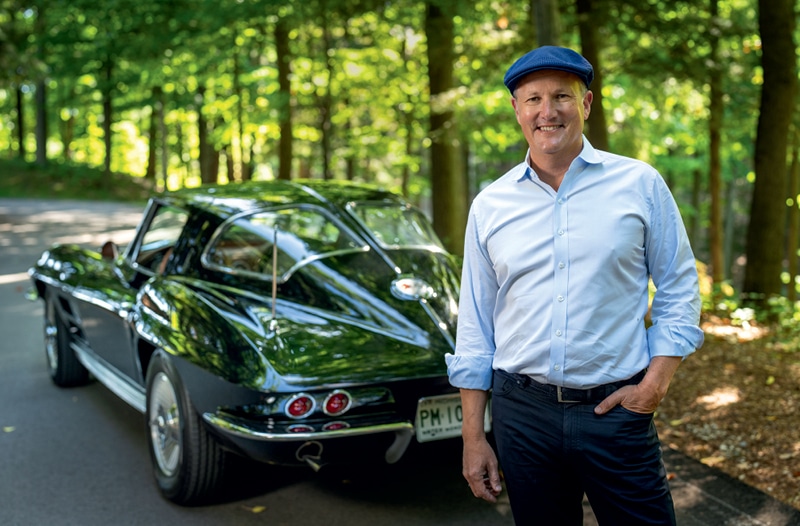
David Brooks Will See You Now
Q&A with The Atlantic staff writer and author of How to Know a Person
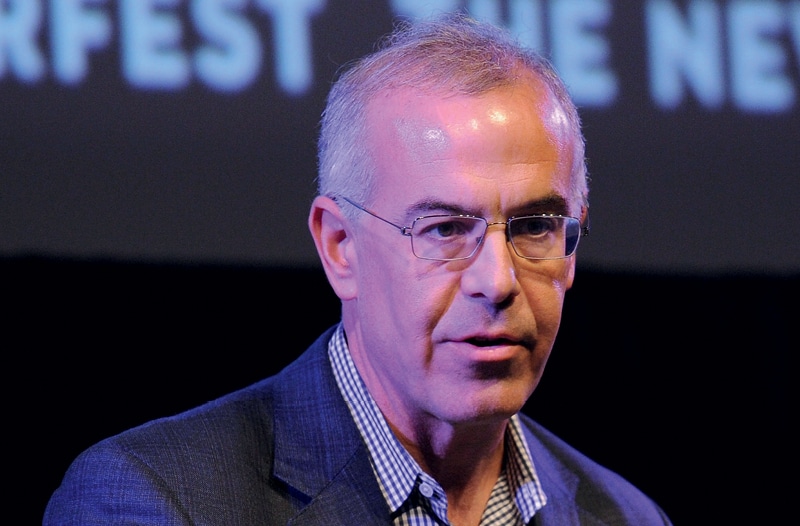
The United States faces a crisis of disconnection, with too many people failing to truly know their fellow humans, says author and The Atlantic staff writer David Brooks.
He wrote his 2025 book, How to Know a Person, with the aim of helping bridge that gap.
In conversation with Leader’s Edge Editor in Chief Sandy Laycox during The Council’s Insurance Leadership Forum, Brooks discussed how writing the book changed him. He emphasized the importance of “small emotions” and talked about how today’s experienced professionals can help point their younger peers toward successful careers. This interview has been edited for clarity.
Q
Tell us why you decided to write your latest book, How to Know a Person.
A
Well, there are two reasons. One, there’s a crisis of disconnection, a lot of lonely people in the country. So it’s sort of a national problem. But it’s also, we writers are working out our stuff in public. And one of my favorite things about writing is, we’re beggars who tell other beggars where we found bread. And so one of my weaknesses as a human being is that I’m not that great at social connection, and I’m too time-obsessed, and I didn’t project the kind of vulnerability that you would need to have people confide in you. And so I went through a lot of my adult life, nobody really confiding [in me]. I just wanted to change that. And so I write a book to be a hammer, to mold myself into a slightly less deranged person.
Q
Now that you’ve finished it, do you feel differently? Did it change anything for you?
A
Yeah, people trust me more. When people come to me with a personal problem, I don’t panic. And then one thing I do—I don’t do this every time—but when I’m on a plane and there’s an hour left in the flight, I’ll start talking to the person next to me. I won’t do it with, like, three hours. I don’t need that much time. But one hour. We underestimate how much we’ll enjoy that. We underestimate how much we’ll enjoy talking to strangers. We underestimate how much people want to go deep. And it’s added a little wrinkle of pleasure. It’s been a nice introduction to humanity just to have those kinds of conversations.
Q
There are lots of great themes that come out in your book. Tell us why it’s important to be known as a human.
A
It’s baked into our evolutionary sauce. We evolved to be in groups of 150 people, totally looking at each other. The concept of privacy was not something most early hominids understood. And so if we don’t feel somebody’s looking out for us, we feel existentially unsafe. There’s a great novel by Ralph Ellison, Invisible Man. Mostly it’s about race in this country. But he says in the first paragraph that when people look at me, they see everything around me, but they don’t see me. They see a category of my race, or they see something else, but they don’t see me. And if you look in the mirror and you don’t see yourself reflected in society’s gaze, it’s deeply alienating, as it should be.
Q
You talk about different types of people in your book, illuminators and diminishers. Tell us what those are and why that is important.
A
The diminishers are the people you meet at a party or wherever, where they don’t really see you, they don’t care about you. They don’t ask you questions. Sometimes I leave a party and I think, “You know, that whole time nobody asked me a question.” And I’ve come to believe that only about 30% or 40% of humans are question askers. And one thing diminishers do is, they stereotype. They do a thing called stacking, which is: I learned one fact about you. You’re from Texas, and therefore I make a whole series of assumptions about who you must be. And I could tell you as a journalist, those stereotypes are always wrong. People never fit into a stereotype. And so those are diminishers.
Illuminators are the people who make you feel warm and lit up. I’m about to drop a name. I’ve been interviewed by Oprah twice in my life. And when you’re in her presence, the beam of her attention is boom. She’s like, superstar-level. When I was writing the book, I would watch her interviews on TV, and she is quiet when things are sad, but she’s warm. She talks back. Her eyes change. She’s a very active listener. And so it’s a great skill to just be burning calories, that’s how heavily you’re listening. And she has that ability. But a lot of people have that ability. They just make you feel like, “Wow, I’m really smart. This person thinks I’m so funny.”
There’s a great novel by Ralph Ellison, Invisible Man….He says in the first paragraph that when people look at me, they see everything around me, but they don’t see me….And if you look in the mirror and you don’t see yourself reflected in society’s gaze, it’s deeply alienating, as it should be.
David Brooks, The Atlantic staff writer and author
Q
I feel like when you meet someone like that, you do feel better and you don’t even realize it when you’re in their presence.
A
I never had a chance to write this, but I’ve become a real fan of small emotions. Like when you’re at a cashier at the CVS or whatever and they greet you warmly compared to when they’re gruff and rude. It really makes a difference in your day, and it’s just a 10-second moment. But small emotions are underappreciated.
Q
That’s absolutely true. OK, I want to talk a little bit about the younger generation. The insurance industry is facing a huge talent gap. How do we attract young talent? You opened your talk this morning to our executives by saying, “The kids today need pathways; please help them.” Can you talk about that statement a little bit?
A
I teach at college, so [have] a lot of college seniors who are obsessed with what am I going to do next? And one young woman said to me, “I wish I was young in the ’90s, I think it would have been so much easier.” And I told her, “Well, I was young in the ’90s, or at least younger, and it was easier.” And I think it was easier.
There are a lot of ways we can go with this, but one is just thinking of a career pathway. So first, when I got to college, it felt like there were eight careers. You could be a teacher, lawyer, you could sell insurance, whatever. But there was a limited number, so it didn’t seem like that hard a choice. Now it seems there are an infinite number, and there are no clear pathways. And then in some fields, they want you to go through the narrowest of little apertures. For example, a lot of young smart kids, they want to go into Goldman Sachs. And so there are 3,000 interns at Goldman Sachs every summer. There are 360,000 applicants for those 3,000. We’re trying to squeeze all these talented people into one little lane.
What we need is something called opportunity pluralism, lots of different lanes. But then a lot of young people don’t know [how to find their lane]. Say they want to go into the insurance business—they have no idea what the steps are, they don’t know anybody in it. There’s like, nobody. It’s like an ocean. I had one of my students, she graduated from Yale, so she’s a very smart, talented lady. And she said, “When I was in college, everything was station to station. There was always the next test, the next thing to apply for. Then I got out of college, I was in a vast ocean with no markers, I had no idea where to steer. And so if people could provide some lane markers, say here’s the next step [or] talk to me [about] how my life worked…”
If we could give them some clarity, then at least they say, “Oh, that’s a path.” And then they can know how to take the next step. But instead, we just leave them out in the vast ocean of nothing. And so my lesson, and I tell this to my own kids who are in their 20s, [take] three adventures a decade. Do three things that are different each decade. If you do that in your 20s, you’ll find things you like, you’ll find things you don’t like. And it’s super important to find what you don’t like. But the second and big thing is you widen your horizon of risk. And I shouldn’t talk about risk at an insurance company [event].
I live in a system, in my colleges where I teach, where people think intelligence is the most important part of ability. I completely reject that. I think determination and motivation are the most important.
David Brooks, The Atlantic staff writer and author
Q
That’s the perfect thing to talk about.
A
But if you do something crazy, forever after, you’ll say to yourself, “Well, I did that so I could try some other crazy thing.” If you widen your horizon of risk, you will carry that horizon for the rest of your life.
Q
Speaking to insurance brokerage leaders, how do you make the people in your organization feel seen?
A
Well, first, by letting them talk before you dominate a meeting. I mean, the biggest thing is questions and then taking time.
I’ve been in some very healthy organizations and some very unhealthy ones. There are some organizations that make a mark on you and some that don’t. You meet somebody who went to Morehouse College, you know they’re a Morehouse man. That’s an organization that leaves a mark. Procter & Gamble, somebody worked at Procter & Gamble, you knew they worked at Procter & Gamble.
What do those [healthy] organizations have? Well, first, a clear purpose, everybody on the team knows their role in that purpose. Second, every voice counts. Third, they have retreats like this one, where you see each other before the makeup goes on and after the makeup comes off. Fourth, there’s music; it’s very hard to hate somebody if you dance with them. Often the organizations have a sacred origin story: this is how we came to be; this is how we had hard times; this is how we overcame them. People could see themselves in that story. And then finally, they’re generative. When people leave the organization, they want to take the culture to the next place they go. So if they left General Electric, the next company they go to, they want to create a little GE, because they found that’s a really great culture.
A leader can decide [if they’re] going to invest in making a [healthy] organization, or [if] it’s going to be transactional, people pass through, and they might make some money or not, but it’s not going to be something that changed them.
Q
What is the next thing that you’re going to be focused on?
A
I’m writing a book on motivation and desire. I live in a system, in my colleges where I teach, where people think intelligence is the most important part of ability. I completely reject that. I think determination and motivation are the most important. You want to hire people who will run through walls, and who are so passionately dedicated to learning, they will be different at 30 than they were at 20, different at 40 than they were at 30. And they just keep growing. They’re machines of learning. And it’s very hard to find that because it doesn’t show up in a resume.
I’ve asked people who hire for companies like this one, how do you locate the people who will try hard? And it’s actually very hard to do. I have one guy who just said, “I ask them straight out, ‘Are you ambitious?’” Turns out people won’t lie. They say, “Yeah, I’m really ambitious.” And it could be a bad kind of ambition, which is selfish, but it could be a good kind of ambition.
And the other thing, one friend of mine said, “I ask them what tabs are open on your browsers.” What are you doing when nobody’s telling you what to do? You can tell a lot about how a person, whether they’re curious or not, by what they’re doing when nobody’s telling them what to do.
Q
What’s your favorite thing that you've ever written?
A
That’s a good question. You know, you love all your books like children. I wrote two things that I’m proud of. One was, my oldest friend in the world committed suicide. And I wrote a piece about what it was like to not know how to walk through that with him. I think it helped people. I wrote a piece about my kid’s bar mitzvah. It’s always the personal ones.
It’s funny, I can remember my favorite headline that I’ve ever written. I interviewed a French philosopher named Bernard-Henri Lévy. And if anybody knows who this guy is, he’s an astoundingly good-looking French guy. He’s got long, black, flowing hair, and he wears his shirts open to his navel. So he’s like glamour, glamour. And so my headline for that was God Is Dead, but My Hair Is Perfect.