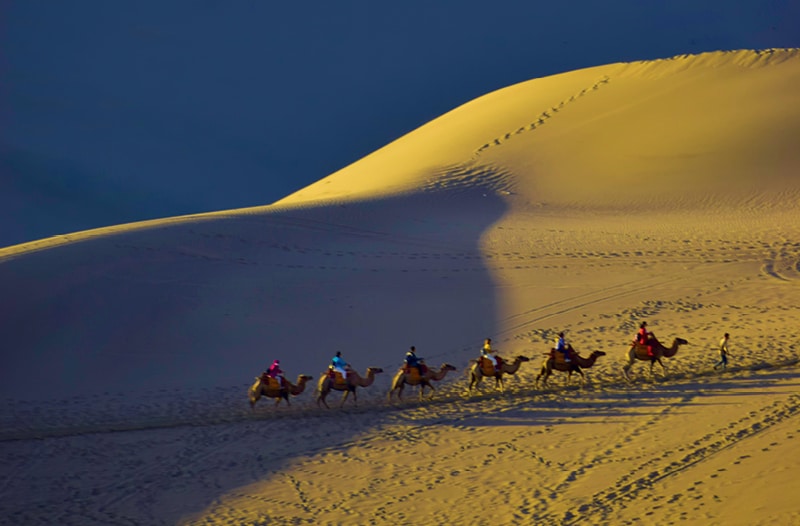
The Silk Road conjures images of epic journeys and precious treasures, snow-capped mountains and desert steppes, camel caravans and Marco Polo.
WHEN TO GO
As the Silk Road covers such a large area, climatic conditions vary. The region is typified by hot summers (May–September) and cold winters (October–March) with sharp fluctuations in temperature between night and day. Late spring or early fall is preferred, but it’s easy to avoid crowds due to their lack of tourism.
LANGUAGE
English is used in the tourist areas of Istanbul and Xi’an, but very little elsewhere, where you’ll hear Turkic languages (Uzbek, Kyrgyz) alongside Persian-based Tajik.
COMPANIES TO CONSIDER
Intrepid Travel, G Adventures, Abercrombie & Kent
It was a vast web of trade routes stretching some 4,000 miles from the Mediterranean Sea to the Far East. Jade, spices, ivory, wine, perfumes, precious metals, and yes, silk, were exchanged along these routes, as were philosophies, ideas, and religions.
Used by millions for close to 1,600 years—from the second century B.C. to the mid-15th century—few could map out the entire thing. The trail shifted throughout the years, depending on which emperor was in power, which warlord demanded the highest taxes, or which brutal bandits patrolled its mountain passes.
Yet it flourished. From Baghdad to Beijing, Cairo to Angkor, crisscrossing Central Asia and dipping into India, caravans steadily marched forward. Along the way they passed ancient mosques, fortified roadside inns, Buddhist cave temples, and a series of vibrant trading hubs.
Few merchants—and fewer goods— made the entire journey. Famously, Marco Polo spent 24 years during the late 13th century going from Venice to China and back again (though with a 17-year layover in China). For those without the time for a full pan-continental expedition, it pays to concentrate on particular areas. No matter where you choose along the old Silk Road, you’re guaranteed spectacular sights and cross-cultural adventures. Here are some highlights.
Istanbul
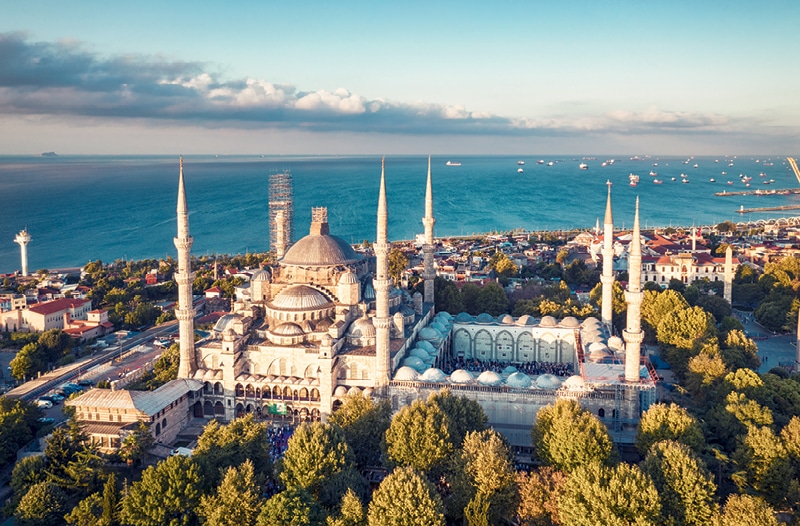
Since its heyday as an anchor store of the Silk Road Mall, Istanbul has changed greatly, including names. As the song famously points out, “Istanbul was Constantinople. Now it’s Istanbul, not Constantinople.” That’s a melodic way to sum up centuries of Byzantine history, which witnessed the creation of “New Rome,” the sacking of the city during the Fourth Crusade, and the Muslim rule of the Ottoman Empire.
Today, of all the cities that claim to be the cultural intersection where “east meets west,” Istanbul is legit. Turkey’s largest city straddles the Bosporus Strait, with one foot in both Europe and Asia. As a result, it’s a diverse celebration of cultures, easily spotted in architecture that runs the gamut from Greek columns, Roman walls, and Genoese towers to Byzantine basilicas, Egyptian obelisks, and American franchises (Turkey hosts over 500 Starbucks).
Istanbul melds millennia of heritage into a vibrant cultural scene. Any Silk Road trips originating here can check off a half-dozen bucket-list experiences. Primary of all is ambling the tangled alleys of the Grand Bazaar, refining the art of haggling over colorful Iznik pottery and evil-eye charms.
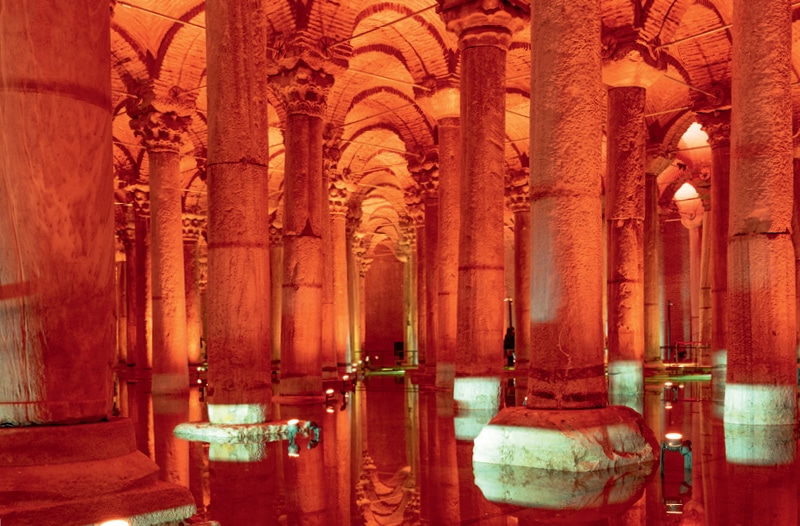
Afterward, the options are walkable. First-timers can’t miss the Hagia Sophia, a nearly 1,500-year-old church-turned-mosque-turned-museum-returned to mosque, and the Blue Mosque, a 17th-century palace famous for its azure-hued tiles and six minarets. Next, venture to Topkapı Palace to see how sultans lived in opulence for centuries, or descend into the Basilica Cistern, a dreamy underground reservoir with massive columns and Medusa heads. Wherever you venture, the call to prayer ringing out five times daily will provide an unforgettable soundtrack to your explorations.
Central Asia
Passing through Central Asia and into China best conjures up the spirit and scenery of the Silk Road. Landlocked Uzbekistan, Tajikistan, and Kyrgyzstan welcome relatively few tourists, making these former Soviet republics all the more alluring to the adventurous traveler. While off the beaten path, they offer worthy rewards: legendary local hospitality, unique souvenirs, and, above all, once-in-a-lifetime experiences.
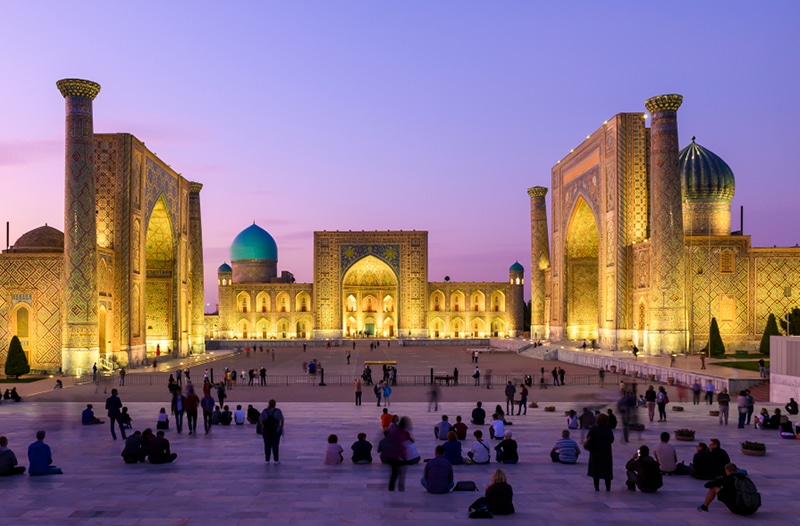
Home to spellbinding architecture and ancient fortresses, Uzbekistan is the region’s biggest draw, and with good reason. Chief among them is Bukhara, a medieval city with a wealth of fascinating monuments, including the Samanid Mausoleum, a masterpiece of 10th-century Muslim architecture. Next on the list is Samarkand, known for monumental squares like Registan Square, impressively framed on three sides by massive madrassas, their elaborate tilework and stately arches reflecting the height of Islamic artistry. Wherever you visit in the country, be sure to venture to one of its bustling bazaars, which remain reminiscent of the Silk Road era, to purchase Uzbekistan’s decorative ceramics.
Neighboring Tajikistan is more notable for its breathtaking backdrops than its cities, although park-filled capital Dushanbe and ancient Penjakent merit visits. The drama of Tajikistan’s mountain vistas is hard to find anywhere else. The Pamir range, often dubbed “The Roof of the World,” provides astounding views throughout the country, while the Pamir Highway unarguably offers one of the continent’s greatest road trips. Here, the Silk Road once wound through the Wakhan Valley to the Yamchun Fort, built to protect traders from raiders.
To Tajikistan’s north, Kyrgyzstan might be tricky to spell, but it’s easy to enjoy. Caravans laden with silk from China, silver from Persia, and cloth from the Mediterranean once passed through deserts and oases here, lands that still support the country’s strong nomadic tradition. This is your chance to camp in a yurt (traditional tent), surrounded by stunning lakes and mountains. If you prefer city life, Kyrgyzstan’s second-largest, Osh, dates to the 5th century B.C., and its bazaar hosted hagglers even before the Silk Road was established. At the markets here, keep an eye out for hand-sewn national clothing—kalpak hats, chapan robes, and wraparound skirts made from velvet or silk known as beldemchis—which makes for unique souvenirs.
China
A short distance from the Kyrgyzstan border, the Silk Road passed through the Chinese city of Kashi. Here, ivory, glass, gold, and precious metals traveled east, while jade, bronze, gunpowder, and silks left China. Today, the oasis town remains popular, thanks largely to its still-lively sense of commerce. Its Sunday market was once the stuff of global legend, a sprawling medley of donkeys, tuk-tuks, and hawkers that attracted up to 200,000 people weekly. While the historic bazaar was torn down in 2022, its legacy continues in smaller, specialized operations including the Sunday Livestock Market and the Oriental Bazaar by the Tumen River, which features carpets, silks, crafts, and musical instruments.
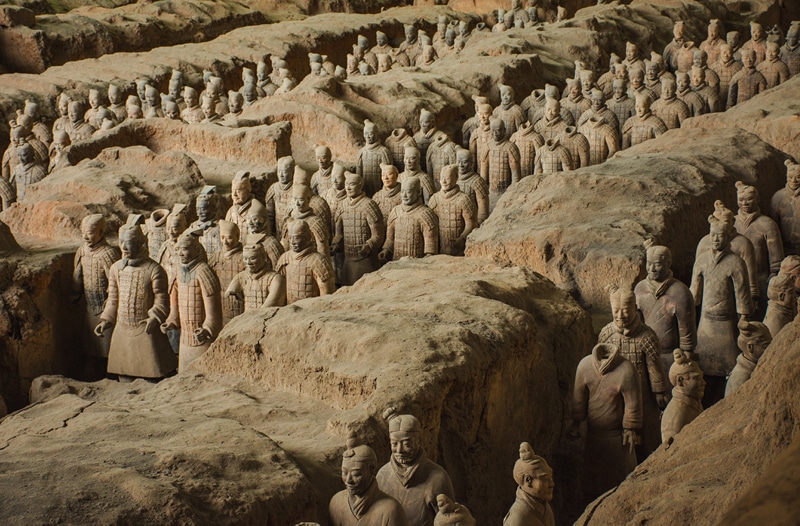
Traveling onward, the imperial city of Xi’an is among the more popular destinations on the Silk Road, thanks largely to its imposing Terracotta Army. Dating to 210 B.C., this collection of sculptures, buried to accompany China’s first emperor, Qin Shi Huang, in the afterlife, encompasses over 8,000 soldiers, 130 chariots with 520 horses, and 150 cavalry horses.
Many consider Xi’an to be the traditional ending or starting point of the Silk Road. Whether you start or finish here, or you tackle another segment, you’ll be walking in the footsteps of ancient merchants and explorers. More importantly, the Silk Road shows the harmonious interaction of diverse societies to achieve a richer life. Spending time at these cultural crossroads enables visitors to celebrate their similarities and differences.
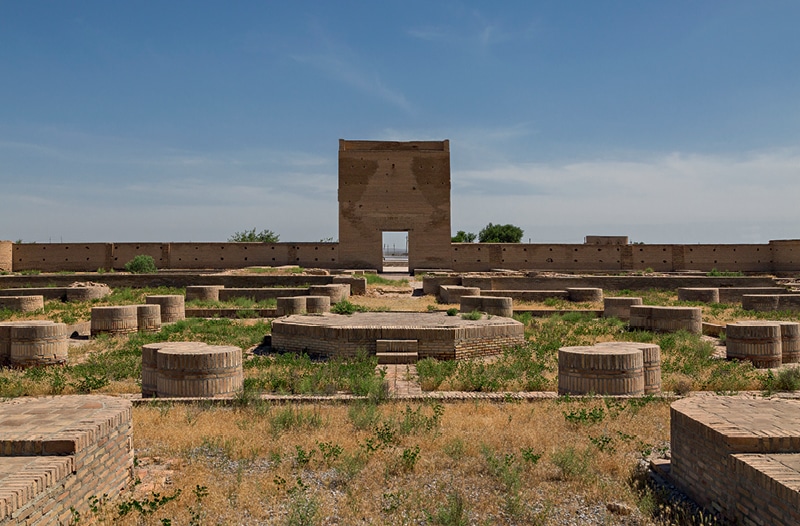
Caravansaries were roadside inns and rest stops along the Silk Road, providing shelter, food, and security for merchants and their animals. Once found about every 20 miles, several of these structures survive today as ruins or restored hotels. Here are a few of the finest.
Rabati Malik—Uzbekistan > Built in the late 11th century along the route between Samarkand and Bukhara, this caravansary ruin still casts a striking figure in the desert thanks to its 12-metertall arched gateway.
Tash Rabat—Kyrgyzstan > Sitting more than 10,000 feet above sea level in the Tian Shan mountains, Tash Rabat was a welcome sight not only for those looking for rest, but also due to being built entirely from local stone and blending into the rugged landscape.
Sultan Han—Turkey > Constructed in 1229, Sultan Han is one of the country’s largest and best-preserved caravansaries. Its 53,000 square feet includes a towering marble gateway, a vast courtyard, and a two-story mosque built atop four arches.
Zein-o-Din Caravansary—Iran > Created in the 16th century as part of a network of 999 caravansaries, Zein-o-Din’s unique circular design and thick stucco walls made it easier to defend from raiders. Guests today can stay overnight in the vaulted rooms once used by traders.
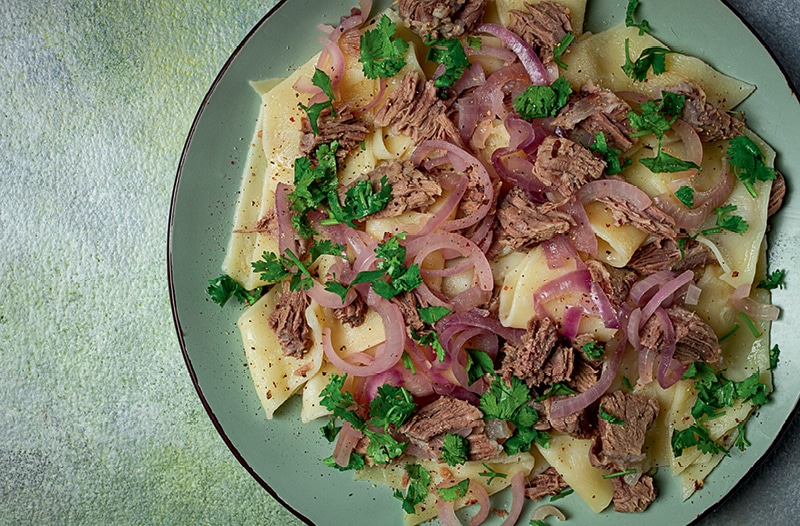
The Silk Road fundamentally changed how the world eats. It was a culinary conveyor belt that transported spices, teas, and unique foods across cultures, allowing chefs to develop specialized dishes that became traditional favorites. Here are some flavors to try on your Silk Road adventures.
Pide (Turkey) > This boat-shaped thin pizza comes stuffed with toppings, including cheese, sausage, spiced meat, and spinach.
Somsa (Uzbekistan) > Delicious, meat-filled pastries that—unlike fried Indian samosas—are baked by stamping them to the inside wall of a clay oven called a tandoor.
Qurutob (Tajikistan) > This popular dish is salty cheese dissolved in water, creating a yogurt-like sauce that is combined with flaky fatir bread, onions, and sometimes meat.
Beshbarmak (Kyrgyzstan) > Traditionally made from horse meat with noodles in an onion broth, today’s version uses mutton or beef. The name means “five fingers,” because you should eat this by hand.
Persimmon Doughnuts (China) > These fried, crisp doughnuts have interiors made of an entirely unleavened dough based on dried persimmons with a dense, chewy texture, similar to Japanese mochi.