Love, Grief, and Quiet Determination
How a Mississippi couple forged a life together and
changed the course of American history.
Joy-Ann Reid’s Medgar & Myrlie is more than a biography or a history of the 1960s Civil Rights Movement.
It is the story of two people whose love, courage, and shared mission reshaped the course of American history. In telling the intertwined stories of Medgar Evers, a civil rights leader assassinated at the age of 37, and Myrlie Evers-Williams, who transformed her grief into decades of activism, Reid offers a narrative that is emotional and personal, intimate and broad.
At its heart, this book is a love story unfolding against the backdrop of the nascent movement for black rights and the constant threat of racial violence and death in the particularly brutal Jim Crow state of Mississippi. Reid portrays Medgar and Myrlie not as untouchable icons, but as a young couple navigating the everyday joys and tensions of marriage and starting a family while carrying the weight of a deeply controversial national cause. The Everses’ love was itself a form of defiance in a society determined to dehumanize them.
Medgar & Myrlie: Medgar Evers and the Love Story That Awakened America
By Joy-Ann Reid
Mariner Books
$18.99
Medgar, a World War II veteran and NAACP field secretary in Mississippi, emerges as a tireless man of quiet determination, strategic brilliance, and unshakable moral clarity. (When the NAACP directs him to focus solely on registering voters, Evers believes it important to organize and participate in protests. Public notice, donations, and new members follow thanks to his approach.) Myrlie, equally compelling, is a partner and a force in her own right—balancing motherhood, activism, and the emotional toll of living under constant threat.
As the Everses began their lives together and planned a family in the early 1950s, “It was a wonderful, terrible time.” They are ever vigilant for their own safety, even at home: “Medgar had guns stashed in nearly every corner of their modest bedroom,” Reid notes. In a particularly chilling segment of the book, Medgar and Myrlie run drills with their three young children, teaching them to quickly drop to the floor and hide under the bed should a rock come through the front window or if they hear a loud gunshot pop. “Medgar was fighting for freedom for Black Mississippians,” Reid elaborates, “but sometimes it felt like a paralyzing confinement for his own family.”
Reid vividly recounts the constant surveillance, threats, economic reprisals, and ever-present possibility of violence in the Deep South against those championing the right to vote for all and demanding equal access to public facilities. She also captures the courage of ordinary people who, inspired by leaders like Medgar and Myrlie, risked everything to demand equality. (While appearing on an NAACP membership roster could result in the loss of a job or foreclosure of a mortgage, Myrlie quietly mobilizes dozens of schoolteachers and shopkeepers to anonymously donate money.)
The author does not romanticize Medgar and Myrlie’s relationship. She acknowledges the long absences, disagreements over priorities, and emotional exhaustion of living in a state of siege. Yet she shows how their shared vision for justice bound them together in ways that transcended personal hardship. In one intense fight over his dangerous late-night trips to the Mississippi Delta, Myrlie hits her husband with a frying pan and he slaps her, but they quickly make up.
Then, what the Evers family had long feared happens on June 12, 1963. Myrlie and the children are waiting up late watching television. After a series of evening meetings, Medgar returns home. A loud bang ricochets through the midnight silence and something comes through the home’s front window. Myrlie cautiously steps outside “to find her worst nightmare had finally become real….Medgar was lying face down in a pool of blood.”
Obviously, I knew the fate of Medgar Evers when I started the book. Still, there was no preparing for it emotionally after Reid so touchingly portrayed the relationship between Myrlie and Medgar. Reid handles this moment with both restraint and power, allowing the enormity of the loss to speak for itself. She does not fill the page with her thoughts or those of others but allows the reader to pause and think through the tragedy of the shooting.

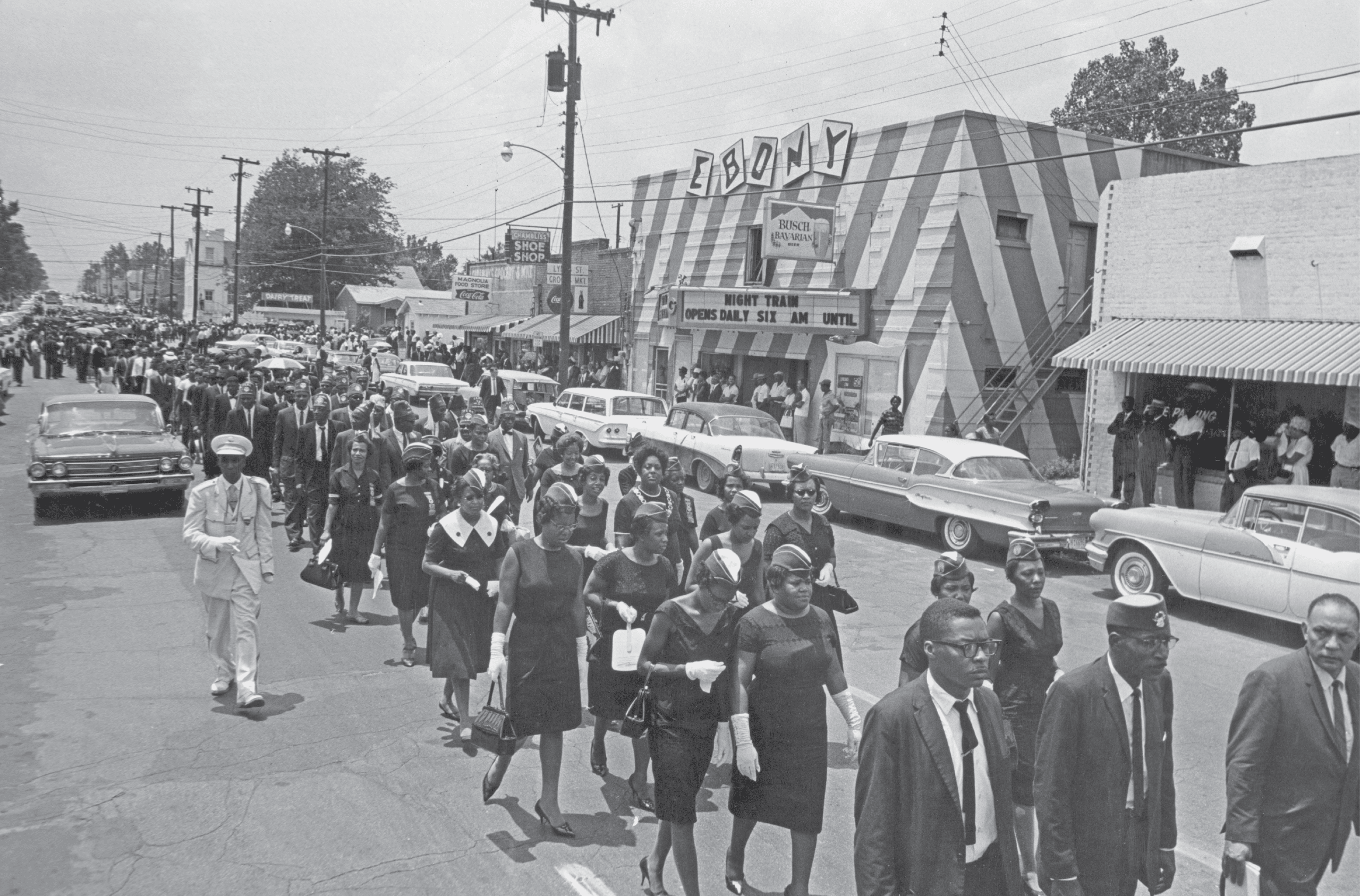
Reid details the aftermath, not just the immediate grief, but Myrlie’s persistence as she works tirelessly to bring her husband’s killer to trial. Her efforts to reopen the case against Byron De La Beckwith finally result in a conviction over 30 years after the crime.
Grief, anger, and hope propel Myrlie forward. After Medgar’s assassination, she moves to California, remarries, and continues fighting for civil rights. In 1995, she is elected as the national chair of the NAACP. Myrlie’s leadership restores credibility to the organization during a turbulent period. In this role, she honors Medgar’s legacy while forging her own identity and path in the struggle for equality.
The Everses’ pioneering efforts in civil rights activism resulted in hard-won victories in Mississippi for voting rights and desegregation. Their efforts showed activists in other states how to organize peaceful demonstrations, strengthening the movement on the national level.
There should be no doubt the struggle continues. In 2025, brief profiles in a section on black Americans who fought in the nation’s wars were removed from the website for the Arlington National Cemetery. One of those erased names was Medgar Evers, who is buried at the cemetery.
Medgar & Myrlie is essential reading for anyone interested in American history or a deeper understanding of the American Civil Rights Movement. Medgar and Myrlie Evers are shown not only as activists, but as individuals whose humanity—strengths, weaknesses, hopes, fears, and love— changed the world. Their story is a testament to the power of courage and partnership in the pursuit of justice.