Dam Fine Cycling
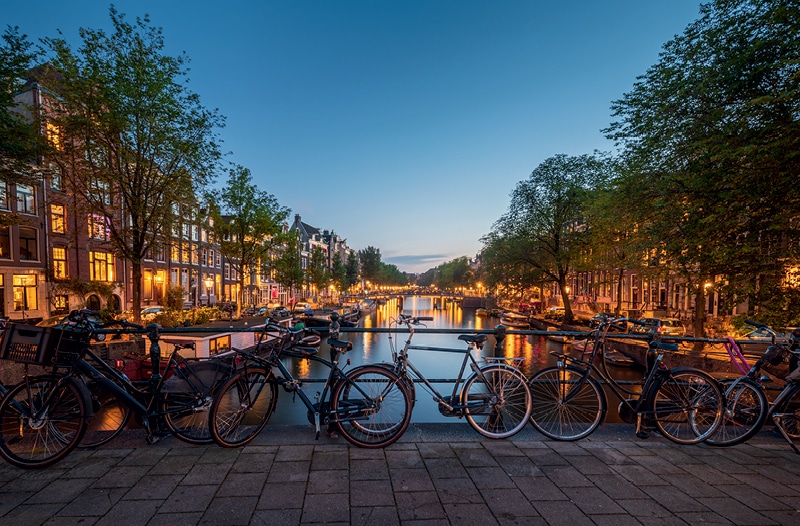
With hundreds of miles of paths and bike lanes, Amsterdam is best explored on two wheels.
Bicycling is ingrained into the culture of Europe.
WHEN TO GO > April to May for tulips and mild weather, or September to November for fewer crowds and pleasant temperatures.
CURRENCY > Euro. $1 = €0.86.
LANGUAGE > Dutch, but the city is highly international with English spoken fluently by roughly 90% of the population.
COMPANIES TO CONSIDER > Butterfield & Robinson, Backroads, AmaWaterways, Avalon Waterways, Viking Cruises
The continent has long set the gold standard for travel on two wheels, thanks to its protected lanes, lowered speed limits, dedicated bicycle traffic lights and parking, and city centers built around two-footed humans and not four-wheeled vehicles. In cycling magazine Momentum’s recent list of the top 30 bicycle-friendly cities in the world, 27 are in Europe. (If you need further convincing, Europeans absolutely love Queen’s epic “Bicycle Race.”)
In the Old World, cycling is a joy shared by all; it’s common to see people in suits, dresses, or heels zipping along on upright cruiser bikes. Add tourists to the list of bicycling aficionados. Cycling around a destination not only helps burn off the calories from that breakfast croissant, but it also allows you to safely explore at your own pace, covering more ground than walking while avoiding the enforced schedule of a tour bus.
Ready for a joy ride unlike any other? While many European cities are easy to explore on two wheels, one is consistently considered the bike-friendliest of them all: Amsterdam.
Going Dutch
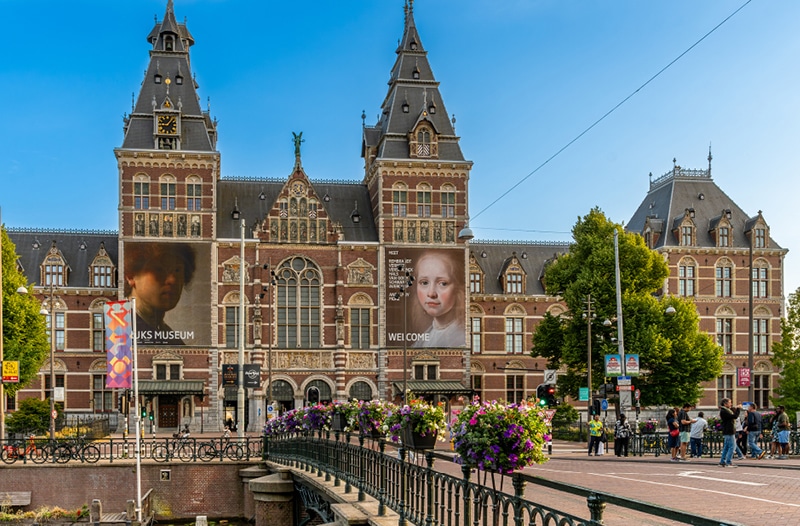
Amsterdam is, famously, a city of well-organized canals, major art collections, historic windmills, brightly-tinged tulip fields, mind-blowing brownies, and color-coded districts. While travelers flock here to nibble on Dutch delicacies, cruise the canals, and stroll the Museumplein—a public space artfully arranged with three major museums: the Rijksmuseum, Van Gogh Museum, and Stedelijk Museum—the city’s cutting-edge urban design often makes the deepest impression.
Since the 1980s, when Dutch cities made a U-turn against the rising dangers of vehicular transportation, a strong cycling culture has been woven into the infrastructure. The result is an elaborate network of 320 miles of bike lanes and cycle-paths all over Amsterdam, making it easy for visitors to bike in complete safety. The city ranked No. 4 on the Momentum pro-bicycle list, behind only Ghent, Belgium, Copenhagen, Denmark, and Dutch peer Utrecht.
Bicycles can be rented throughout the city, especially around Central Station, Leidseplein (Leiden Square), and many hotels. Three hours costs roughly 10 euros ($12 U.S.). You’ll have many styles to choose from, though the most popular are the oma fiets, the so-called grandma bikes due to their comfortable padded seats. Don’t worry about slogging up hills—the city is flat as a pannenkoek (a large, thin Dutch pancake).
If you’re nervous about joining the river of expert bikers flowing through the city, you can easily get into the swing—or the pedal—of things with a bike tour. Gregarious guides offer a crash course in biking etiquette, including the important hand signals, before embarking on an easy route. Once you get it down, you can venture out on your own, either in the city or beyond on a country ride to enjoy the iconic windmills and tulip gardens.
Happy Cycling
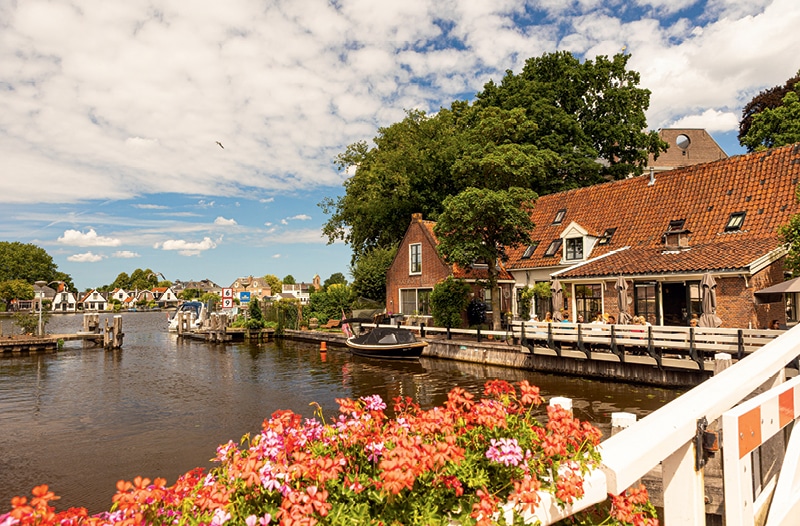
While you can ride most anywhere in the city, popular cycleseeing routes hit the region’s numerous highlights. Warm up at the Vondelpark, Amsterdam’s most popular park since 1865. This easy 2.1-mile loop goes past an openair theater (stop and watch the free performances if you can), a garden with more than 70 types of roses, and numerous cafés, including the Alfred Hitchcock-inspired Café Vertigo. Don’t pedal too swiftly or you’ll miss Picasso’s Figure découpée sculpture and a statue of the park’s namesake, the poet and playwright Joost van den Vondel.
Another popular route visits the city’s top tourist attractions. Departing from the Central train station, you’ll first ride through Dam Square, the historic heart of the city, and past the Royal Palace on your way to the Anne Frank House, a profoundly moving experience that brings the history of the Holocaust into sharp, personal focus. The second half of the loop can be all about museums, including the Amsterdam Houseboat Museum, where you can experience firsthand what it’s like to live on the canals, as well as the three museums of the Museumplein.
For a longer experience, a roughly 15-mile trail loops around the Amstel river. The route can be completed in a single afternoon, though no one will blame you for stopping to refresh with a Heineken. Starting again at Central Station, follow the river to the charming village of Ouderkerk aan de Amstel. Along the way you’ll pass country estates and pumping stations that kept the polders (low-lying tracts of reclaimed land) dry for centuries. The route has its fair share of historic windmills—in fact, Rembrandt regularly walked here to paint the Riekermolen windmill.
For Rembrandt fans, a variation of the Amstel river loop highlights the master painter’s major works. This biking and walking trail passes the Blauwbrug bridge, where he drew “View of the Amstel from the Blauwbrug,” on display in the Rijksmuseum, along with the spot where he painted “The Omval” (where, oddly enough, now sits the skyscraping Rembrandt Tower). You can also find several statues of the artist along the route, including a more prominent cast-iron version holding court in Rembrandtplein (Rembrandt Square).
Rembrandt, like countless artists and visitors, was constantly inspired by Amsterdam’s beauty and charm. Cycling here will not turn you into a painting virtuoso, but it does allow you to stop when you wish and soak in whatever masterpiece of a view catches your eye. And that makes it all worthwhile.
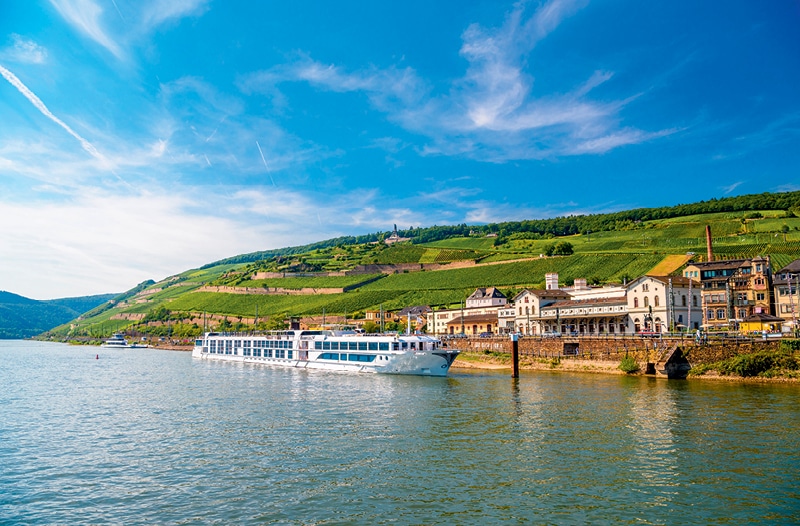
Amsterdam is a popular embarkation point for river cruises down the Rhine, Western Europe’s most significant waterway. These voyages pass through the UNESCO-listed Rhine Gorge, past hills swathed in vineyards and crowned with castles, before you venture to medieval towns along the Moselle and the Main. Here are a few of the ports along the way.
Kinderdijk, the Netherlands > This UNESCO World Heritage site hosts 19 remarkably preserved 18th-century windmills, built to pump excessive rainwater into a local lake, which are best seen on a waterbus or a canal boat ride.
Düsseldorf, Germany > Visit the Altstadt (Old Town), known as the “longest bar in the world” for its high density of drinking establishments, to sample the pride of the town: Altbier. Fashion-minded folks should stroll down the Königsallee (aka the Kö), Germany’s answer to the Champs-Élysées.
Rüdesheim am Rhein, Germany > Located in the heart of Germany’s Rheingau winemaking region, Rüdesheim is home to the famous Drosselgasse, a cobblestone street lined with timber-framed, music-filled taverns, as well as 9th-century Brömserburg castle and Siegfried’s Mechanical Music Cabinet.
Basel, Switzerland > In this city straddling the Rhine, you can cross the river on small wooden boats tethered to a cable that use only the current to drive them, or visit one of 40+ museums—Basel has the highest density of museums in Switzerland, including the oldest public art collection in the world.
Amsterdam cuisine features a mix of traditional Dutch comfort food and international influences. The city is also instrumental in the “New Dutch Food” movement, which marries the country’s agricultural prowess with sustainable technology like vertical farming and plant-based innovation. Here are a few essential bites and sips.
Bitterballen > These deep-fried, breaded balls filled with a thick, savory beef are the ultimate bar snack.
Haring (Herring) > Amsterdam’s most iconic street food, the fish is brined, not pickled, giving it a buttery, mild flavor.
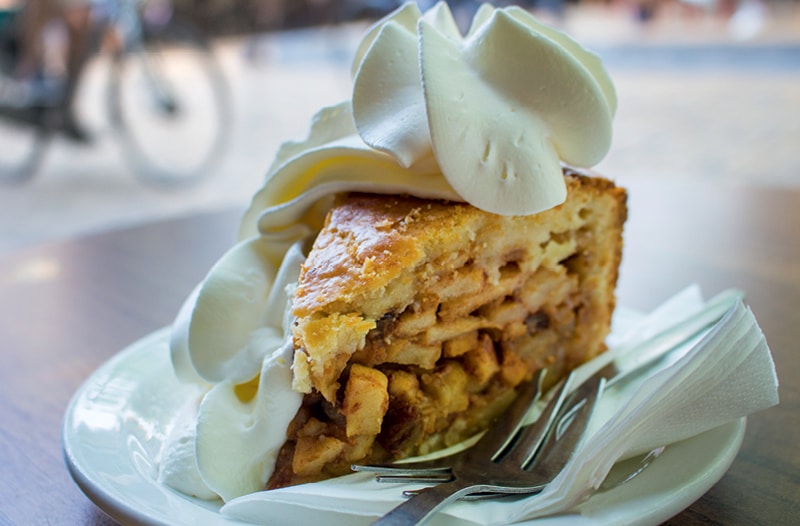
Appeltaart (Dutch Apple Pie) > This deep-dish treat is packed with cinnamon-heavy apples and raisins and encased in a crumbly, cake-like crust.
Patatje Oorlog (War Fries) > Thick-cut fries (double-fried for maximum crunch) best served Oorlog style, which tops them with peanut satay sauce, mayonnaise, and raw onions.
Rijsttafel (Rice Table) > A feast of up to 40 Indonesian side dishes (satay, curry, pickles, and more) served with rice, reflecting the city’s colonial history.
Jenever > The original gin, this malt-based spirit is traditionally served in a tulip-shaped glass, filled so high it reaches the surface tension limit.