Ensuring the End of the British Slave Trade
The story of how abolitionists and a nascent insurance industry find common cause.
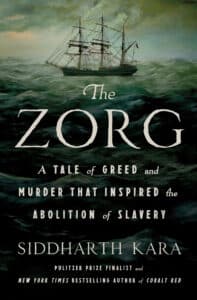
Compellingly written and extensively researched, Siddharth Kara’s The Zorg: A Tale of Greed and Murder That Inspired the Abolition of Slavery takes readers deep into the 18th century Atlantic slave trade.
Greed and disregard for humans underly the narrative in this chilling and harrowing story. However, there are bright spots, with the United Kingdom’s young insurance industry unintentionally aiding abolitionists’ attempts to expose the horrors of slavery.
The Zorg: A Tale of Greed and Murder That Inspired the Abolition of Slavery
By Siddharth Kara
St. Martin’s Press
$30
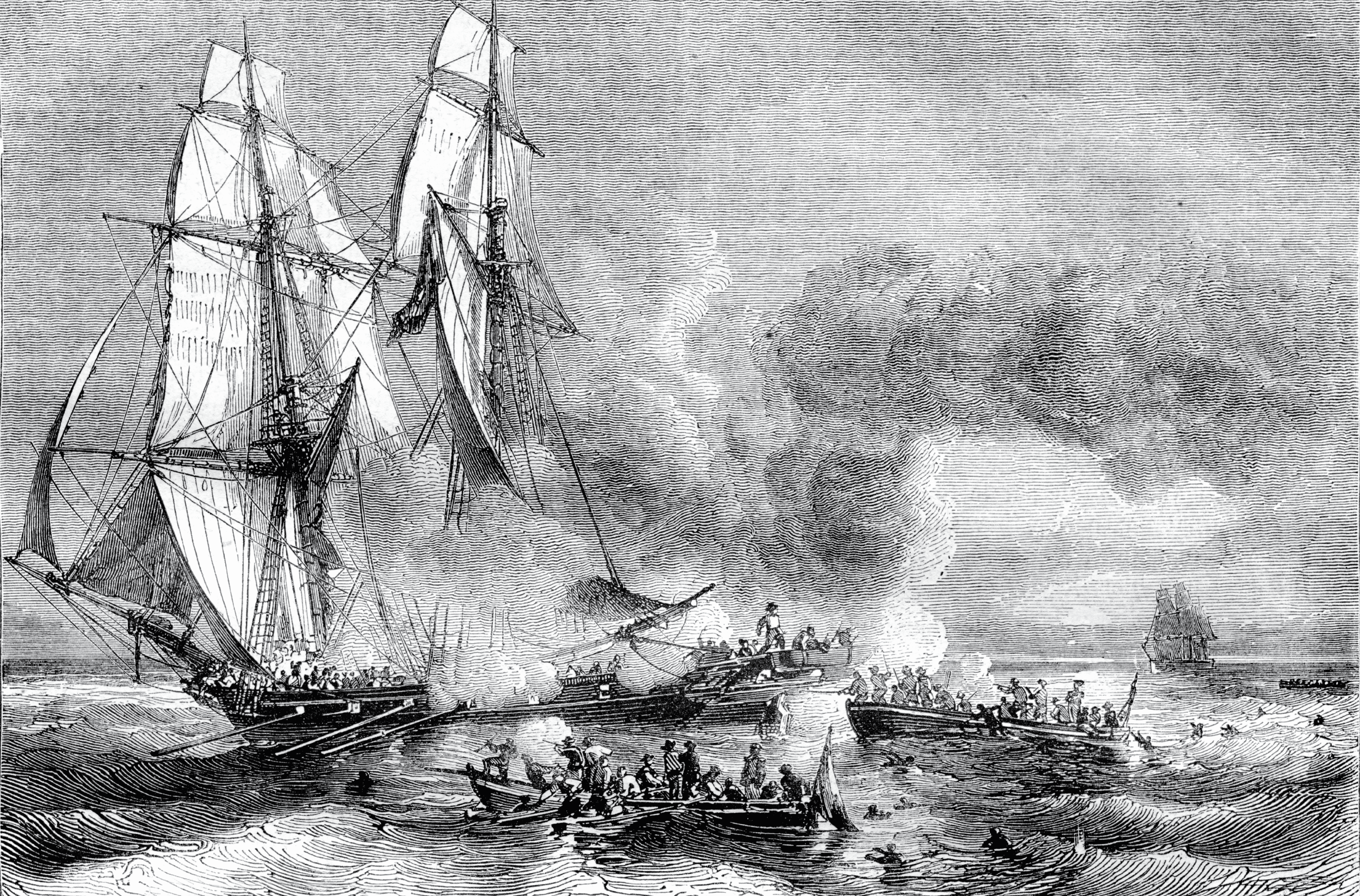
The Zorg follows a Dutch slave ship of the same name. Ironically, zorg means care and concern in the Dutch language, diametrically opposite to the treatment of the enslaved passengers on the ship. Setting sail in 1780, the Zorg followed the well-sailed path of slave ships to complete “the triangle”—traveling first to the western coast of Africa from Great Britain to barter goods for black men and women captured in the continent’s interior and marched to the coast; transporting the enslaved Africans across the Atlantic to the Caribbean and selling them at auction; and using these proceeds to purchase rum, molasses, cotton, and tobacco to be sold in England. The entire circuit could take a year.
For months during the voyage from Western Africa to the Caribbean, the captured Africans were kept in the ship’s hold with only a brief period each day on deck to exercise and breathe fresh air. The slave ships were modified with a ’tween deck, effectively adding an additional floor in the hold so that more human cargo could be loaded. The space between the floors was 2½ feet, and Africans were laid spoon style tight up against one another, chained together with ankle cuffs in abysmal sanitary conditions. They suffered disease, starvation, dehydration, and abuse. On average, a 10% mortality rate was considered acceptable. Ship captains received bonuses for keeping mortality at or below the accepted level and delivering as many healthy slaves as possible to the auction blocks.
The Zorg’s captain and crew, as they left Africa for Jamaica, took on too many enslaved individuals (380 versus the normal count of 220 to 250) and inadequate food and water for the long sea crossing. Their goal was to maximize profits.
The crew unknowingly overshot Jamaica and faced disease outbreaks and a perceived shortage of water. First-time captain Luke Collingwood decided to conserve water and food. Starting on Nov. 29, 1781, the crew began to throw overboard 100 of the sickest and weakest Africans, mostly women and children as their value at auction was less than the men, to drown at sea or to be attacked by the sharks trailing the ship.
William Gregson, the owner of the Zorg, had secured insurance for the cargo “modeled after a standard maritime contract that was first printed in the 1680s at England’s nascent maritime insurance exchange, Lloyd’s Coffee House.” The policy stated that slaves killed during an insurrection would be valued at “£30 each” above a 3% deductible—but there had been no insurrection. Instead, Gregson hoped to find coverage and payment for the slaves thrown overboard based on language buried in the document stating that losses from “all other perils” would be covered above 5%. “It was the first time in the history of the British slave trade that slave merchants attempted to claim compensation for the loss of slaves other than during an insurrection,” Kara writes.
The syndicate of investors led by Thomas Gilbert refused to pay the claim. Its refusal was based on the fact that the loss was “caused by factors that insurers were not required to cover, such as natural death, suicide, or incompetence by the crew.” Gregson took it to court. This provided an opening for abolitionists who had sought unsuccessfully for decades to outlaw the slave trade in Great Britian. The British abolitionist Granville Sharp saw this court case as a platform to secure a ruling that the enslaved Africans should be protected by the same laws and principles as white men and women.
Sharp knew that if a court would overturn the legal precedent that slaves were property, he would have the foothold needed to advance legislation against the slave trade. The jurists were not ready to make this leap; in fact, the drowning of the Africans was akin to “throwing wood overboard” in the words of the solicitor general in the case. The insurance syndicate lost the case and was ordered to pay the insured the stated value of the drowned slaves.
But the syndicate appealed and subsequently won. Gregson did not pursue the claim further, influenced possibly by the negative outcry from the press and his fellow Londoners. There is no evidence that the insurance syndicate was taking up the abolitionist cause, but its profit-driven argument that the Africans were intentionally murdered lined up with efforts to end the slave trade.
Granville Sharp got the legal precedent he had hoped for and proceeded to advance the cause of abolition, as the case had “occasioned the disclosure of that horrible transaction which otherwise, perhaps might have been known only among the impious slave dealers of Liverpool, and have never been brought to light.” Abolitionist fervor spread, and within a few years the Atlantic slave trade was outlawed in Great Britain.
If you want a clear understanding of the horrors of the slave trade counterbalanced by the exhaustive diligence of those determined to expose and end it, The Zorg is the book to read. I don’t believe any of us working in the industry today would be surprised by the syndicate’s refusal to pay a claim that did not appear to be covered in the insurance contract. But this denial nonetheless had an enormously positive outcome in sparking a resurgence of energy in the abolitionist cause in pursuing and securing legislation outlawing the slave trade and eventually slavery itself. Here is a reason, a few centuries later, to be proud of the insurance industry.