Do you frequently suffer from paper cuts while turning pages too quickly?
Is the stack of books on your bedside table so tall that it may topple over at any moment? Do you have pets with names like Atticus, Katniss, or Mr. Darcy? Then you might suffer from bibliophilia, aka the bookworm’s disease. Fortunately, there is a cure: travel.
Exploring the literary side of a city is a great way to feed your passion for books while discovering the destination’s soul. You can walk in the footsteps of great authors, visit the cafés they frequented, attend literary festivals, stroll through themed museums, and explore historic libraries, all while enjoying the city’s natural charm and landmarks.
Here are five quintessential cities for readers: Paris, London, Dublin, Edinburgh, and New York City. While this list leans heavily Eurocentric, numerous locales around the world contain that literary spark that make stories come to life. In fact, UNESCO currently lists 53 locales in its City of Literature program, including Jakarta, Melbourne, Rio, and Iowa City. Yes, Iowa City—home to the famous Iowa Writers’ Workshop. It just goes to show that ink-stained wonderment is everywhere.
Paris
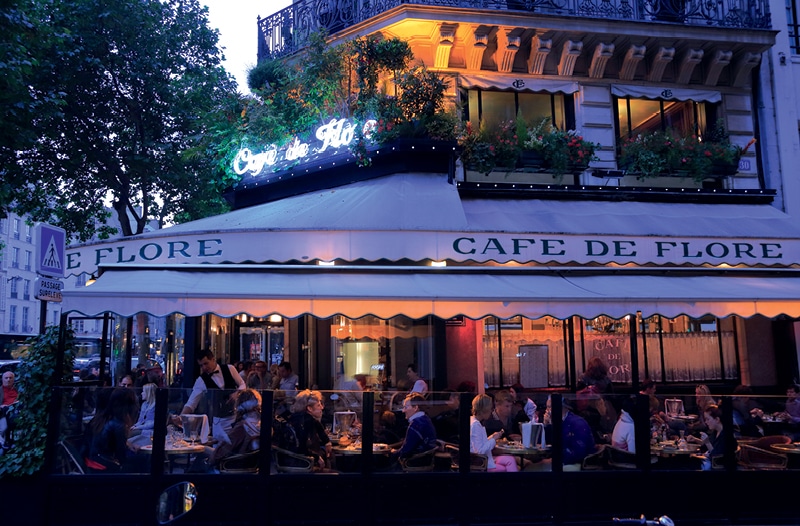
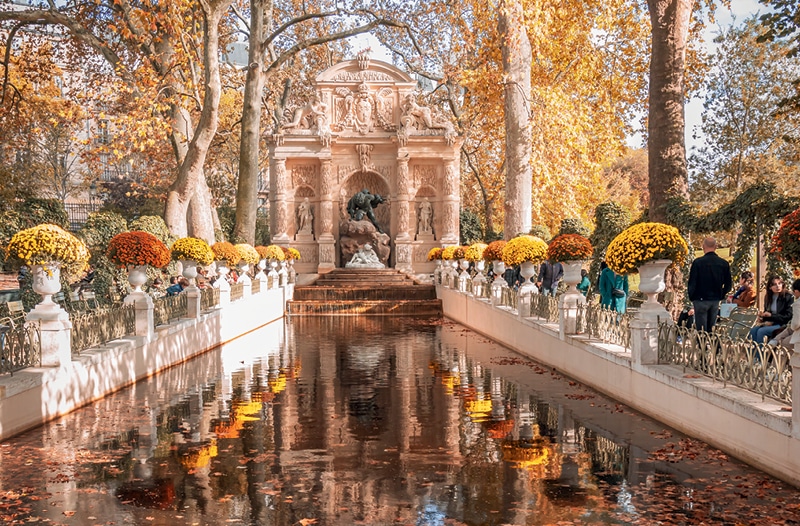
Among the millions of visitors to Paris over the centuries, many have been writers, attracted by the city’s legendary bohemian spirit. F. Scott Fitzgerald and Ernest Hemingway attended Gertrude Stein’s Saturday evening salons near the Luxembourg Garden, where the Lost Generation whiled away their disillusionment, while French legends Jean-Paul Sartre, Albert Camus, and Simone de Beauvoir pondered existential dread over strong black coffees at Café de Flore.
Travelers today can still visit said café and discuss lighter topics while sipping a signature cocktail of champagne, brandy, Grand Marnier, and red fruits coulis. Museum fans can stop by the Carnavalet Museum to see the bed in which the reclusive Marcel Proust wrote, or head to Maison de Victor Hugo to view manuscripts, drawings, and personal artifacts of the author of Les Misérables and The Hunchback of Notre-Dame. Or simply stroll the famed Montparnasse district as Henry Miller and Ezra Pound once did, on your way to the Cimetière du Montparnasse to find the final resting places of Charles Baudelaire and Samuel Beckett.
While those experiences are based largely on your enjoyment of particular writers, one spot in Paris is for all bibliomaniacs—Shakespeare and Company. Located on the Left Bank across from Notre Dame Cathedral, the world’s most famous English-language bookstore is the mecca of literary historians. Original shop owner Sylvia Beach helped James Joyce publish Ulysses and mingled with such literary luminaries as Allen Ginsberg, William Burroughs, and James Baldwin before closing her business in 1941. Reopened under new ownership in 1951, the current location keeps the original’s spirit alive by allowing unpublished writers to stay in a studio apartment in exchange for helping with the shop, a tradition called Tumbleweeding.
London
If you think Paris is the epicenter of literary history, London would like a word.
The sprawling metropolis is not just a city often portrayed in literature; it is the heart of English literature itself, a tangible connection to authors who shaped our modern language.
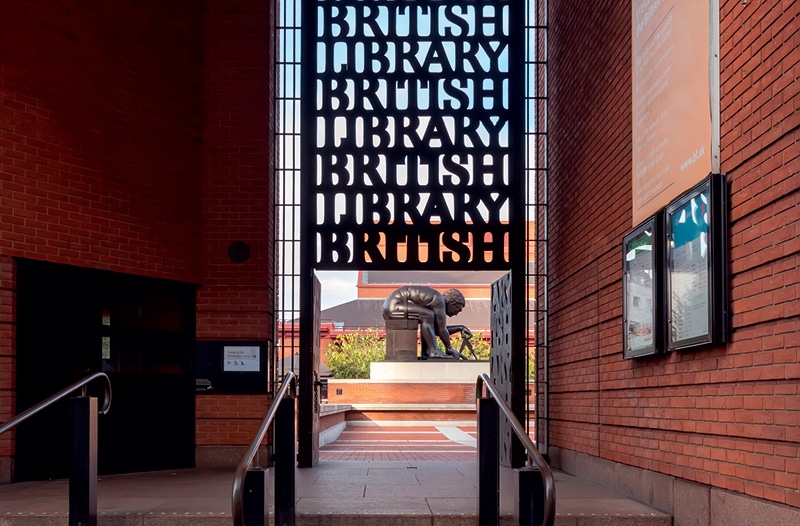
Let’s start with The British Library, one of the world’s largest. While 170 million items are collected here, head straight to the Treasures Gallery, where the word “treasures” is not used facetiously. Here you’ll find original manuscripts by Jane Austen and the Brontës, illustrated books by Lewis Carroll and J.R.R. Tolkien, the earliest surviving copy of the epic poem “Beowulf,” and early copies of Chaucer’s The Canterbury Tales. Oh, and don’t forget Shakespeare’s First Folio, the original collection of 36 of his plays.
Speaking of the Bard, across the River Thames and next to the Tate Modern lies Shakespeare’s Globe. This faithful reconstruction of the open-air Elizabethan playhouse is open for tours, or, if the timing’s right, to see one of his plays performed much like it was in 1599. If only ticket prices remained the same.
Other literary lights across the city include the Charles Dickens Museum at the author’s former home at 48 Doughty St. where he wrote Oliver Twist and Nicholas Nickleby. At another famous address, 221B Baker St., the Sherlock Holmes Museum recreates the sleuth’s Victorian-era rooms, filled with artifacts and references to his most famous cases. And no visit to literary London would be complete without paying respects at the Poets’ Corner at Westminster Abbey, where writers such as Chaucer, Dickens, Austen, Rudyard Kipling, and T.S. Eliot are either buried or memorialized.
Dublin
There’s something about Ireland’s lively capital city that inspires boisterous words and fires the imagination, and I’m not just talking about the proliferation of Guinness. This UNESCO City of Literature is a champion of creativity, home to literary festivals and art galleries and to the likes of James Joyce, Oscar Wilde, George Bernard Shaw, W.B. Yeats, and Bram Stoker.
The author of Dracula gets his own festival. The Bram Stoker Festival each fall fills the city with Gothic-inspired productions in darkened libraries and sacred crypts. On every June 16, Bloomsday is celebrated as locals don Edwardian attire and act out scenes from Joyce’s iconic novel Ulysses. On most other days, you can join the Dublin Literary Pub Crawl, which whisks you to several historic pubs while professional actors weave tales of the local literary giants who drank and wrote there.
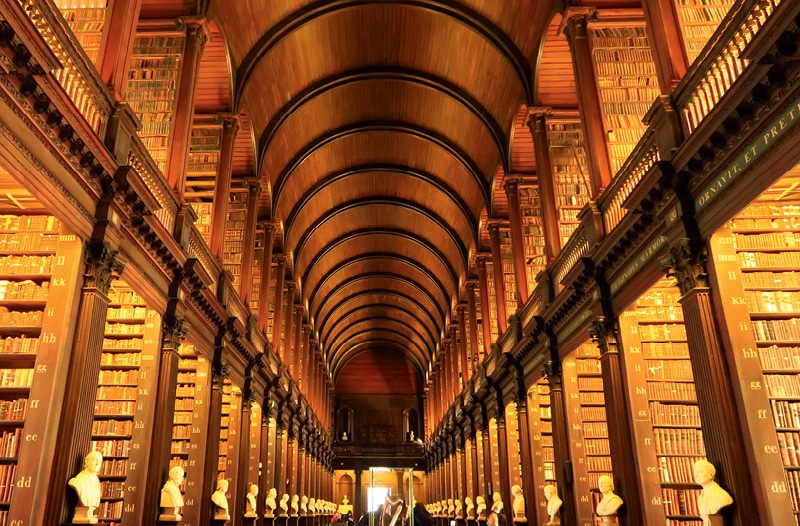
If you like your literature filled with more history and grandeur, Dublin doesn’t disappoint. At Trinity College, you’ll find the awestriking Long Room—a 65-meter-long architectural love letter to books. While there, visit The Book of Kells, an illuminated manuscript dating to around 800 A.D. that is one of the nation’s most cherished cultural treasures. You’ll only be able to see two pages on display at any one time, but if you wait around for another six to eight weeks, they’ll turn the page.
Edinburgh
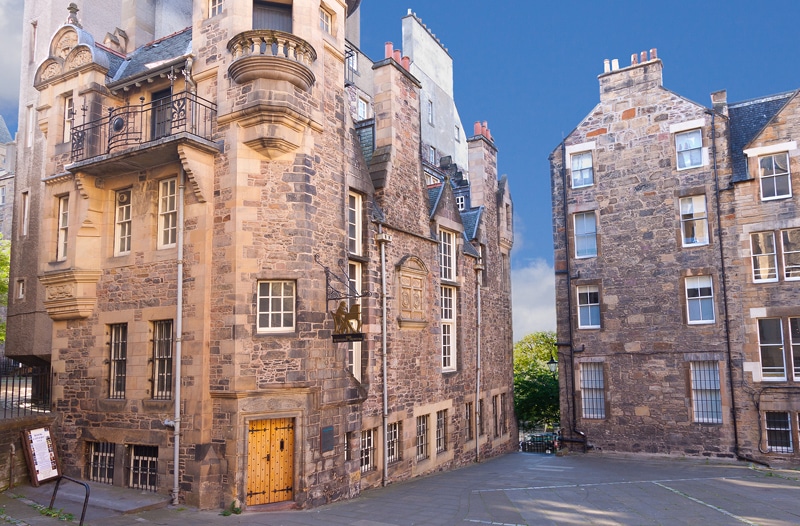
Edinburgh was named the first UNESCO City of Literature in 2004, and deservedly so. To see why, visit The Writers’ Museum to find portraits, rare books, and personal objects of three stars of Scottish literature, including Robert Burns’s writing desk (along with a plaster cast of his skull), Sir Walter Scott’s rocking horse, and Robert Louis Stevenson’s riding boots. It’s all in Lady Stair’s House, a 17th-century townhouse that could easily be the setting of a Harry Potter film.
Speaking of the boy wizard, Edinburgh is quite the magical destination for Potterheads. Clockwise from left: Andrea Pucci; Barry Winiker; Louis Chui Not only did J.K. Rowling famously write sections of the novels in several local pubs, but she was also greatly influenced by the city. Along The Potter Trail, you‘ll find several recognizable names at the Greyfriars Kirkyard cemetery, such as Thomas Riddell and William McGonagall, and there’s a certain allure of curving Victoria Street that makes you think of Diagon Alley.
New York City
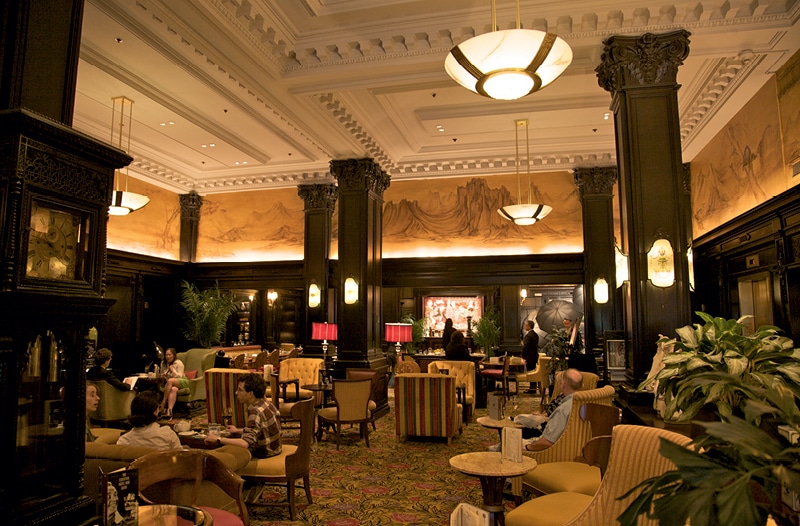
Europe can’t lay claim to all the top storybook hot spots. The Big Apple has more literary landmarks than tiny, overpriced apartments, and it’s easy to experience many of them while casually doing other tourist activities. For example, while strolling through Central Park, you can venture to the Literary Walk, a picturesque thoroughfare lined with American elms and statues of Shakespeare, Scott, and Burns.
A few blocks away, while admiring the grandiosity of the Cathedral Church of Saint John the Divine, the largest cathedral in the United States, you can visit the American Poets Corner. Here you’ll find stones dedicated to Emily Dickinson, Robert Frost, Langston Hughes, Henry David Thoreau, and Walt Whitman, among others.
In Times Square, have dinner at The Algonquin Hotel and see if the conversations around you come close to what Dorothy Parker heard around her Round Table. And while walking along the High Line, pop down and grab a drink in the Lobby Bar of The Hotel Chelsea, knowing that legendary figures— including writers Arthur Miller, Dylan Thomas, and Jack Kerouac, along with Bob Dylan, Jimi Hendrix, Tom Waits, and Patti Smith—frequented the joint.
That’s the beauty of travel. While checking out a destination’s main attractions, you can follow your passions and discover something personally intriguing nearby. And if that passion is the written word, then the world is a real page-turner.
UNIQUE CITIES DEMAND UNIQUE BOOKSTORES
PARIS
L’eau et les rêves (Water & Dreams) > Paris’s first floating bookshop is on a barge moored on the Canal de l’Ourcq.
Librairie 7L >Started by fashion icon Karl Lagerfeld, 7L invites you into a stylish shop specializing in coffee-table books on the visual arts.
Artazart > Located on the Canal Saint Martin, this shop merges books with illustrations, providing a unique space for local writers and artists to showcase their creations.
LONDON
Libreria > This eye-catching independent bookshop with a mirrored ceiling arranges books by themes such as (happily coincidentally) “Wanderlust,” making it easy to come across your next read.
Hatchards > Established in 1797 in Piccadilly, the oldest bookshop in London covers five stories, often displaying books in oddly specific niches, such as espionage.
Daunt Books Marylebone > This beloved shop organizes books by their geographical setting or origin, so you’ll have to visit the Japan section for the latest from Haruki Murakami.
DUBLIN
Sweny’s > A living museum dedicated to James Joyce, this former pharmacy is now a volunteer-run, secondhand bookstore that sells the same lemon soap Leopold Bloom bought in Ulysses.
Hodges Figgis > Open since 1768, the third-oldest operating bookshop in the world has the largest collection of Irish literature in the country.
Ulysses Rare Books > Filled with that old book smell, this shop specializes in rare editions, prints, and author-signed copies.
EDINBURGH
Typewronger Books > Here you can get hand-spooled typewriter ribbon, chat with up-and-coming writers in residence, or have something printed on the shop’s risograph machine.
Armchair Books > The overburdened bookshelves seemingly groan under the weight of the used books, making any stroll through this tiny shop feel more like an adventure than mere browsing.
Tills Bookshop > During the winter months, there’s always a welcoming fire blazing in this shop on Hope Park Crescent, making it a cozy destination far from the main tourist drag.
NEW YORK CITY
The Twisted Spine > Putting the “boo” in bookstore, this Brooklyn-based shop sells only horror and dark literature that spans the spectrum of fear and fascination.
The Book Cellar > Located in the basement of the Webster branch of the New York Public Library, this used bookstore is where all the well-to-do readers of the Upper West Side donate their bestsellers.
Sweet Pickle Books > The owner of this Lower East Side shop is an avid pickler, so you can trade in your used books for a jar of double dill spears.