Rewiring Insurance Island
Long a major reinsurance capital for liability and property, Bermuda is leveraging its world-class regulatory standing in developing alternative risk transfer solutions and digital asset frameworks.
Beyond its postcard-perfect pink sands and turquoise horizons, Bermuda has quietly cemented itself as one of the top three reinsurance hubs alongside London and New York.
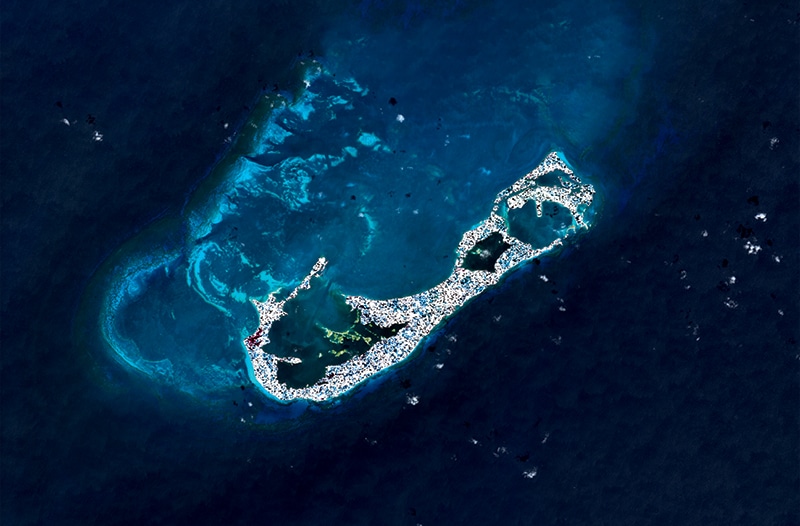
While tourists flock to the 21-square-mile island territory for leisure, the largest global financial institutions are drawn by its innovative risk transfer solutions.
Bermuda has joined London and New York as the top three global reinsurance hubs. With more than 1,200 registered insurers and reinsurers, along with over 600 captives, the archipelago manages 35% of the world’s P&C reinsurance capacity and 15% of all reinsurance capital.
Businesses are drawn by Bermuda’s strong regulatory framework, which enabled it to become one of two non-European Union territories to gain complete Solvency II equivalence. Bermuda-based reinsurers can now operate throughout the EU as if they were headquartered there.
Looking to diversify its economy, the territory has developed a comprehensive legal framework for blockchain and cryptocurrency activities. As of 2025, more than 50 firms were using digital “smart contracts” that automatically distribute money as soon as a disaster is verified, avoiding the hassle of slow paperwork.
The scrappy British Overseas Territory has punched above its weight for half a century to command approximately 35% of the world’s property and casualty reinsurance capacity and 15% of total reinsurance capital. The archipelago tallies more than 1,200 registered insurers and reinsurers and roughly 630 licensed captives covering a vast range of risks, from property and casualty to life and health. Gross written premiums in Bermuda’s commercial long-term sector—specializing in life, annuity, and health insurance and reinsurance— reached a record $200.1 billion in 2024, according to industry reports.
In this era of sky-high jury verdicts and climate change-fueled wildfires, hurricanes, and other major storms, the jurisdiction’s risk-bearing capacity is in enormous demand. “Bermuda serves as a sophisticated shock absorber for the global insurance industry; what goes on in the world of volatile risks finds its way here,” says John Huff, president and CEO of the Association of Bermuda Insurers and Reinsurers (ABIR), a public policy and advocacy organization representing the country’s leading insurance and reinsurance companies.
Bermuda manages $1.5 trillion in insurance assets, according to the Bermuda Monetary Authority (BMA). As a recognized laboratory for innovation, it is adept at matching cutting-edge capital with complex risks to meet investor needs. An example is the insurance-linked securities market, including catastrophe bonds that transfer risks directly to capital market investors. By year-end 2025, the global catastrophe bond market reached a record $61.3 billion, with the vast majority of these instruments listed on the Bermuda Stock Exchange.
But Bermuda is not resting on its insurance laurels. In keeping with the goal of economic diversification, Bermuda developed the 2018 Digital Asset Business Act, considered one of the world’s first comprehensive legal frameworks for blockchain and cryptocurrency activities. The framework is meant to help modernize and expand its insurance market capabilities and create new business opportunities using digital assets.
“In the 27 years I’ve spent in insurance, Bermuda has consistently proven itself as the premier market for bespoke risk solutions and resilience-based capital,” says Peter Rapciewicz, executive vice president and U.S. casualty practice leader at insurance broker Lockton.
The Regulatory Gold Standard
At the core of these advancements is a regulatory framework overseen by the BMA. The jurisdiction is one of only two territories outside the European Union (EU) to achieve full Solvency II equivalence, often referred to as “gold standard” regulatory status for insurance and reinsurance operations (Switzerland is the other jurisdiction). This standing allows Bermuda-based reinsurers to operate across the European Union with minimal friction, treating their contracts as if they were EU-domiciled. Simultaneously, the National Association of Insurance Commissioners (NAIC) in the United States recognizes Bermuda as a reciprocal jurisdiction, providing seamless access to the vital U.S. market.
The Bermuda Monetary Authority is regarded as an innovator on par with the entities it oversees. Its formal regulatory sandbox process, for instance, allows companies to live-test innovative products and business models in a supervised, controlled environment. With a temporary, conditional license, companies can offer their innovations to a limited number of policyholders for a set period. During this phase, the regulator maintains oversight to ensure consumer protection and risk mitigation.
“Bermuda is probably the domicile at the moment that’s striking the best balance between being both innovative and prudent in regulatory oversight,” says Dan Hofmeister, associate director at global credit rating agency AM Best. “Companies [can] pursue more esoteric solutions in the open market—under heavy regulatory supervision—whereas other domiciles might simply reject the proposals.”
Doing business in Bermuda is defined by a level of proximity that is impossible in larger financial capitals like London or New York. Here, the world’s most complex risk solutions are often sketched out within the same handful of square blocks in the capital city of Hamilton. Rather than ZIP codes, the physical distance between the BMA, top-tier law firms, and the world’s leading reinsurers is measured in footsteps. This physical closeness creates a high-trust, high-speed environment where faces are familiar as the firms they represent. “On any given evening, you go into Harry’s at the Waterfront or The Little Venice and know half the people there,” says David Parker, head of business development at the Bermuda Business Development Agency.
This social cohesion is formalized through long-standing local institutions like the Bermuda Insurance Institute and ABIR, which Huff, a former U.S. insurance regulator and NAIC president, pronounces “a beer,” joking that it demonstrates the islands’ small-town feeling.
Bermuda is probably the domicile at the moment that’s striking the best balance between being both innovative and prudent in regulatory oversight. Companies [can] pursue more esoteric solutions in the open market—under heavy regulatory supervision—whereas other domiciles might simply reject the proposals.
Dan Hofmeister, associate director, AM Best
A Storied History
Bermuda hosted its first modern captive insurance offering in 1958, a milestone largely credited to Fred Reiss, who selected the territory to establish the initial offshore captive for an Ohio-based steel company, Youngstown Sheet & Tube. Reiss, who managed the company’s industrial risks and insurance needs, was drawn by Bermuda’s favorable tax environment and its government’s openness to innovative financial structures.
By the early 1970s, approximately 100 captives were domiciled in Bermuda, including the first industry-specific group captives designed to solve severe coverage problems affecting the nuclear, oil and gas, and electric sectors. These entities included Nuclear Mutual Limited in 1971, Oil Insurance Limited in 1972, and Associated Electric & Gas Insurance Services Limited in 1975, laying the groundwork for Bermuda’s reputation as a flexible, innovation-friendly jurisdiction.
Passage of the Insurance Act 1978, establishing a clear legal distinction between captive and commercial insurers, is considered a definitive turning point in Bermuda’s history. This robust framework, overseen by the BMA, preserved the island’s high standards of oversight while offering the flexibility needed for captives to flourish. The legislation treated captives differently than commercial insurers by allowing for lower capital and reporting requirements for self-insured risks. Before the legislation, Bermuda lacked a legal distinction between companies insuring the public and those insuring only their own parent corporations. By codifying this difference, the Act replaced a one-size-fits-all model with a tiered licensing system that scales oversight based on a company’s specific risk profile.
Other new concepts emerged, such as “rent-a-captive” solutions, an arrangement where an organization pays a fee to use the capital, license, and administrative infrastructure of an existing captive insurer instead of forming its own company, reinforcing Bermuda’s reputation as an insurance problem-solver.
Bermuda expanded into a global reinsurance hub during final decades of the 20th century. The shift began in the mid-1980s when a liability crisis led to the founding there of industry giants including ACE (now Chubb) and XL (now AXA XL) to provide excess liability coverage. A second surge followed in 1992 after Hurricane Andrew caused $15.5 billion in insured losses. In response, a new wave of capital formed property catastrophe specialists with Bermuda operations, including Mid Ocean Re, RenaissanceRe, and PartnerRe.
In 2004, the rapid succession of Hurricanes Charley, Frances, Ivan, and Jeanne striking Florida within six weeks introduced the industry to the devastating phenomenon of multiple major storms hitting the same region in a single season. This concentrated activity created a massive demand surge for labor and materials, driving repair costs far beyond traditional estimates. Such unprecedented hurricane frequency forced the market to shift its focus from single-event modeling toward the more complex risks of aggregate seasonal loss.
Setting the standard for this type of modeling in the industry, the Bermuda market transitioned from reactive historical analysis to advanced near-term catastrophe modeling, which explicitly accounted for cumulative repair cost spikes and total potential loss over an entire season. Ultimately, the market emerged with its capital intact, proving that a technical, model-driven approach could successfully absorb the costs of multiple back-to-back disasters.
The new millennium merged traditional insurance with capital markets through the rise of insurance-linked securities. Following the Sept. 11 attacks, Bermuda attracted over half of the world’s new reinsurance capital, but the market’s true evolution was cemented in 2009 with legislation for special purpose insurers. By simplifying the registration process and removing the heavy paperwork usually required for standard insurance companies, this law made it much easier for large investors to fund disaster-protection tools like catastrophe bonds. This system gave institutional investors the legal security and speed they needed to invest their money quickly, helping Bermuda secure over 60% of this global market—a leading position it still holds in 2026.
Regulators have also assisted the rapid expansion of Bermuda’s parametric insurance sector through the implementation of a Parametric Special Purpose Insurer class, expected to be fully in place by the end of Q2 2026. This regulatory framework creates a fast-track for traditional insurers and non-insurance entities—such as corporate captives, hedge funds, and NGOs—to execute parametric reinsurance contracts using objective, data-driven triggers like specific wind speeds or earthquake magnitudes. Once triggered, nearly instantaneous payouts become available to help bridge the global climate protection gap.
Beyond catastrophe risk, the Bermuda market rapidly diversified into the life and annuity reinsurance sector. Leveraging a sophisticated regulatory environment and Solvency II equivalence, Bermuda now holds approximately 84% of U.S. life and annuity reserves ceded offshore. This maturation reflects a shift from a niche disaster-response hub to a comprehensive global center for long-term capital management.
On Jan. 1, 2025, Bermuda implemented a 15% corporate income tax, aligning with the Organization for Economic Cooperation and Development’s Pillar Two regulatory framework (a minimum 15% tax on profits from large multinational enterprises). The new revenue stream funds national debt reduction and infrastructure.
Bermuda’s concentration of capital and expertise creates a critical relief valve for U.S. insureds, ensuring catastrophic liability risks do not jeopardize commercial activity. Although reinsurers are put into a more exposed financial position given much higher [litigation] volatility, with the increase in premiums over the last six to seven years the rate of return is much more sustainable.
Chris Heinicke, head of casualty insurance, Willis Bermuda
Highly Selective Casualty
Today’s excess casualty risks offer a prime opportunity for Bermuda to demonstrate its ability to respond to market crises. Reacting to sky-high liability verdicts in U.S. courts, reinsurers have moved away from the traditional high-limit, low-frequency model on which the Bermuda casualty market was formed. Carriers have restructured their approach by significantly lowering attachment points and reducing individual capacity—slashing once-standard $100 million-plus limits to more surgical $5 million to $15 million tranches. By repositioning as a highly selective provider of excess capacity, Bermuda fills critical gaps left by domestic markets that have pulled back from that sector, while maintaining a disciplined, less-competitive environment, says Chris Heinicke, head of casualty insurance at Willis Bermuda (part of WTW) and a native Bermudian with over 30 years of industry experience.
“Bermuda’s concentration of capital and expertise creates a critical relief valve for U.S. insureds, ensuring catastrophic liability risks do not jeopardize commercial activity,” he says.
“Although reinsurers are put into a more exposed financial position given much higher [litigation] volatility, with the increase in premiums over the last six to seven years the rate of return is much more sustainable,” Heinicke adds. “Despite deploying less capacity per account, the combination of triple-digit rate increases and sustained global demand has driven gross written premiums to unprecedented levels, transforming a period of litigation volatility into a secure long-term marketplace.”
While internal restructuring has stabilized the market, a broader shift in capital management is underway. According to Kathleen Faries, CEO of Artex Capital Solutions (part of Gallagher), Bermuda has successfully addressed the historical difficulty of attracting alternative capital into the casualty insurance space on a fully collateralized basis, where investors were previously wary of the long-tail liabilities associated with leveraged balance sheets.
Most of these arrangements are structured as casualty quota share agreements, with investors participating in a proportional slice of an entire book of business. “This approach has particularly caught the attention of private credit investors, who are drawn to the reliable cash flows and the ability to manage the underlying assets while entering the casualty space,” says Faries, noting that investor interest in the sector has accelerated rapidly, with capital levels doubling over the past 12 months as new structures make long-term casualty risks more digestible.
Converting this surging interest into long-term commitment requires a framework that provides absolute clarity for multibillion-dollar portfolios. To achieve this, the jurisdiction uses the Bermuda Form, a specialized policy that aggregates related claims into a single occurrence while providing coverage for punitive damages. These programs leverage a sophisticated mix of traditional insurance and third-party capital, often applying insurance-linked securities and reinsurance sidecars to transfer specific risk portfolios to private investors. A sidecar is a privately financed, special purpose vehicle created by an insurer or reinsurer to offload a portion of its risk to third-party investors.
While the Bermuda Form remains the bedrock for managing complex casualty liabilities, the market’s sophisticated capital structures are being recalibrated to address an increasingly volatile property landscape. This influx of third-party capital is being tested almost immediately by a new era of climate volatility. Disasters like the California wildfires have forced a total recalibration of risk as localized events evolve into systemic, macro-scale disasters characterized by extreme severity and vast geographic reach, driven by prolonged droughts, dense asset concentration, and intensified wind patterns.
As such, the industry is rapidly moving away from relying on historical data, which no longer accurately predicts the behavior of these intensified fires, in favor of sophisticated, forward-looking catastrophe models. By acknowledging that wildfires can now rival the financial impact of top-tier hurricanes, Bermuda’s reinsurers are repositioning their capacity to anchor a financial system facing increasingly frequent multibillion-dollar climate events.
The Digital Frontier
Beyond traditional risk management, Bermuda is pioneering the intersection of insurance and technology by establishing a regulatory environment for blockchain and digital assets. This forward-thinking approach has created a high-tech ecosystem where smart contracts and specialized licenses are transforming how global risks are traded, settled, and even denominated.
By late 2025, for instance, more than 50 firms were using “smart contracts”—digital agreements (primarily blockchain-based) that automatically pay out money the moment a disaster is confirmed, eliminating the usual slow paperwork. This emerging ecosystem includes companies like Nayms and Relm. Nayms operates a digital marketplace that uses blockchain technology to allow investors to provide collateral and trade insurance risks directly. Relm, meanwhile, uses its dual licensing to provide tailored insurance coverages involving D&O liability, cyber, and E&O liability for companies specifically operating in the digital asset and emerging technology sectors.
Modern regulations have also made Bermuda a center for personal financial innovation. For example, Meanwhile Insurance used a specialized Class IILT digital license granted by the BMA in becoming the world’s first life insurer to operate entirely in bitcoin. Customers can pay for their policies and receive their family’s benefits using digital currency.
“What makes Meanwhile particularly interesting is how they bridge these two worlds, providing the long-term planning and wealth protection needed by high-net-worth entities, but doing so entirely within an innovative, tech-driven framework,” according to Parker. “By using Bermuda as a center for both risk and digital innovation, such firms help diversify our economy and attract new investment across a range of related industries.”
Through new partnerships with major companies like Circle and Coinbase, Bermuda is creating a system where blockchain acts as the main financial engine for both the government and local businesses. One prominent example is the government’s collaboration with Circle to integrate the USDC stablecoin into its local payment systems, allowing residents to pay for government services like taxes and fees using digital assets. Additionally, Bermuda has pioneered a blockchain-based national digital identity system, which enables local businesses to verify customer identities more efficiently and securely while reducing the administrative burden on the public sector.
Officials believe this shift is necessary to grow the economy and move away from a reliance on just insurance. “We’re conscious that any jurisdiction too heavily reliant on one industry is potentially vulnerable. Therefore, a large part of our work, in addition to supporting insurance, is focused on economic diversification,” Parker says.
This transformation is already yielding results. In February 2026, mF International, a financial trading solutions provider based in Hong Kong, announced plans to seek a Bermuda license for launching crypto-based wealth protection products. “We have the potential to be not just a hub for innovators and entrepreneurs, but a jurisdiction where new ideas are born and tested before they go global,” Parker notes.