Q
Your parents were missionaries, so you lived in Japan through 12th grade. That had to be a very different experience than you would have had growing up in the United States.
A
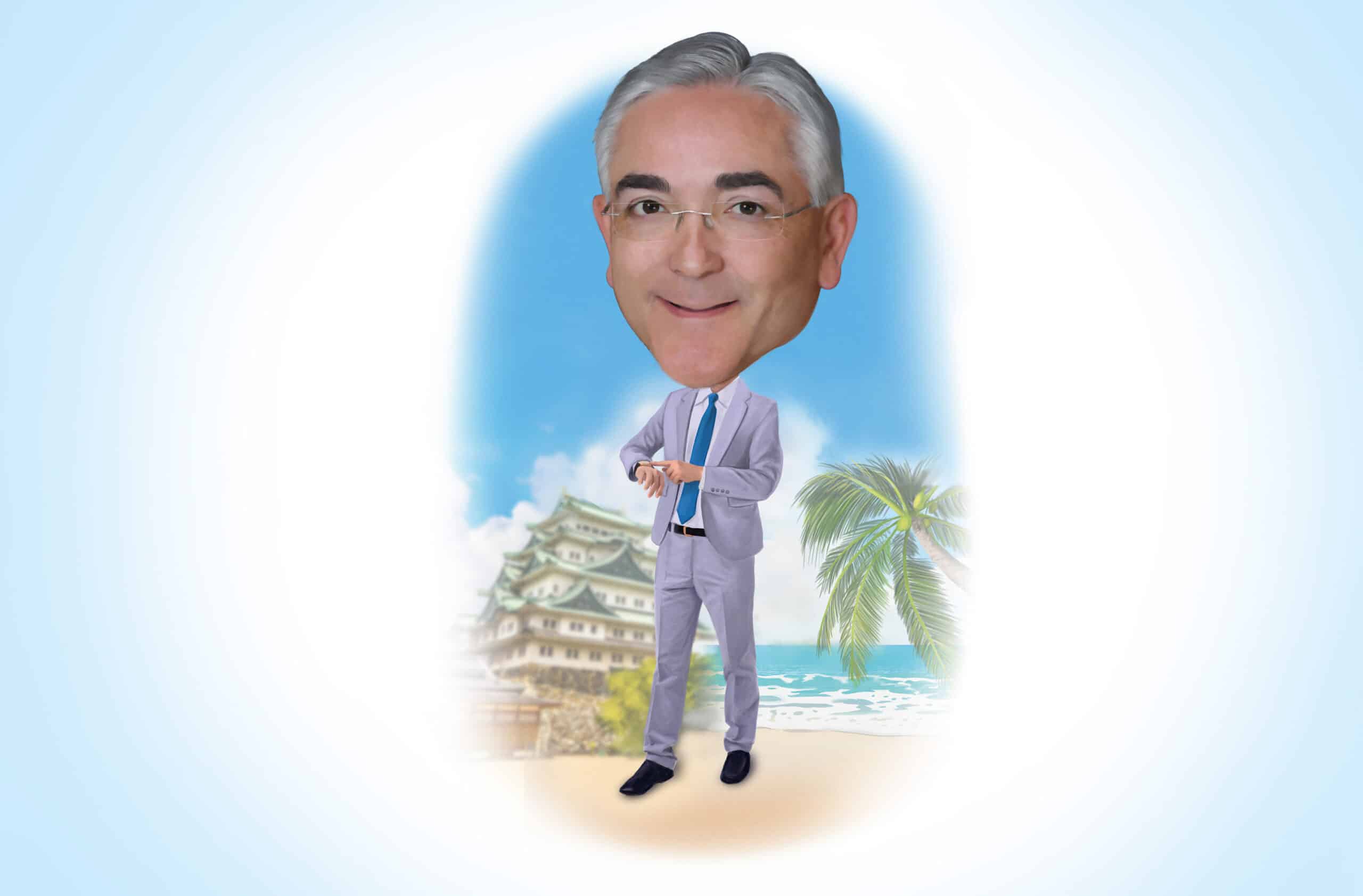
I went to an English-language school in Nagoya, Japan, a big city. I’d take the subway, buses, all of that. And every two to three years we’d come back to the states, and we’d stay in a small town, Portland, North Dakota, which is where my parents lived before moving, and I’d work on a farm. It would take some adjusting, because you go from living in a big city, where you take your shoes off before you come into the house and culturally everything’s different, to living and working on a farm. I like to say I had the best of both worlds—a little bit of country kid and a little bit of big-city kid—growing up.
FAVORITE VACATION SPOT: Hawaii (“There’s not a bad time to go there.”)
FAVORITE MOVIE: Reservoir Dogs (“It might have been my first big, shocking movie where I didn’t know what was going to happen next, much less at the end.”)
FAVORITE ACTOR: Kevin Costner
FAVORITE MUSICAL GROUP: Fleetwood Mac (“The first concert I saw was Fleetwood Mac, and I’ve always gravitated back to them.”)
FAVORITE AUTHOR: C.J. Box
FAVORITE RESTAURANTS IN CRYSTAL LAKE, ILLINOIS: 1776, Vine and Plate, da Baffone, The Cottage (“1776 is a farm-to-table restaurant. I highly recommend it. Vine and Plate is a tapas-style restaurant. Da Baffone is an Italian restaurant. The Cottage is your classic pub food. I can’t just name one. They’re all great, and I could go down another four deep, if anybody’s ever interested.”)
Q
Did you learn to speak Japanese?
A
I was conversationally proficient, and I used to speak a lot of half-Japanese, half-English. My Japanese friends, they’d want to speak English, and sometimes it was easier to speak in Japanese.
Q
Do you think that experience made you the young person you came to be?
A
One of my attributes or faults is I’m always punctual. When trains [in Japan] leave at 7:02, it means 7:02, not 7:03. It was sort of ingrained in me at a young age, being punctual and on time and being polite. I grew up bowing to people, not shaking hands. We live in, obviously, a very different society here in the United States, but you get a different perspective. Having a background where I’ve traveled quite a bit has helped me in my career.
Q
I was going to ask if that experience carried over into your work life.
A
The different foods, the different cultures, the different ways you have to adapt when you’re working with different people, or even languages, it just forces you to adapt more. That adaptability has helped me in business, where you think, “Where is this person coming from that we can’t come to an agreement?”
Q
You went to college in California. Having spent most of your life in a different country, far away, what was that like?
A
College is an adjustment. Regardless, the culture shock was quite different. All of the recreation is different in Southern California than it is in Nagoya, Japan. So you grow up quickly. You see things you’ve never seen before.
Q
Give me an example.
A
Japan’s a very rule-following society. They have beer vending machines in Japan, but you just don’t buy beer until you’re 21. In California, I think there was almost anything available if you wanted to go down those paths.
Q
What does a perfect weekend look like for you?
A
A perfect weekend would be if I’m on a beach. I’m a warm-weather person, which in Illinois is challenging. If I’m in Florida or Southern California, playing a round of golf in the morning and spending an afternoon poolside or on the beach.
Q
What three words would your co-workers use to describe your management style?
A
Integrity, accountability, and grit.
Q
If you could change one thing about the insurance industry. What would it be?
A
The myriad of state laws and regulations is sometimes challenging. We follow certain state regulations, and have great software that does it all, but it’s complicated. I’m not sure that a national solution would be better, but certainly more consistency would be helpful.
Q
What gives you your leader’s edge?
A
Putting your team members first. I like to say I’ve got 330 bosses. If I can take care of them, they’ll take care of the hard problems.