Depth on the Nile
Egypt’s millennia-long history is on full display on a river cruise.
There’s a comfortable cadence to a cruise down the Nile River.
WHEN TO GO: Nile cruises operate year-round, but avoid high summer, when temperatures can rise above 100 degrees Fahrenheit. The best time is November to April when the weather is warm, but not too hot.
CURRENCY: Egyptian Pound. US$1 = 53 E£.
LANGUAGE: Arabic. English is widely spoken.
COMPANIES TO CONSIDER: National Geographic-Lindblad Expeditions, AmaWaterways, Viking Cruises, Abercrombie & Kent
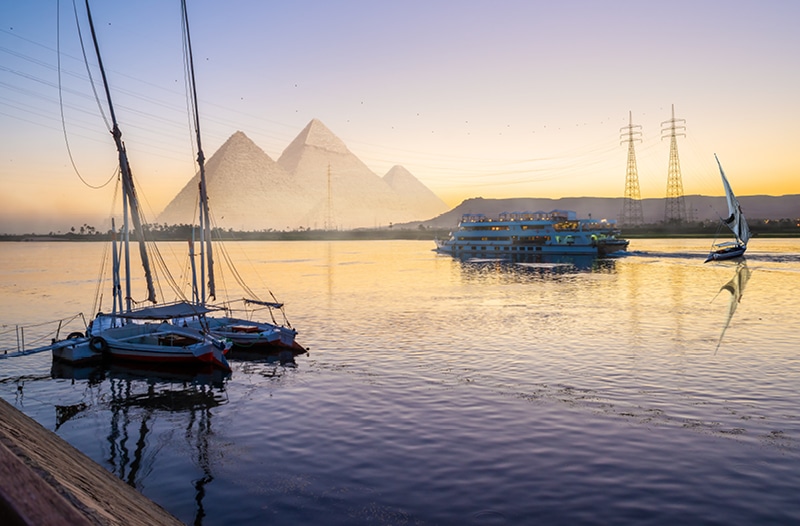
Mornings are for exploring onshore to beat the midday heat, investigating ancient temples and tombs. Afternoons are spent relaxing on the sun deck and observing rural life, from fishermen in feluccas (wooden sailing boats) to farmers tending date palms. Finally, nights are for immersing yourself in the local culture: dinners filled with flavors from the area, guests wearing jalabiyas (traditional robes), and colorful dancers performing the tanoura, an Egyptian folk dance.
Collectively, it’s a relaxing and somewhat standard cruise experience that undercuts how unique it truly is. The Nile is a 4,000-mile corridor of history, bordered by lush, fertile banks keeping the harsh sands of the Sahara at bay. It’s the only source of water in a hostile environment. Without it, Egypt would not exist, never becoming the superpower that would leave a trail of architectural landmarks behind for centuries of wonder and exploration.
Navigating the tranquil current on a river cruise through the Nile offers the comforts of a floating boutique hotel with the adventure of drifting by numerous UNESCO World Heritage Sites with dedicated Egyptologists on board to decode hieroglyphics and mesmerize you with tales of the changing dynasties. A nice glass of mowz bil-laban (banana milk with honey) also helps get you ready to cruise through history.
Begin in Cairo
Most Nile River cruises begin in Cairo, where you must make your first choice. The popular option is to stay a few days in the Egyptian capital, tour the major sites, and then fly some 400 miles south to Luxor to embark on a three-to-seven-night cruise visiting the country’s most famous non-pyramidal monuments. This allows you to capture the full spectrum of Egyptian history in a single, well-paced trip. Those who dislike shortcuts can take the 10–14-night version from Cairo to Luxor and beyond, a slower, more immersive journey through rural Egypt, stopping at sites rarely visited by mainstream tourists such as the Middle Kingdom tombs of Beni Hasan or the ruins of Tell el Amarna.
Your next choice is how best to spend your days in Cairo. This is a place of overwhelming scale, where millennia of history are layered atop a modern megacity of about 10 million. Still, if you are like many visitors, your first stop will be the Giza Plateau. Before venturing to the pyramids, stop at the largest archaeological museum in the world, the Grand Egyptian Museum, which hosts over 100,000 artifacts. In these corridors you will discover the rise and fall of Egyptian dynasties and the history of the pyramids, though the main draw is the entire contents of the tomb of Tutankhamen, displayed collectively for the first time since uncovered by British Egyptologist Howard Carter in 1922.
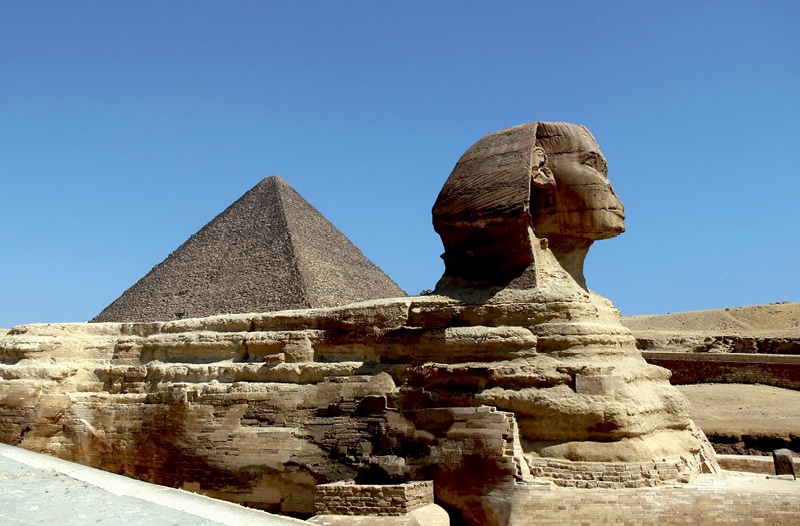
Walk outside the museum and you can stroll to the Great Pyramid of Giza. Flanked by the pyramids of Khafre and Menkaure and protected from raiders by the Great Sphinx of Giza, the tomb of the pharaoh Khufu was built around 2570–2500 B.C. by tens of thousands of skilled laborers, and not, much to many people’s chagrin, by aliens. Those not prone to claustrophobia can enter the structure and climb a steep, narrow tunnel to the King’s Chamber to discover a large granite sarcophagus. Photography is forbidden here, but your camera will need a break anyway after taking hundreds of snaps outside the pyramids.
Fly to Luxor
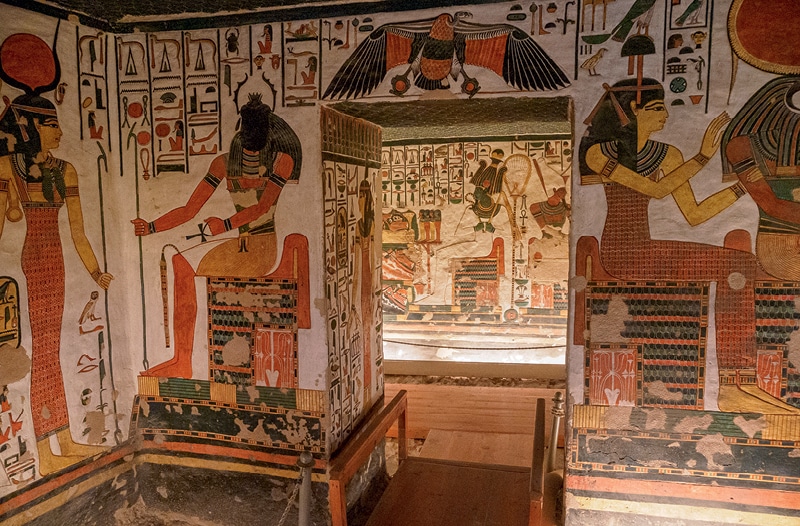
Beginning your Nile cruise from this much smaller city shifts the travel experience from the monumental scale of Cairo to a more intimate exploration of antiquity and living culture. Before the vessel even slips its moorings, you can explore both sides of the river: the East Bank, referred to as the city of the living, home to residential areas, markets, and temples; and the West Bank, the city of the dead, where the sand-covered hillsides are filled with tombs.
On the East Bank, you’ll find the vibrant heart of modern Luxor, home to major hotels and markets, as well as one of the largest religious buildings ever constructed. Coming in at more than 200 acres, the Karnak Temple Complex was built over 1,500 years by roughly 30 pharaohs, creating a fascinating mix of temples and monumental gates. The Great Hypostyle Hall is considered the highlight with its 134 columns, 10 to 21 meters tall, which once held a decorative lintel that may have weighed 70 tons. From Karnak, you can walk the Avenue of Sphinxes, a recently restored 1.7-mile path lined with hundreds of sphinx statues, all the way to Luxor Temple, an obelisk-fronted complex that is most impressive at night under floodlights.
Across the river is the West Bank, a quieter, more rural area where limestone cliffs hide the tombs of Egypt’s greatest rulers. Here you will find not only the famed Valley of the Kings (home to some 60 tombs, including those of Tutankhamen and Ramses VI) but also the Valley of the Queens, the burial site for the pharaohs’ wives and other royalty (such as the well-preserved Tomb of Nefertari), and the Valley of the Artisans, where the tombs are vibrantly painted to depict scenes of daily life. Nestled within these valleys are two 60-foot stone statues of Amenhotep III known as the Colossi of Memnon, as well as the Mortuary Temple of Hatshepsut, a dramatic, three-tiered temple built into the cliffs in honor of Egypt’s most successful female pharaoh.
Sail South
From Luxor, your river cruise ship sails south on its way to two of Egypt’s most unique temples. First comes the Temple of Horus, the falcon-headed god. Buried in sand for centuries, the temple is well preserved, retaining many of its original architectural and decorative elements, including scenes of Ptolemy XII conquering his enemies on its monumental gate. On many excursions to this site, also called the Temple of Edfu, guests take a horse-drawn carriage from the dock to the temple, passing through bustling local streets to the sound of clip-clopping hooves and the rhythmic shouting between carriage drivers.
The second main temple on this southern passage of the Nile is the Temple of Kom Ombo. Perfectly symmetrical, the double temple is dedicated to two gods: Sobek the crocodile and Horus the falcon. The temple once swarmed with crocodiles, some of which you’ll discover mummified in the adjacent Crocodile Museum. Don’t spend too long there—you’ll want to return to your ship by early evening. The temple sits on a high bend in the river, providing a dramatic backdrop at sunset when the sandstone glows orange against the river.
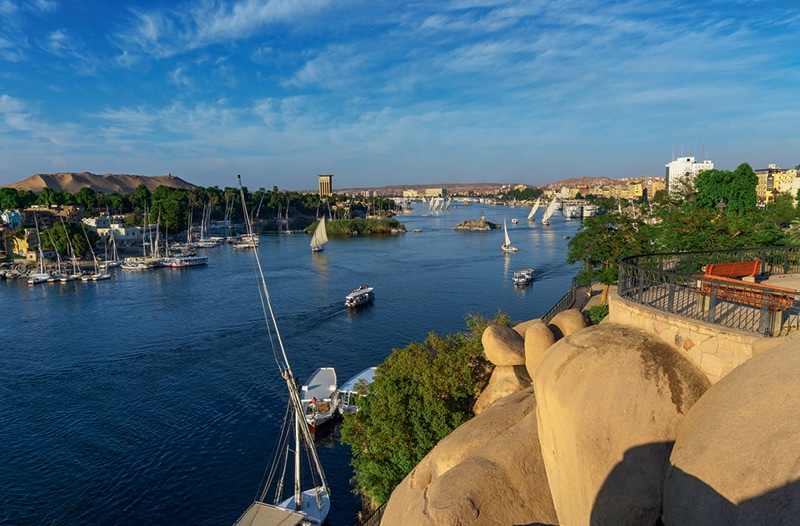
The cruise concludes in Aswan, where the Nile—filled with granite islands and white-sailed boats—is at its most picturesque. The monumental highlight here is the Philae Temple, an island fortress dedicated to Isis and reachable only by motorboat. The temple was moved stone by stone from 1977 to 1980 to its current location to save it from the rising waters of the High Dam. If that type of construction history fascinates you, venture to the nearby Unfinished Obelisk, a massive monument-in-progress that allows you to see exactly how the ancients carved these monoliths out of the bedrock.
Before flying back to Cairo, stay awhile in Aswan. Enjoy afternoon tea on the terrace of the Sofitel Legend Old Cataract hotel, watching feluccas sail past Elephantine Island. The hotel is where Agatha Christie wrote Death on the Nile. Next, take a three-hour desert drive or short flight to Abu Simbel on Lake Nasser, to view the substantial temples of Ramses II carved into the mountainside.
That’s the thing about Egypt. There are always more cryptic hieroglyphics to peruse, jaw-dropping temples to admire, and subterranean rooms to explore. A cruise on the Nile provides the best way to experience as much of this mighty history as possible, but it will only be a taste of what lies here above and beneath the ever-shifting sand. Still, that small taste is well worth the journey.
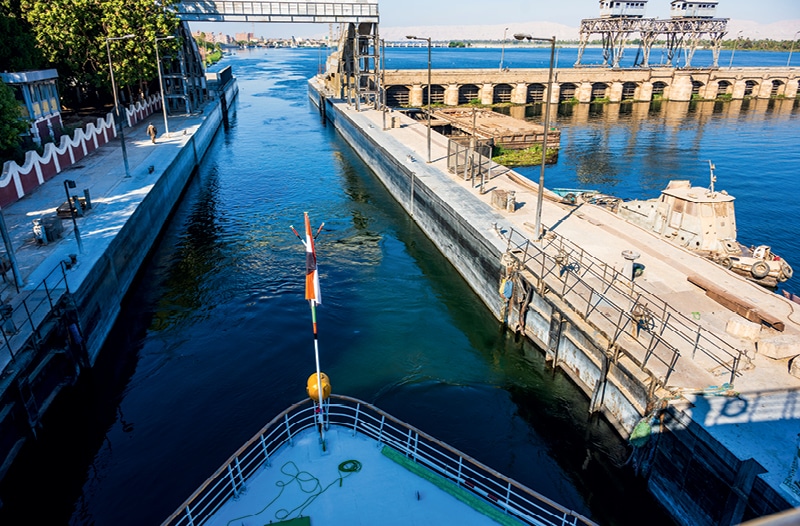
While Luxor, Edfu, Kom Ombo, and Aswan are often the anchors of Nile itineraries, other locations offer unique engineering marvels, perfectly preserved art, and a quieter look at river life. Depending on the size of your ship and the length of your stay, you may visit these locales.
Esna > The Temple of Khnum, dedicated to the ram-headed god, is interesting, but visitors most enjoy watching large ships rise and fall while navigating the Esna Lock.
Qena > Often included in seven-night itineraries or as a day trip from Luxor, Qena provides access to the Temple of Hathor at Dendera, arguably Egypt’s best-preserved temple complex.
Abydos > There’s a lot to learn at the Temple of Seti I, known for having the highest-quality raised-relief carvings in the Nile Valley. It houses a chronological list of 76 pharaohs that has been vital to modern Egyptology.
Beni Hasan > Unlike the royal tombs in Luxor, the rock-cut Middle Kingdom tombs found here show remarkably detailed scenes of daily life, including wrestling, weaving, and ball games.
Tell el Amarna > The ruins of the short-lived capital built by the heretic pharaoh Akhenaten was abandoned shortly after his death, leaving a unique, preserved urban layout.
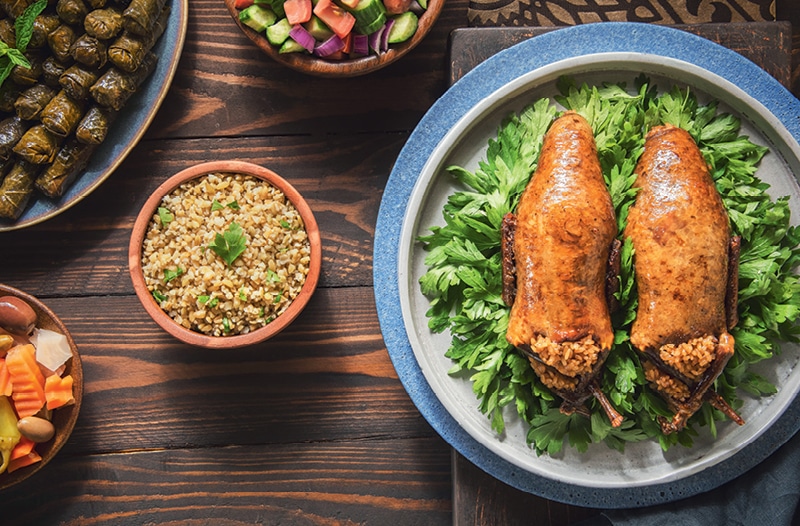
Egyptian food is hearty, unpretentious, and deeply communal, meant to be scooped up with flatbread. Because meat was historically a luxury, the national palate is defined by flavorful legumes, sun-ripened vegetables, and the nation’s holy trinity of spices: cumin, coriander, and garlic. Here are a few essential items.
Koshary > The undisputed national dish chaotically layers rice, macaroni, and lentils, covered with chickpeas, crispy fried onions, and a tangy vinegar-garlic sauce.
Ful Medames > Fava beans slow-cooked in large copper pots until they reach a buttery consistency, then seasoned with olive oil, lemon, and cumin.
Hamam Mahshi (Stuffed Pigeon) > A delicacy served at special celebrations, the pigeon is stuffed with freekeh (cracked green wheat) or seasoned rice and then roasted or grilled.
Basbousa > A staple at bakeries, this dense, moist semolina cake is soaked in a fragrant simple syrup (often infused with rosewater or orange blossom) and topped with a single almond.
Karkadeh (Hibiscus Tea) > The soul of Egyptian hospitality, the hot or cold drink is deep crimson, wonderfully tart, and famously helps regulate blood pressure in the Egyptian heat.