Moving Backward on Biodefense?
Though the Trump administration maintains it is committed to disease preparedness, cuts to relevant federal agencies and R&D pipelines have experts questioning the country’s readiness.
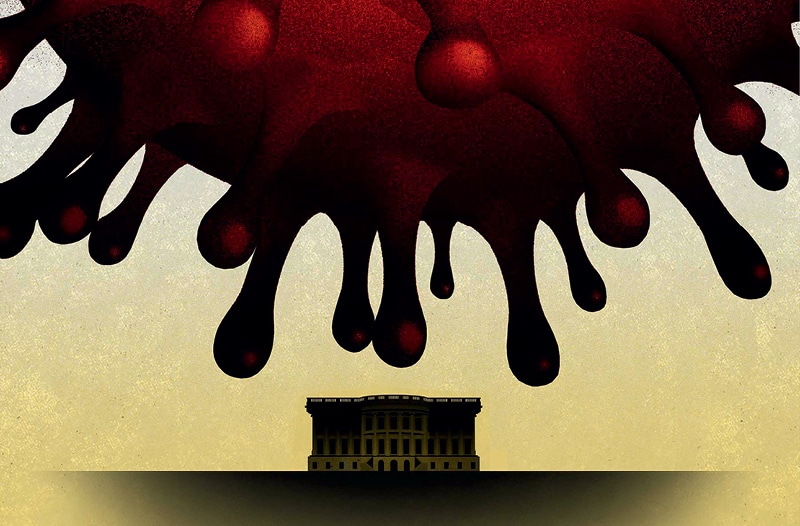
Biological threats come in many shapes and sizes: natural events, such as emerging infectious diseases; unintentional incidents in laboratories; and pathogens that are deliberately engineered or released with malicious intent.
The Trump administration is cutting billions of dollars in funding and thousands of staff from the U.S. Department of Health and Human Services and some of its key public health agencies. That includes a 25% reduction in the workforce of the Centers for Disease Control and Prevention.
Experts outside of government warn that the cuts will leave the United States unprepared for an inevitable future pandemic or an intentional biological attack and less able to monitor infectious diseases and prepare local communities to respond to them.
Health and Human Services agencies emphasize their continuing commitment to defense against biological threats, including partnerships with other federal organizations and all levels of government.
Each category poses unique challenges for detection, prevention, and response. Together they threaten humans, animals, agriculture, and the environment.
COVID-19 demonstrated the devastation that can be inflicted by the rampant spread of disease—over 7 million deaths to date globally, 1.2 million of them in the United States, the most of any single nation.
From June 30, 2020, to June 30, 2024, encompassing the heart of the pandemic, U.S. health benefit claims rose by 56%, amounting to $182 billion in additional costs, according to the National Association of Insurance Commissioners. Offsetting factors, including lower use of non-COVID healthcare services, helped mitigate the overall financial impact on insurers.
COVID-19 was estimated to have caused $14 trillion of economic damage in the United States alone by the close of 2023, according to research at the time. The insurance industry incurred tens of billions in costs as well, including $20 billion or more for business interruption and event cancellation and up to $92 billion for workers compensation.
In a December 2024 systemic risk scenario, experts from Lloyd’s Futureset and the Cambridge Centre for Risk Studies said a possible future pandemic could cost the global economy from $7.3 trillion to $41.7 trillion over five years, depending on the severity of the event. The economic losses are tied in part to the drastic impact that local lockdowns and worldwide travel limitations would have on manufacturing, transportation, healthcare, and other industries, ultimately pushing the global economy into recession.
The weakening of the federal government’s capacity to contain the spread could significantly increase projections—potentially shifting what would be moderate-loss scenarios into far more catastrophic outcomes. Observers fear that is what is going to happen as the Trump administration significantly reduces budget and staffing at the U.S. Health and Human Services Department (HHS) and its component agencies.
As it announced the process in March, HHS said the restructuring would reduce costs by $1.8 billion annually and reduce agency staffing by 20,000 full-time employees. “We aren’t just reducing bureaucratic sprawl. We are realigning the organization with its core mission and our new priorities in reversing the chronic disease epidemic,” Health and Human Services Secretary Robert F. Kennedy Jr. said in prepared comments at the time. “This Department will do more—a lot more—at a lower cost to the taxpayer.”
Observers worried about the potential for significant downsides to biodefense.
“The recent federal cuts to science agencies and public health agencies will likely have a broad effect against preparations for a wide range of biological events, from naturally occurring spillover events to biological attacks. The effects will be felt in all aspects of the preparation for and response to these biological events,” says Daniel M. Gerstein, former deputy undersecretary for the Science and Technology Directorate at the U.S. Department of Homeland Security.
An event comparable to COVID-19 in the future—without a strong federal response—would strain the health insurance system, raising premiums and destabilizing markets. A chorus of experts has warned that reduced public health preparedness will lead to significantly higher claims during the next major outbreak. “The basic goal of both public health and biodefense is to protect against harm through preparation and creation of the tools to detect and counteract threats. Dramatic reductions by the Trump administration in all elements of both research and development and production of necessary medicines and diagnostics makes the risk of significant harm far greater. The reductions at NIH, CDC, USAID, [and] FEMA are destined to haunt us for years to come,” says healthcare policy specialist David Beier, managing director of Bay City Capital and former chief domestic policy advisor to Vice President Al Gore.
Insurers’ job of “making rational predictions,” Beier says, becomes significantly more challenging in the face of rapid and unexplained policy updates. “The future-proofing models [insurers] develop will no doubt embed a higher risk premium as a result of Trump’s actions. This hidden tax will be embedded throughout the economy.”
Public health experts are also quick to note that it is simply a matter of time before the next pandemic. “Is there another pandemic coming? Yes. When? Which pathogen? How severe will it be? No one can say for sure,” Harvard University immunology and infectious diseases professor Yonatan Grad said in a late 2024 Q&A with several colleagues.
He added: “A remarkable accomplishment during the COVID pandemic was how quickly the scientific community responded to a new pathogen, from sequencing its genome to development of a vaccine. That provides a measure of hope—modulated by concerns about providing the needed funding for infectious disease researchers and public health efforts. As long as we invest in basic research and translational research and in public health, we will be in a position to respond as quickly as possible.”
The State of U.S. Biodefense
Well-funded public- and private-sector programs have been in place for decades to enable the United States and other nations to manage biological threats. They brought COVID vaccines into existence less than a year after the outbreak was formally declared a pandemic—an achievement University of California-Los Angeles Health dubbed “the fastest vaccine in history.”
Across the U.S. government, federal entities have historically coordinated a wide range of activities, from detection and monitoring of biological threats to developing countermeasures to responding to outbreaks.
The U.S. biodefense complex spans multiple agencies with overlapping missions. Many operate within Health and Human Services: the Centers for Disease Control and Prevention (CDC) leads domestic and global disease surveillance and emergency response; the National Institutes of Health (NIH) supports basic and applied biomedical research; the Food and Drug Administration (FDA) regulates vaccines and other medicines; the Administration for Strategic Preparedness and Response (ASPR) provides preparation and response for public health crises and other hazards.
Separately, the National Science Foundation (NSF) funds foundational biology research essential for understanding threats. The Foundation has historically supported fundamental and applied biological research with the aim of advancing detection, mitigation, and preparedness against biological threats, including pandemics and bioterrorism.
Taken together, these federal organizations in 2024 employed tens of thousands and commanded annual funding exceeding $20 billion. But early this year, the second Trump administration began cutting, or even eliminating, many of these biodefense programs.
The announced reduction of HHS staffing, from 82,000 to 62,000 full-time employees, would include thousands at the CDC, the NIH, and the FDA. The agency’s 28 divisions are being slimmed to 15. On April 1, Kennedy ordered a 25% reduction in staff at the CDC, along with a 35% reduction in contracts across Health and Human Services. More changes followed at the CDC, with Kennedy in August firing Director Susan Monarez, who had been on the job only a month; several senior officials resigned in protest. The CDC sustained another round of layoffs in October; about 1,300 employees were initially notified, but 700 of those dismissals were rescinded after one day, according to news reports.
Specialists who monitor global disease trends have been cut as part of the overall workforce reductions. At least 430 global epidemiology and surveillance positions at the Centers for Disease Control and Prevention were eliminated in the first quarter of 2025 alone—primarily from the Division of Global Health Protection, according to internal human-resources data obtained by Science magazine.
An entire class of the CDC’s Epidemic Intelligence Service—the world’s leading infectious disease detectives—was terminated in mid-February.
By May of this year, the NSF ordered the cancellation of more than 1,000 active research grants, many of which pertain to biological sciences. The agency laid off between 25% to 50% of its workforce, affecting numerous biologists and administrative personnel involved in grant management and research support. Sixteen states, led by New York, have sued the Trump administration to prevent the NSF funding cuts.
Reductions remove essential personnel while cutting the expert operational units that have historically been critical to outbreak detection, rapid response, and public health crisis management. With fewer specialists in the field, and with less capacity to deploy much more limited federal resources, the risk of delayed or insufficient response grows exponentially. “Workforce issues alone have already resulted in personnel reductions for those tracking health trends and disease outbreaks, medical research, and monitoring the safety of food and medicine,” Gerstein commented in the first half of 2025.
The Department of Government Efficiency (DOGE), launched by Elon Musk, announced that the administration terminated 563 leases worth $262 million for facilities used by federal agencies, including the NIH and the CDC. DOGE claimed it had canceled 30 leases for FDA facilities nationwide, including a facility in St. Louis that is crucial to the agency’s drug testing operations for biodefense medicines.
In addition to the lack of personnel to respond to current risks, some experts fear the long-term effect on the country’s expertise. Wholesale cuts, or those done without a strategy consistent with the organization’s mandate, could create “a void of institutional memory that hinders an organization’s effectiveness and efficiency, along with limiting interagency collaboration to bring all pertinent aspects of government capabilities to bear,” says John Moulton, deputy director for the nongovernmental Janne E. Nolan Center on Strategic Weapons. “This effectiveness is critically important during an infectious disease outbreak or deliberate use of a biological weapon. The long-term impact is the disruption of the talent pipeline.”
Leader’s Edge reached out to Health and Human Services, the National Institutes of Health, the National Science Foundation, and other agencies for this article. Most did not respond to queries. The CDC directed a reporter to a webpage with information on its Office of Readiness and Response but did not answer a list of submitted questions.
The Administration for Strategic Preparedness and Response affirmed that it works with federal, state, local, territorial, and tribal agencies to defend the country against biological threats. Those efforts include detection, prevention, and preparedness, a spokesperson said.
“The U.S. Government works together to confront the challenges arising from naturally occurring, deliberate, or accidental biological threats, and to effectively assess, prevent, protect against, respond to, and recover from these threats,” ASPR added. “Across the government, federal agencies coordinate a range of activities to protect the American people from biothreats, including, but not limited to, biosurveillance, threat monitoring and awareness, counterterrorism, biosafety and biosecurity, the development of medical countermeasures, and public health and medical preparedness, response, and recovery activities.”
Between the research cuts and the dismantling of the knowledge pipeline, we are now less prepared for a biological attack today than we were yesterday, and we are setting ourselves up to be years behind tomorrow.
Jaime Yassif, vice president for global biological policy and programs, Nuclear Threat Initiative
State and Local Impacts
The effects of the Trump administration’s biodefense funding and programmatic pullback will be felt beyond federal agencies, stakeholders say. The impacts will be both local and global.
In the latest publicly available version of its triannual National Profile of Local Health Departments, from 2022, the National Association of County and City Health Officials (NACCHO) noted that 72% of those agencies receive federal funding passed through states for preparedness operations. Infectious disease other than influenza was the leading all-hazard event to which they responded.
Health and Human Services acknowledged in March that it intended to reclaim $11.4 billion issued to state and local health agencies, among other bodies, for COVID-19 response. That is a worrisome signal of federal intentions, officials told the University of Minnesota’s Center for Infectious Disease Research and Policy (CIDRAP).
For example, it would cost the Minnesota Department of Health $226 million, which would force the shuttering of vaccine clinics and other emergency readiness operations with partnering organizations, impair the response to outbreaks of infectious diseases, and eliminate funding for 170 positions, CIDRAP reported.
“The nation’s public health and emergency preparedness enterprise is in a total state of disarray,” says Georges C. Benjamin, executive director of the American Public Health Association. “The administration has not put in place a functional national incident command structure for health emergencies and has paralyzed the existing system for all-hazard emergency response. Mass layoffs and funding cuts have hindered and further complicated public health responses to things like the measles outbreak, as well as emergency management operations during severe weather. It is impacting response capacities at the federal, state, and local levels.”
Some states are stepping in to fill the gaps left by federal cuts. For example, California state legislators are debating a $23 billion bond initiative to restore Trump’s deep R&D cuts. Leaders of California’s Democratic Party are calling for creation of a state equivalent of the National Institutes of Health. State lawmakers, and then voters, would need to approve it. The bill creating this new state agency, the California Institute for Scientific Research, explicitly mentions “emerging disease threats and public health” and “vaccine production, procurement, or distribution” in its mandate.
Writ large, though, state and local governments simply do not have the resources to offset cuts to biological readiness at the federal level, experts say.
“Let’s be clear—when the next pandemic from an infectious agent breaks, if this budget passes, we will be largely unprepared, and needless deaths will happen,” Dr. Mary Pittman, former president and CEO of the Public Health Institute, said in a release from the American Public Health Association. “The CDC will be late detecting, tracking, and responding to it, and the states will not have the resources to do it at the state level. Time to action is everything in an outbreak of disease.”
Threats to R&D
Several advanced laboratories (Biosafety Level 3) located at state universities reported that the federal government had effectively suspended operations due to lack of funds. BSL-3 labs enable secure research and diagnostics on airborne pathogens and toxins, some of which could be used in acts of bioterrorism, which can cause serious or potentially lethal infections. The facilities are specifically designed with advanced containment measures: directional airflow, sealed enclosures, and rigorous decontamination protocols.
NACCHO warned in a policy brief that these lab cuts could delay disease detection by weeks and increase the likelihood of a domestic outbreak spiraling beyond control.
At the same time, significant biothreat-focused programs have been reduced as part of the HHS reorganization.
The Biomedical Advanced Research and Development Authority (BARDA) was ordered to be merged with the Advanced Research Projects Agency for Health, according to reports by Health Management Associates and other sources. BARDA supports development of medical countermeasures for emerging infectious diseases influenza, along with biological and other weapons agents. That includes 24 vaccines and 28 therapeutics, among other medical countermeasures, that have received FDA approval, the ASPR spokesperson notes.
“BARDA partners with the private sector including pharmaceutical and biotechnology companies, philanthropic and not-for-profit organizations, and academia to share risk in the development process, improve efficiency, and accelerate development of medical countermeasures,” according to the agency representative. “These are true partnerships—not only does BARDA provide funding but it provides subject matter expertise to help advance innovative solutions and advanced development of medical countermeasures toward regulatory approval, clearance, or licensure, as well as support post-marketing requirements and commitments.”
The spokesperson also highlighted ongoing programs, including ASPR’s Center for Industrial Base Management and Supply Chain, which supports medical product industrial base capacities to prepare the nation for future public health crises, and the National Special Pathogen System, which helps hospitals and other health providers prepare for pathogen events.
However, cuts to BARDA undermine the federal government’s ability to quickly develop, test, and deploy new vaccines or therapies against novel pathogens, potentially leading to slower outbreak containment and higher public health risks in future emergencies, experts say.
The Administration for Strategic Preparedness and Response was also reduced and then subsumed under the CDC.
The impact of these reductions, and related shifts in federal programs, could extend well into the private sector, according to Gerstein. “Industry now serves as the seed for early-stage R&D for the next generation of capabilities including medical countermeasures that will allow us to effectively prepare for and respond to a significant biological event,” he says. “A large portion of this type of R&D is occurring in industry and is often funded by government. As a result, NSF funding reductions are catastrophic for continuing the cutting-edge research in important biological areas. This is the enterprise that we have built and have come to rely on over the last 70 years.”
The repercussions of the Trump administration’s measures are being felt worldwide, Gerstein adds. The United States’ withdrawal from the World Health Organization (WHO) as of January 2026 will “have a negative impact on our overall readiness to respond to a global biological event, whether it is a natural spillover or a deliberate event. It will mean less collaboration globally, less sharing of information, and even less response time for responding to a biological event.”
Without access to WHO data, U.S. scientists lose real-time availability of global outbreak reports, lab samples, and early genetic sequencing data—tools widely seen as critical for the United States to conduct timely domestic response planning for a biological event. It also restricts access to critical pandemic-related and other data and resources during global health emergencies.
“We’re going to lose our ability to tap into this really large surveillance system, which is going to diminish our ability to respond to pandemics, for example,” Aleksandra Jakubowski, an assistant professor in health sciences and economics at Northeastern University, told Northeastern Global News.
Loss of access to the WHO Pandemic Influenza Preparedness system means U.S. scientific institutions and pharmaceutical firms may no longer reliably receive virus samples, data, or equitable allocations of vaccines and antiviral resources during an outbreak.
Federal cuts to science and public health agencies undermine scientific and technical readiness to counter biological threats, both domestically and globally, says Jaime Yassif, vice president for global biological policy and programs at the nongovernmental Nuclear Threat Initiative. The federal government “has also removed, or pushed out, some of the most prolific researchers, and academic institutes have begun rescinding offers to doctoral students, in large part due to cuts to federal grants,” she adds. “Between the research cuts and the dismantling of the knowledge pipeline, we are now less prepared for a biological attack today than we were yesterday, and we are setting ourselves up to be years behind tomorrow.”
Stepping Back on Disease Readiness?
While the COVID-19 pandemic has retreated from emergency status, other biological threats remain. As of Oct. 28, 1,648 measles cases had been reported by 41 states and New York City, according to the CDC. That is the largest number in the United States in one year since 2019, according to reports. Forty-three outbreaks had been identified by mid-October, versus 16 reported in 2024.
Key elements for effective biodefense research and preparedness—political support, public trust, funding, and universal access to care—are all hobbled under the Trump administration, says physician and research scholar Dr. Laura Bahn. In August, Kennedy announced the withdrawal of $500 million from a BARDA program to develop vaccines that would apply mRNA technology against COVID-19 and other respiratory viruses.
“Vaccines have been the greatest discovery in the history of medicine and public health,” Bahn tells Leader’s Edge. “They have changed history by eradicating smallpox, a highly lethal disease, and rinderpest, a scourge of livestock. Rabies is 100% lethal, but 100% preventable, thanks to a vaccine developed by Louis Pasteur. Unfortunately, the best vaccines are useless if the public doesn’t trust them or the officials promoting them.…Measles is a case in point. If a country can’t prevent or contain measles, a highly contagious but preventable disease thanks to a safe, effective, and cheap vaccine, then it can’t handle anything.”
Sentiment against vaccines, and challenges in developing new vaccines for a potential future pandemic, could also impair response, the Lloyd’s-Cambridge report says.
“Over the last five years we have had to deal with a novel infectious disease in SARS-CoV-2, the reemergence of measles, and the natural evolution of highly pathogenic avian influenza,” says Daniel P. Regan, a senior fellow at the Janne E. Nolan Center on Strategic Weapons. “By definition, the negative impact from preventable biological threats will come from something that we had the capability and capacity to respond to and mitigate.”
HHS Emphasizes New Programs
The Trump administration is holding fast to its positions. In documents for the budget year that began on Oct. 1, Health and Human Services reaffirmed its case for reducing funding and staffing.
“This budget reflects the President’s vision of making Americans the healthiest in the world while achieving his goal of transforming the bureaucracy,” HHS said in its fiscal 2026 Budget in Brief. “It aligns to the HHS planned reorganization, which will save taxpayer dollars and streamline the functions of the Department in order to end our country’s chronic illness epidemic. The budget prioritizes resources to efficiently achieve our goal to Make America Healthy Again (MAHA).”
Alongside this, the department emphasized continued and new steps it is taking on disease and other public health threats. The department would establish a new Center for Preparedness and Response at the CDC, with a $588 million budget in its first year, housing a number of programs previously at the Administration for Strategic Preparedness and Response.
The CDC is also collaborating with the National Security Council to build what HHS calls “an innovative, new biothreat detection system that can rapidly detect novel pathogens with 24-hour turnaround times.” This program will augment data in the Ready Response Data Integration system to enhance the National Center for Emerging and Zoonotic Infectious Disease’s traveler genomic surveillance and molecular detection operations, according to the HHS Budget in Brief.
The department is further pledging hundreds of millions of dollars to support state, national, and global disease surveillance operations. And, despite its uncertain future, BARDA would receive $1.7 billion, including $725 million for the Project Bioshield program to promote development of countermeasures against biological and other unconventional agents.
In line with a White House executive order on biological research, though, the NIH would halt gain-of-function research— techniques that enhance an organism’s function to understand how that process happens in nature. The HHS budget characterizes the research as a threat to the public: “NIH will balance the prevention of catastrophic consequences with maintaining readiness against biological threats and driving global leadership in biotechnology, biological countermeasures, biosecurity, and health research.”