A Whale of a Good Time
You won’t need your last breath to catch up with the world’s largest animals.
Whales are the largest animals on Earth and among the most photogenic.
Blue whales (the all-time heavyweight champion) can come in over 200 tons and 100 feet. Right whales can reach up to 100 tons and over 50 feet, while humpbacks are known to tip the scale at over 50 feet and 40 tons (though how they get them on a scale is anyone’s guess).
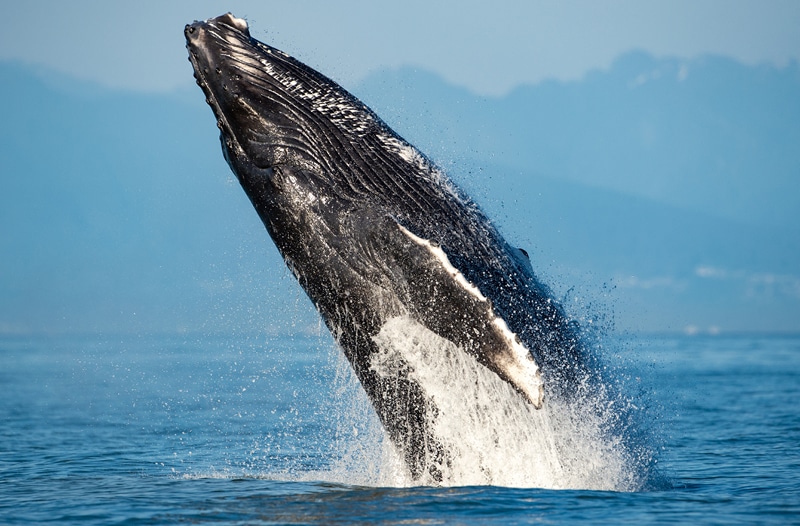
This considerable bulk makes it all the more impressive when a whale launches out of the sea. To witness this feat—the great beast rising from the depths, shooting out of the water and arcing in the air with unbelievable grace, only to plummet back down with a thunderous splash—is a highlight of any vacation.
In fact, many adventurers choose their destination especially for its whale-watching action. In between visiting museums, lounging on the beach, and savoring the local cuisine, these travelers will board a boat with a small group, a local guide, and a dream: to catch a breaching whale in real life. Luckily, such destinations include some of the most inspiring on the planet, including these four.
Vancouver, British Columbia
The problem with whale watching in Vancouver is the many other distractions. Sprawling Stanley Park is home to a 1,000-acre rainforest and over 16 miles of hiking trails. Not to be outdone, Queen Elizabeth Park covers the highest point in the city, where eye-popping views of buildings, mountains, and shores seem to go on forever. Extending over 17 miles, the Seawall is the world’s longest uninterrupted waterfront path, perfect for sightseeing or strolling to the Granville Island Public Market for fresh-caught spring salmon.
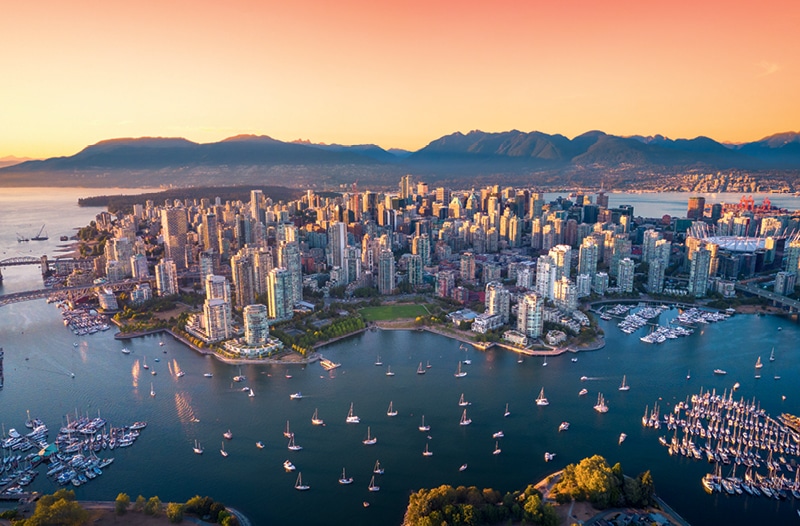
Still, the sea calls, and the whales wait. The Salish Sea—fed by both Pacific saltwater and coastal-coursing freshwater—is a nutrient-rich soup for marine life. Porpoises, sea lions, and otters thrive here, while bald eagles watch their playful antics from above. As for whales, one local outfit boasts a 95% sighting success rate from its environmentally friendly catamarans or high-speed Zodiacs, thanks to transient pods of orcas that visit throughout the year, as well as humpbacks foraging from May through December. Visitors can enjoy the visual juxtaposition of the whales against Vancouver’s urban glass skyline and the snow-capped North Shore Mountains.
Dominica
It’s not called the “Whale Watching Capital of the Caribbean” for nothing. Thanks to deep underwater canyons and sheltered bays around the island, whales spend a great deal of time here. Dominica is the only country where sperm whales can be seen year-round.
Even though these titans of the deep are the largest toothed predators on the planet, you can swim with them here. Using specialized hydrophones, tour operators find pods of whales and determine how many there are, if an aggressive male is present, and if they’re foraging, resting, or socializing. Once it’s safe to draw near, you’ll don snorkeling gear and hop in. With luck, you may catch whales floating in close-knit groups or maybe even a calf breaking away from its protective mother to investigate your presence.
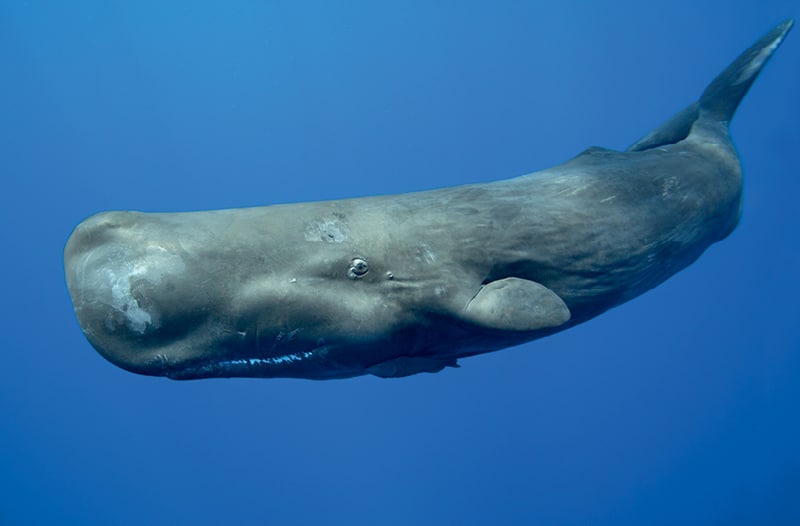
More snorkeling adventures can be had at Champagne Reef, named because volcanic vents fill the area with heated bubbles that tickle against your skin. Elsewhere across “Nature Island,” you can wade through freshwater pools beneath Trafalgar Falls, twin falls tucked within UNESCO-recognized Morne Trois Pitons National Park, or indulge in a detoxing mud bath at Wotten Waven Caldera, one of the island’s nine active volcanoes.
South Africa
For centuries, any traveler worth their salt would venture to South Africa to spot the Big Five game animals: lion, leopard, rhinoceros, elephant, and Cape buffalo. However, the country is also home to the lesser known, but equally impressive, Marine Big Five, giving you the chance to witness whales, dolphins, penguins, seals, and great white sharks in Mother Nature’s well-stocked aquarium.
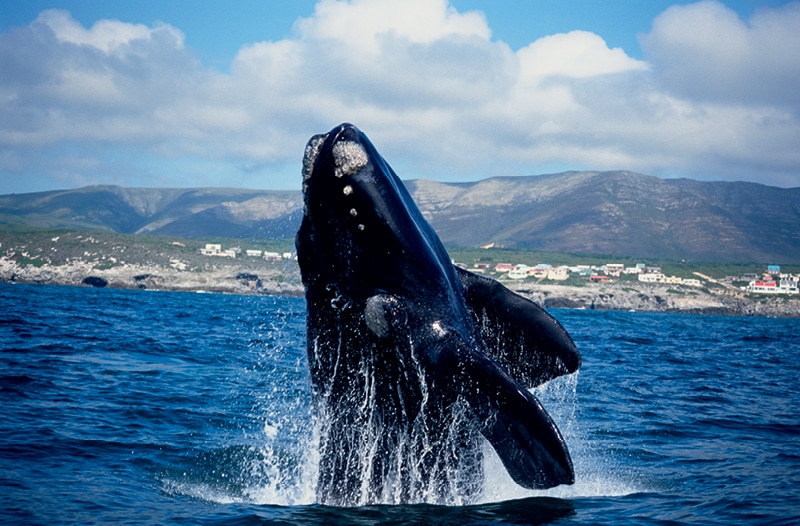
That’s the beauty of whale watching here: any opportunity to spot the breaching behemoths will also include numerous other animal sightings. While you launch from Gansbaai, a few hours southeast from Cape Town, African penguins will watch your departure as Cape gannets and giant petrels fill the sky. Your boat will pass by Geyser Rock, home to 60,000 Cape fur seals, following a sea channel commonly known as Shark Alley due to the abundance of great whites looking to thin out the seal population.
If that’s too much for your blood pressure, you can easily spot whales from the shore at Hermanus. Thanks to sheer cliffs that drop straight into a deep, sheltered bay, you merely need to glance down to see southern rights and humpbacks swimming as close as 15 feet from shore. There’s even a “whale crier” who keeps lookout and lets everyone know when they’re close by. September and October provide the most whale-spotting action here, including the Hermanus Whale Festival.
Sri Lanka
In the waters surrounding Sri Lanka, a teardrop of an island at the southern tip of India, you’ll find the largest animal ever to inhabit the Earth. Due to an abundance of krill, blue whales frequent this submerged food court from December to July. They are chased by an armada of boats often launching from popular Mirissa in the south or less crowded Trincomalee in the east, hauling anywhere from four to 300 wide-eyed passengers gaping at the quiet, overwhelming immensity of a blue whale.
Before they surface, you’ll catch an ethereal blue glow just beneath the water. Next is the percussive blast of the blow that shoots a massive fountain of mist up to 30 feet high. The whales curve their seemingly never-ending bodies out of the water before departing with the ultimate farewell—lifting their massive flukes before descending back into the deep.
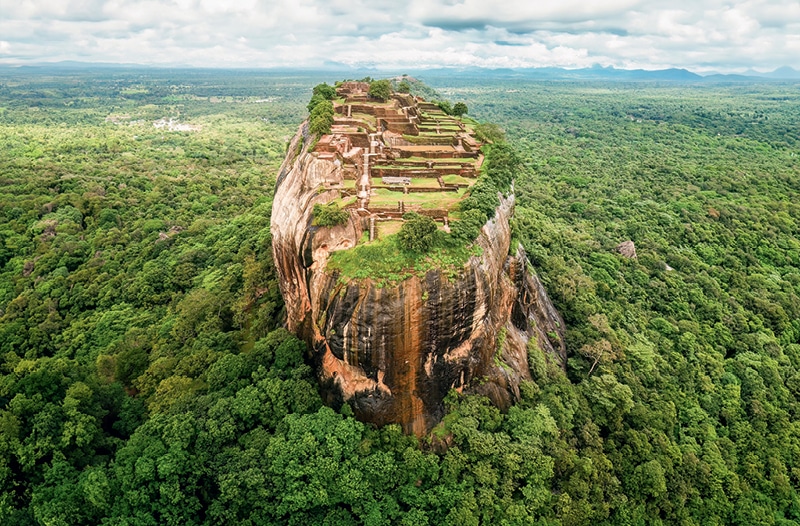
Measuring just 150 miles at its widest point, the mountainous, forested island of is easy to traverse via train or hired car. Nature lovers should beeline to Sigiriya, a striking, 590-feet column of granite topped by the ruins of an ancient fortress. Those in search of enlightenment are spoiled for choice thanks to the island’s Buddhist heritage. You’ll find a 46-foot reclining Buddha in the Gal Viharaya temple complex at Polonnaruwa; an escort of native toque macaque monkeys, as well as 150 well-preserved statues in the Rangiri Dambulla Cave Temple; and the revered Sri Maha Bodhi tree in Anuradhapura, grown from a cutting taken from the tree where Buddha first attained enlightenment, so the story goes.
Belief, as in religion, is also an important staple of whale watching. Sitting in a boat, watching the calm waters roll about, you must believe that a great whale will soon break the surface. That building anticipation is shared with the others on deck, releasing all at once the moment you spot the first of the day. It’s a moment you will never forget. And it will most likely be the highlight of your vacation.
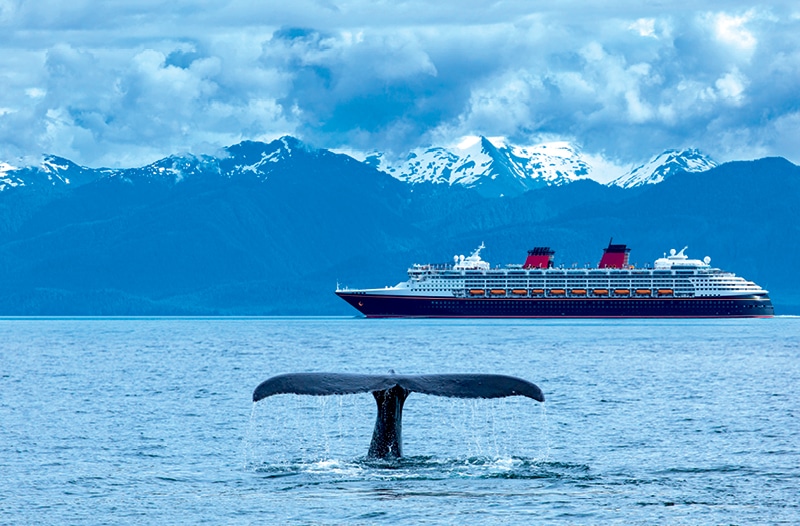
Whether you’re searching for your white whale or happy to spy one of any color, these popular cruise itineraries offer the best shot of fulfilling your inner Ahab.
Inside Passage, Alaska > This coastal route for ships is popular for both glacier viewing and whale watching. From April to November, you’ll enjoy prime viewing locations at Juneau, Icy Strait Point, Sitka, Ketchikan, and Prince William Sound, spotting humpbacks and orcas mostly.
California to Mexico > On Mexican Riviera itineraries from Los Angeles or San Diego to Cabo San Lucas, Puerto Vallarta, and Mazatlán, you can view gray whales and humpbacks in the Sea of Cortez and the Pacific side of Baja from December to April.
Inter-Island Hawaii Cruise > On an inter-island cruise, round trip from Honolulu, you’ll have plenty of time to sink your toes in black sand, hike up volcanoes, and see humpbacks. Apparently two-thirds of the entire North Pacific humpback whale population migrates to Hawaii to breed.
Northern Europe featuring Iceland > The North Atlantic is a playground for diverse species, including minke, humpback, and the elusive blue whale. Your best shot is at Húsavík, located on Skjálfandi Bay in northeast Iceland, known as the whale-watching capital of Iceland for having a nearly 100% success rate for sightings.
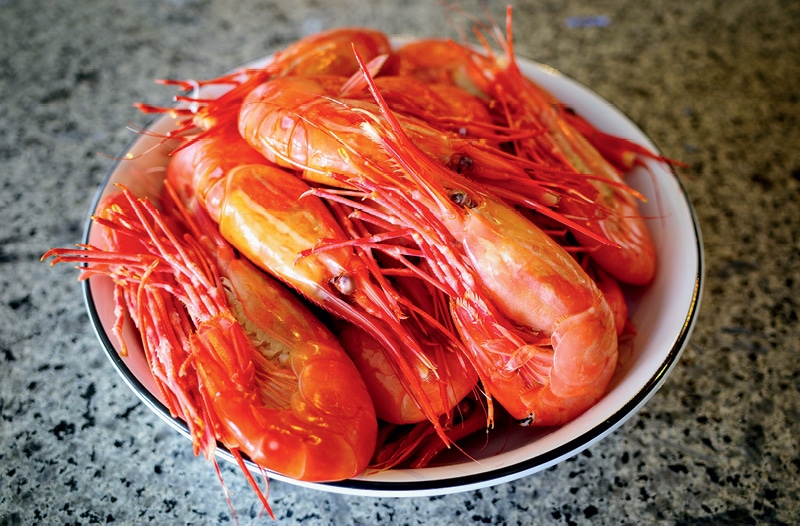
Plying the open seas can work up an appetite. Thankfully, each locale listed here offers delicious specialties that will keep you fed and seaworthy.
Vancouver > Dip into Neptune’s pantry for locally caught wild Pacific salmon, Dungeness crab, and geoduck (pronounced gooey-duck). However, the shining star of the city’s seafood scene are spot prawns, which are only available in May and June.
South Africa > A traditional braai is a social event as well as a hearty meal of barbecued meat and vegetables, grilled over charcoal or wood, preferably accompanied by one of the country’s many award-winning wines.
Dominica > You can’t leave the island without sampling callaloo soup, a leafy green plant simmered with onions, garlic, and coconut milk, or mountain chicken, which is actually a local frog with tender meat.
Sri Lanka > The Sri Lankan hopper is not another frog-based dish. Instead, it’s a bowl-shaped pancake, often topped with a fried egg and curry. Wash it down with a bright orange king coconut, which is sweeter than your average coconut and often found for under $1.