Underwriting Is Evolving to Meet Industrial Property Risks
Carriers must combine underwriting, risk engineering, and claims expertise to keep pace with evolving exposures and operational changes.
Industrial operations have long faced intricate challenges due to the nature of their function, from chemical blending and plastics manufacturing to storing volatile goods.
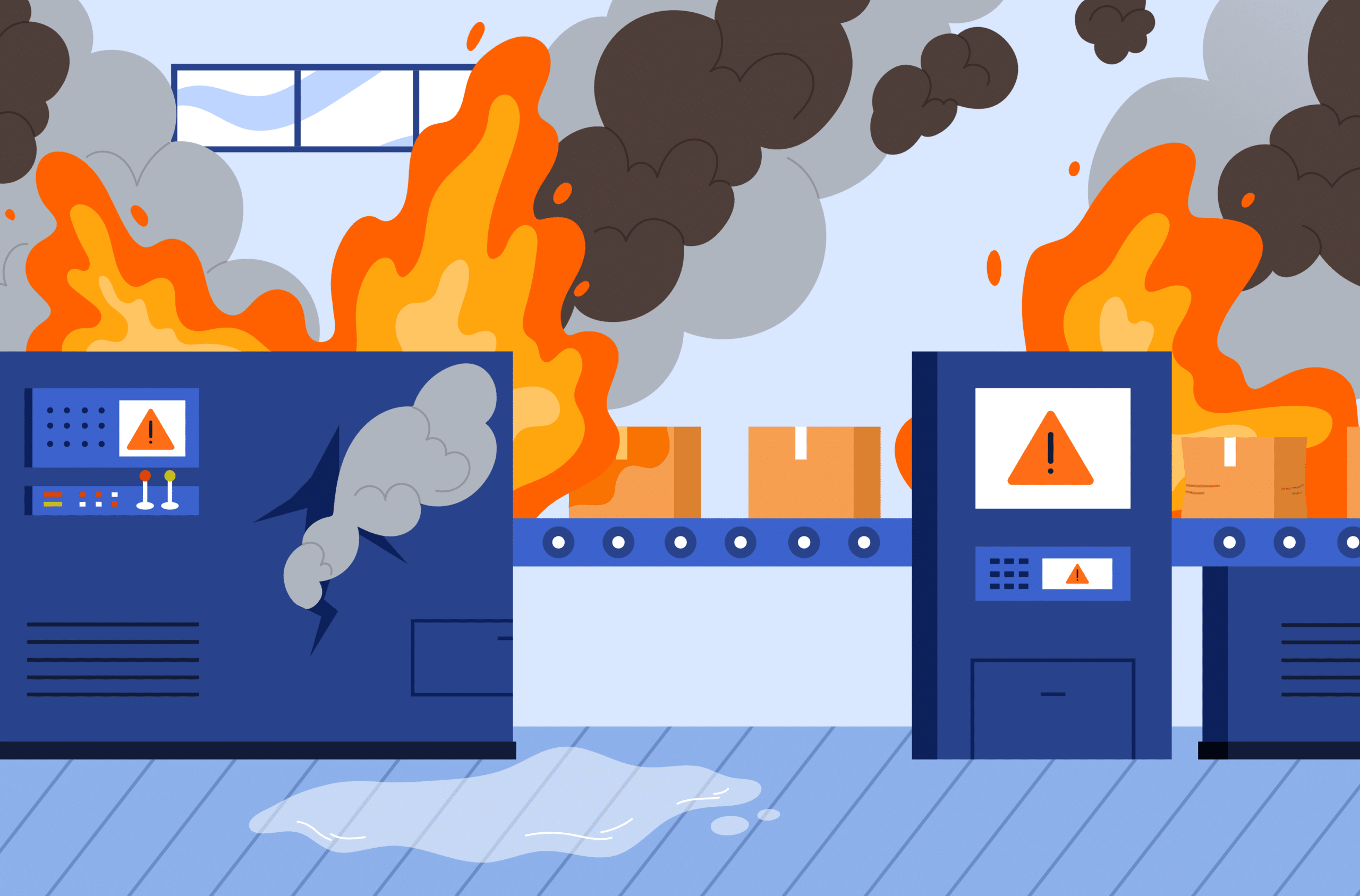
These environments often involve highly reactive substances, complex processes, and other unique hazards that can lead to outcomes such as fires and explosions.
One high risk operation, for example, is mixing chlorine with an incompatible substance such as ammonia, which can trigger an explosion resulting in severe property damage and bodily injury. Another high-risk operation involves reaction-based manufacturing, where controlled chemical reactions are used to convert raw materials into finished goods for various industries.
Today, emerging exposures are further intensifying that complexity: innovation is reshaping risk profiles, while climate change introduces unpredictable external pressures. At the same time, few insurance carriers are willing to underwrite these advanced industrial risks, leaving businesses with limited coverage options in the admitted market.
In response, specialized underwriting has shifted from simply providing coverage to delivering a holistic risk management partnership. Carriers combine underwriting, risk engineering, and claims expertise to keep pace with evolving exposures and operational changes, ensuring businesses receive tailored solutions to the unique industrial property risks.
Innovation and Risk
Emerging technologies are introducing new exposures to industrial properties. In wholesale and transportation, lithium-ion batteries are widely used to power equipment and are frequently found in stored or shipped goods, creating dual risks of fire and operational disruption. These batteries pose a particular fire hazard due to thermal runaway, where heat builds faster than it can dissipate, causing uncontrolled temperature spikes, venting of flammable gases, smoke, and intense heat. These events can halt production or delay shipments if battery fires damage equipment or inventory, disrupting supply chains and continuity plans. With global demand for lithium-ion batteries projected to rise nearly seven times from 2022 to 2030, it’s increasingly vital for businesses to evaluate their protection and continuity strategies.
Manufacturing is evolving as well. For example, automated or manual systems for spraying paint on items can create serious fire ignition hazards without properly rated electrical equipment. These operational changes may seem minor, but they can significantly undermine insurability, underscoring the need for specialized underwriting that keeps pace with innovation.
Manufacturing is evolving as well. For example, automated or manual systems for spraying paint on items can create serious fire ignition hazards without properly rated electrical equipment. These operational changes may seem minor, but they can significantly undermine insurability, underscoring the need for specialized underwriting that keeps pace with innovation.
Working together, underwriters and risk engineers can develop coverage programs with the appropriate terms, limits, and protections, ensuring clients aren’t penalized for complexity, but instead receive coverage that reflects their true risk profile.
The Role of Risk Engineering
One of the most significant differentiators in underwriting high-hazard property versus other operations is integrating risk engineering. Increasingly, carriers are embedding risk engineers into underwriting from the start, allowing for more informed risk selection, pricing, and evaluation of probable maximum loss.
Many industrial property risk engineers hold degrees in fields such as chemical, electrical, civil, or fire protection engineering, while others bring deep technical expertise in areas including fire science and geology. This breadth of knowledge enables carriers to assess highly technical protection schemes and operational controls with greater accuracy, supporting more thorough and reliable evaluations.
Technology is also transforming how risks are assessed. Drone-based inspections and thermographic surveys are becoming standard tools for evaluating roof integrity, heat loss, and structural vulnerabilities. These methods reduce inspection times and costs, improve data accuracy, and enhance safety by eliminating the need for personnel to enter hazardous areas. Beyond drones, carriers are increasingly using sensors to monitor conditions in real time, detecting temperature fluctuations, equipment malfunctions, or moisture intrusion before they escalate into major losses.
For agents and brokers, working with carriers that combine advanced tools with the knowledge of skilled risk engineers can lead to more accurate underwriting and enhanced risk management, resulting in better outcomes for clients.
Industrial properties realize the benefits of stronger operational resilience. Facilities with robust controls, such as sprinkler systems, proper chemical storage, and effective ventilation are often better positioned to secure more favorable insurance terms. When risks are individually assessed based on unique exposures and mitigation strategies, businesses that invest in safety may benefit from more competitive coverage options.
Climate Change is Reshaping Underwriting
The increasing frequency and severity of extreme weather events are prompting insurance carriers to reevaluate how they assess risk and set premiums. In 2024 alone, global insured losses from natural disasters reached approximately $140 billion, making it one of the most expensive years for the insurance industry in decades.
Specialized underwriting is not just a niche; it’s a strategic advantage. Agents who understand the nuances of industrial risks and work with carriers that offer complementary expertise are well-positioned to deliver tailored solutions, navigate emerging exposures, and achieve meaningful results for their clients.
For industrial properties, this means underwriting must go beyond fire and explosion concerns to account for catastrophe exposures such as flood, severe convective storms, and wind. These risks can threaten not only physical structures but also supply chains and operational continuity. Carriers are also managing aggregation within defined territories to avoid concentrated losses from regional events.
Sophisticated carriers in this space are leveraging predictive analytics and geospatial tools to assess exposures like roof size, drainage systems, and site elevation with greater accuracy. These tools represent a major evolution in underwriting, from traditional site inspections to advanced modeling that combines historical weather data, real-time climate trends, and property-specific characteristics. For agents, staying informed on how climate-related risks are being evaluated is essential to helping clients navigate a rapidly changing underwriting environment.
Smart Risk Management
Specialized underwriting is not just a niche; it’s a strategic advantage. Agents who understand the nuances of industrial risks and work with carriers that offer complementary expertise are well-positioned to deliver tailored solutions, navigate emerging exposures, and achieve meaningful results for their clients. Ultimately, specialized underwriting is a strategic partnership built on expertise, collaboration, and a commitment to evolving alongside the risks industrial businesses face.