Disaster Protection and Capital Diversification
Q&A with Chris Lefferdink, Managing Director, Aon Securities
When Hurricane Melissa slammed into Jamaica in October 2025, it left behind dozens of deaths and billions of dollars of damage.
But the island nation’s government had also prepared for just such an event, including a $150 million catastrophe bond that was triggered by the hurricane. Aon Securities teamed with Swiss Re as joint structuring agents, managers, and bookrunners for the International Bank for Reconstruction and Development (IBRD) bond. In this interview, Lefferdink discusses the company’s role in the insurance-linked securities (ILS) market, where cat bonds are focused today, and the resilience of the market. The interview has been edited for clarity and length.
Q
Per Artemis, Aon Securities is unquestionably the most prolific intermediary or service provider in the ILS market. How long has the company been at this work and what makes the business worth pursuing aggressively?
A
I would say we’ve been sort of in the securities area since the late ’90s; really since the inception of the cat bond market, we’ve had a securities team.
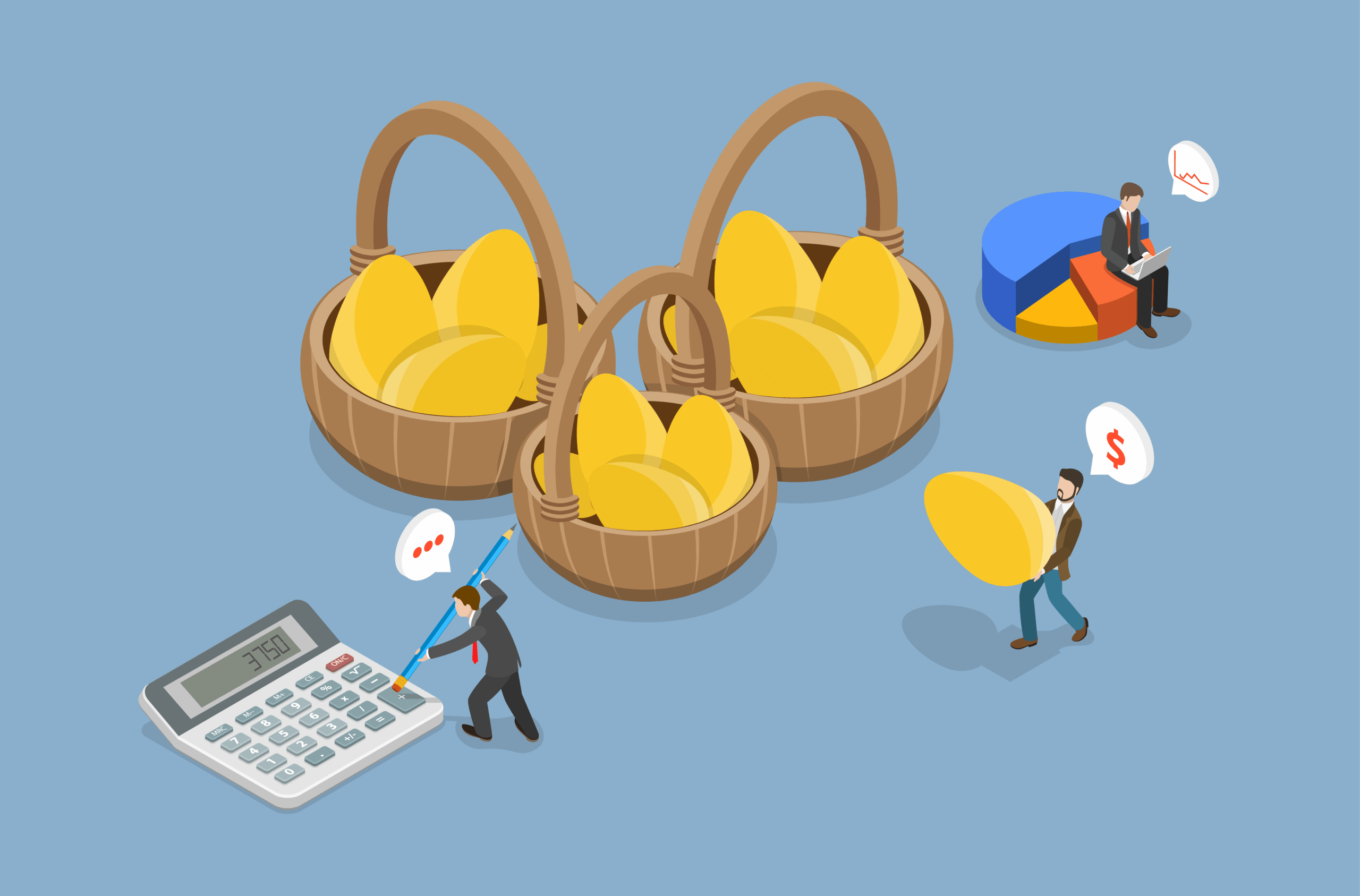
In terms of what makes it so worth pursuing, why are insurers in the cat bond market? What’s driving them to it? A huge component of it is just diversification of capital. Insurers buy the majority of their reinsurance from reinsurance companies, Munich Re, Swiss Re, RenRe, you name it. And by and large they’re sort of beholden to the fluctuations within that market. When they place a cat bond, now accessing a broader, more diversified pool of capital, that helps them not only lower their overall cost of reinsurance but also mitigate the volatility in pricing.
The reinsurance market and the capital market on a macro level sort of follow similar trends. But on a micro level, the capital market and the reinsurance market can actually sometimes be a little bit out of step where one can be less expensive than the other. For our clients, it’s really helpful to be able to lean into both markets depending on timing. It’s also helpful to be able to hold the big hammer that says, “Hey, if you’re going to move pricing on me, I’m just going to go do more of this [other option].”
Q
Aon Securities was the co-structuring agent, manager, and bookrunner for the Jamaican cat bond that Hurricane Melissa triggered. Walk me through the process of those roles.
A
So the Jamaica cat bond and a lot of the sovereign cat bonds are interesting in that, more often than not, they are supported and organized by the World Bank. And the World Bank can help sovereign nations in a number of different ways. It can generate or find donor funds that can help support the premiums for a bond. It has a platform of documentation and a legal framework for helping sovereign entities issue [bonds]. And then cat bonds have collateral that is invested. So when investors put money up into a cat bond, the insurer or the country in this case, Jamaica, they want some assurance that they’re going to get paid.
From a reinsurer, you usually get paper, AM Best A-plus rated. Cat bond investors don’t have a rating, so they actually put collateral up. And in the case of the World Bank deals, that collateral is invested in the IBRD Sustainable Development Fund. Part of the IBRD’s mission is to decrease poverty and improve quality of life around the globe in areas that need help. By using the World Bank’s platform, the collateral gets invested into those funds. And so not only is the cat bond potentially helping Jamaica when an event occurs, but during the time that the cat bond is on risk, that money is invested in a fund that’s helping to further the mission of the World Bank. It’s an important distinction because most cat bonds aren’t set up this way.
But in the case of a lot of sovereign nation cat bonds, the World Bank is the one that’s first organizing it. It would generate in some cases donor funds and then they would approach different countries for potentially putting transactions into place. The World Bank would then typically send out an RFP, which will sort of fit its procurement requirements, to all of the different investment banks in the space. And then between the World Bank and Jamaica, they’ll select a bank or two banks or sometimes three banks to help them with the issuance. And then they’ll put us in charge of the project going forward. So our role then would really be advising the client, giving them advice on what is feasible in the market.
They’ve obviously got to think about cost and benefit as they think about their parametric bond. You could design a parametric that triggers on a Category 1 event, but it’s going to be really expensive because those events happen all of the time. Or you can design it where it’s more remote, maybe it’s a little bit less expensive, but find more limit, get better execution in the market, etc.
So things like that are what we would be advising the client on, in this case Jamaica and the World Bank. We’ll give them advice, we’ll help them structure it, we’ll actually put together early views of the modeling to give them a sense of what the transactions look like. We’ll give them views on price, capacity, things along those lines.We’ll then launch the deal, put it into the market, and then it’s our job to coordinate with all of the investors and make sure that the transaction goes well, make sure that investors support the transaction, make sure they understand it, answer their questions, so on and so forth. And then ultimately, when the whole transaction is done, we are the initial purchaser of the notes. So we actually buy the notes and then resell them to investors.
Q
What catastrophes does the market focus on today, and do you see greater focus on others potentially going forward?
A
The vast majority of the market is driven by U.S. named storm [tropical storms or hurricanes]. And even more specifically, Florida named storm is driving the majority of that U.S. named storm. I do think that we are seeing an expansion of perils beyond that. The market’s always sort of written on a multiperil basis, but heavily focused on the United States. Your typical multiperil U.S. transaction would cover named storm, earthquake, severe weather, which would be SCS [severe convective storm] and winter storm. Sometimes wildfires, that’s been your typical one. But on a model basis, named storm is really driving the majority of that loss.
I would say pricing has become so attractive [for] those primary peak perils that we’re now seeing investors look at other perils where they can sometimes get more margin. Cyber is a great example; we’ve done a handful of cyber transactions in the market and currently those do offer a little bit more margin than just your named storm transactions. And a lot of that is due to the novelty of the risk. The models aren’t as seasoned as hurricane models would be. The risk itself is not as well understood as the nat-cat risk. So we’re seeing some extra margin there that’s driving investor interest.Stand-alone wildfire is another area of interest for our market. As you can imagine, there’s a lot of demand for it given the dislocation that’s occurring in California right now. And investors have been very supportive of wildfire. Again, they’re to some extent seeking margin, right, so they’re seeing the margins on named storm just shrink over time and then seeing margin in other places. I think wildfire will continue to be a big focus. The largest wildfire deal done to date was $200 million. We are going to price a transaction tomorrow which will be $750 million.
Q
Along with cyber, are there other, non-natural-catastrophe lines the ILS market is already moving into or where you could foresee it expanding?
A
I think we’ll see an expansion in cyber. I think when the tip of the spear comes with a new risk and peril, it takes some time for it to grow. And we’re a couple years now into cyber and so I think we’ll see that continue to grow.
I think there’s potential for terror [terrorism risk insurance] to continue to grow. We’ve done a few terror bonds, but I’d say only a few. I think obviously there’s uncertainty around terror modeling because there’s a human component to it. There’s obviously uncertainty around governments and how different governments can impact the risk of terror[ism] in the future. So there are some things to iron out, but I think we could see terror continue to expand.
Then, not in the cat bond market, but in the sidecar market, we’ve seen an increase in casualty sidecars over the last year or so, and I think that’ll continue to expand as well.
I think there’s potential for terror [terrorism risk insurance] to continue to grow. We’ve done a few terror bonds, but I’d say only a few. I think obviously there’s uncertainty around terror modeling because there’s a human component to it. There’s obviously uncertainty around governments and how different governments can impact the risk of terror[ism] in the future.
Q
Going back to Hurricane Melissa, was the Jamaica bond the first ILS that you’ve worked on to trigger?
A
No, the first one I worked on to trigger was in 2011.
The World Bank, it has sponsored a number of these sovereign transactions for Jamaica, the Philippines, Colombia, Chile, Peru, Mexico. It created a bond for the pandemic; actually pre-pandemic, which is pretty interesting.
A number of those have triggered, including the pandemic bond has triggered. And I think in the early days of the cat bond market, all the reinsurers were saying that once cat bond investors pay a loss, they’ll just disappear. And the market’s obviously proven that isn’t the case. They’ve been paying losses now for over a decade. I think as long as the risk is well modeled and well understood, so cat bond investors are comfortable they’re getting the right price for it, they’re comfortable paying those losses. I think where the discomfort comes in is if there’s a risk that isn’t well modeled or well understood or something that surprises everybody, I think that’s where you get disruption and concerns in the market.
Q
Obviously it matters to the investors and the sponsors if a bond triggers. Does it matter to Aon Securities?
A
Economically, it absolutely doesn’t matter to us. What really matters to us is that the transaction works as intended. And so it matters that the client, whether that’s Jamaica or an insurance company, fully understands the transaction, and they fully understand the benefits, the different options they have within the transaction, and how those options weigh against one another.
So for example, thinking about Jamaica, they were focused on extreme events that could really impact the GDP of the island and they really wanted to create a social net for the island. And it’s really important for them to create more resilience for their island, which in my view is fantastic that they put this together and fantastic they’re able to do that, because I think a lot of governments are not that forward-thinking. But it’s important that they understand the trade-offs in the transaction. If we’re trying to cover a Category 1 going to Montego Bay, that happens pretty often, so that’s going to be more expensive. If they’re trying to cover catastrophic events like a 3, 4, or 5 going all the way across the island from Kingston to Montego Bay, that’s a very different transaction. So it’s important that they fully understand that those options are available to them and then important that the transaction works as intended when we put it in place.
And I think [it’s] the same thing for investors. Even though investors don’t have options, we want them to fully understand the structure. We want them to go into the investment knowing what their risks are, knowing what they’re exposed to, being comfortable with that, being comfortable with the price they’re getting paid. And then ultimately for the three or four years that the deal’s on risk, we want all of that to work as it should and as it’s intended to.
Q
My sense is certainly that the industry believes that it is resilient, even in the face of a potentially massive event, let’s say a named storm hitting Miami. What gives you that confidence? And is there an event so large that it might test that?
A
It’s a good question. And it actually highlights one of the benefits of a cat bond—cat bonds are fully collateralized. So in the case of the Jamaica bond, it was a $150 million transaction, that amount sits in a reinsurance trust account or a collateral account with a trustee, and it typically sits in U.S. money market funds. Again, in the case of the World Bank transactions, it’s backed by the World Bank and sits in its sustainable development fund. But that full limit is sitting in that collateral account for the use of paying losses, paying the government, etc. And so there really is a lot less credit risk in a cat bond than you would find in reinsurance.
So in reinsurance, you’re sort of relying on the rating of the reinsurer as they promise to pay. For the most part, you know, everything’s been orderly and reinsurers have always paid. If you go back to Katrina, I think there was one reinsurer that was not solvent after Katrina. And so it has happened in the past where you have maybe a smaller reinsurer that’s not as well capitalized that went insolvent. But I would say all of the large reinsurers have been able to weather any storm and been able to pay through any event. But again, cat bonds being fully collateralized really mitigates that credit risk.
The first component is the ability to pay. The second component is, will people show up to write this risk after a big event on the reinsurance and on the cat bond side. And I think in both of those cases, obviously, entities will continue to write this risk.
On the cat bond side, a lot of the money that flows into the space is from pension funds, and they primarily are looking to diversify away from the majority of their pension portfolio—97%, 98%, 99% of their pension portfolio is correlated with the financial markets. Natural catastrophe risk isn’t well correlated. And so I think they would continue to seek this risk even after a big event just because they’re looking for that lack of correlation.
On the cat bond side, a lot of the money that flows into the space is from pension funds, and they primarily are looking to diversify away from the majority of their pension portfolio—97%, 98%, 99% of their pension portfolio is correlated with the financial markets. Natural catastrophe risk isn’t well correlated. And so I think they would continue to seek this risk even after a big event just because they’re looking for that lack of correlation.
Q
Beyond that, are there any particularly significant risks to the market that might be cause for concern?
A
I don’t think there’s sort of any existential cause for concern that would be a critical thing that would shut the market down. We’ve been in three years of really explosive growth for this market. The previous record was set two years ago at about $15.4 billion of issuance. Last year’s record I think was $17 [billion] and change. This year we’ll do north of $22 billion.
If you look back, you’ll see the bond market used to sort of grow one year and then step back a year, grow two years, step back a year. We were always kind of one step forward, one step back, or two steps forward, one step back. If you took the average, it grew over time, [but] we’d have these little dips. This is really the first time we’ve had three years of sustained growth. And I think that’s really due to, one, we have a more balanced market now. In the past…pricing would get too high and sponsors would leave the market, pricing would get too low and investors would leave the market, or liquidity would dry up in the broader financial markets for whatever other reason. I think that we now are at a place where we have a broader market from an investor standpoint. And so we have a little bit more discipline around pricing and the market’s a bit more orderly, and so I think we’re going to avoid some of those dips.
I think the only thing that could really slow the growth of the market would be some sort of broader financial event outside of the cat bond market that just impacts liquidity. It wouldn’t shut the market down, obviously; but if you have issues with liquidity in a broader financial market, people are going to start allocating less to the cat bond market. And in that case I think you could see the market slow down, but not collapse or have any large issues beyond that.