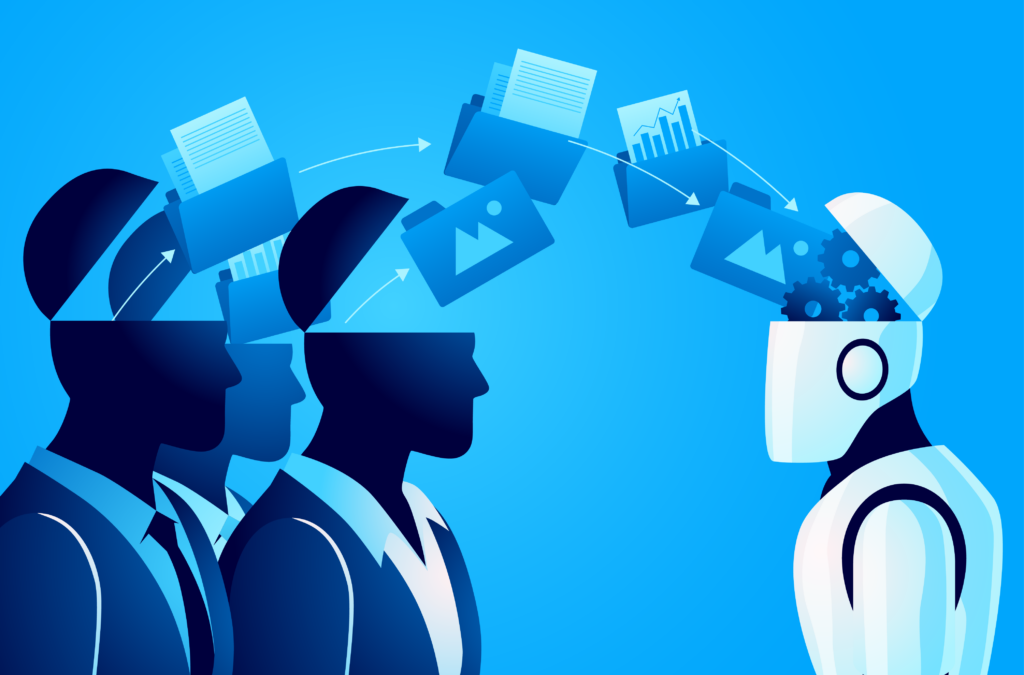
Unlocking Enterprise-Wide Knowledge for Brokerage AI
Structuring insurance data is essential to extracting the true value of artificial intelligence.
Operating an insurance brokerage has always been a battle against information: the deluge of carrier documents, the volume of client and internal communications, the long ledger of financial and policy data stored across different systems.
AI was supposed to provide relief in managing all that data. At a task level, it delivers: hand an AI agent a curated set of documents and it can generate a proposal or check a policy. But the real promise of artificial intelligence is global. We want systems that read and understand every piece of context across the entire company, drawing on all available information to answer questions, write reports and automate workflows. That is where nearly everyone gets stuck.
Data integrity is the white whale of brokerage technology teams. Something as simple as mapping a policy record in the AMS to downloaded carrier documents can fail as much as 40% of the time. Critical information about entity relationships lives only in the minds of account managers, never captured in any system. At enterprise scale, these ambiguities compound. An AI agent that is fed inconsistent context does not produce slightly wrong responses; it produces confidently wrong responses.
The failure of most enterprise AI today is that it processes each system’s data in isolation, unable to follow the associative trails that would make information useful.
Structure turns raw data into reliable context. This means more than clean formatting. It means ontology: knowing that “Travelers Indemnity Co.” and “Travelers” and “TRV” on a bank deposit are the same entity. It means entity mapping: connecting a policy number on a carrier statement to the corresponding record in the AMS to the cash receipt in the bank feed. It means credibility scoring: understanding that a carrier’s finalized commission statement is authoritative, a preliminary notice is provisional, and a forwarded email from a producer is hearsay until corroborated. A system that treats all signals equally will hallucinate with confidence.
This structure cannot be designed in a conference room. It emerges from continuous learning across interconnected processes. Consider accounting close. Every month, the accounting team reconciles commission statements, matches payments, resolves exceptions, and posts transactions. When a statement line cannot be matched to policies, someone investigates and discovers that a policy migrated to a new code, or that a carrier merged two billing entities, or that a producer’s book was reassigned. Each resolution corrects the entity map. Now feed those corrections forward. The high-confidence mappings that accounting produces become the foundation for policy servicing, where AI agents process endorsements, renewals, and cancellations and need to know exactly which policy, which producer, and which client a document belongs to. In a siloed world, servicing does not enjoy the benefit of accounting team’s work. In a connected system, it arrives automatically, already validated by the hardest test available: the ledger balanced.
This is analogous to the core technological insight behind driving app Waze (now integrated into Google Maps). No driver is deliberately mapping the road network. Each is simply driving to work, choosing a lane, slowing at a light. But the system reads structure from those ordinary actions: which roads are congested at what hours, which routes save time, which turns are dangerous. The information was always there in the aggregate behavior of drivers; the architecture just made it legible. Brokerage staff are not intentionally building entity maps when they reconcile a statement or resolve an exception. They are doing their jobs. A connected system extracts structural knowledge from that routine work and makes it available to every downstream process.
Building enterprise-scale AI requires a shift from workflows to systems. A workflow asks: how do I automate this task? A system asks: what can every process teach every other process? The difference is architectural, and it determines whether AI compounds in value or plateaus after the first round of automation.
In the short story “The Library of Babel,” Jorge Luis Borges imagines a library containing every possible book: all of human knowledge present and accounted for, all of it useless because no structure connects any book to the person who needs it. The librarians wander for centuries. We do not have to. The data inside a brokerage already contains the answers needed. What it needs are cartographers, systems, and people who map the terrain of information so that AI agents can navigate it with confidence, not wander through it hoping to stumble on the right page.