The Middle East: Changing Economies, New Risks
As nations in the region shift away from near-total focus on oil, insurers are expanding their offerings in cyber and other coverages.
In 2024, the Middle East insurance market generated approximately $70 billion (USD) in gross written premiums, but that market is developing as the region wrestles with economic and geopolitical challenges.
Business in the region—which, for the purposes of this report, encompasses the nations of the Gulf Cooperation Council (Saudi Arabia, the United Arab Emirates, Qatar, Kuwait, Bahrain, Oman) and Egypt—has been on a roller-coaster ride in recent years. Even as some insurers and reinsurers have pulled back, others have entered, expanded, or returned to provide significant capacity back to the market.
The region’s total gross written premium, encompassing both life and non-life segments, grew by 8.7% in 2024; the United Arab Emirates and Saudi Arabia remain the largest contributors to the market’s expansion. Yet there is enormous growth potential as insurance penetration remains under 2% in six of these seven countries; for comparison, insurance penetration is 4.4% in the United States and 2.5% in Europe, according to Allianz.
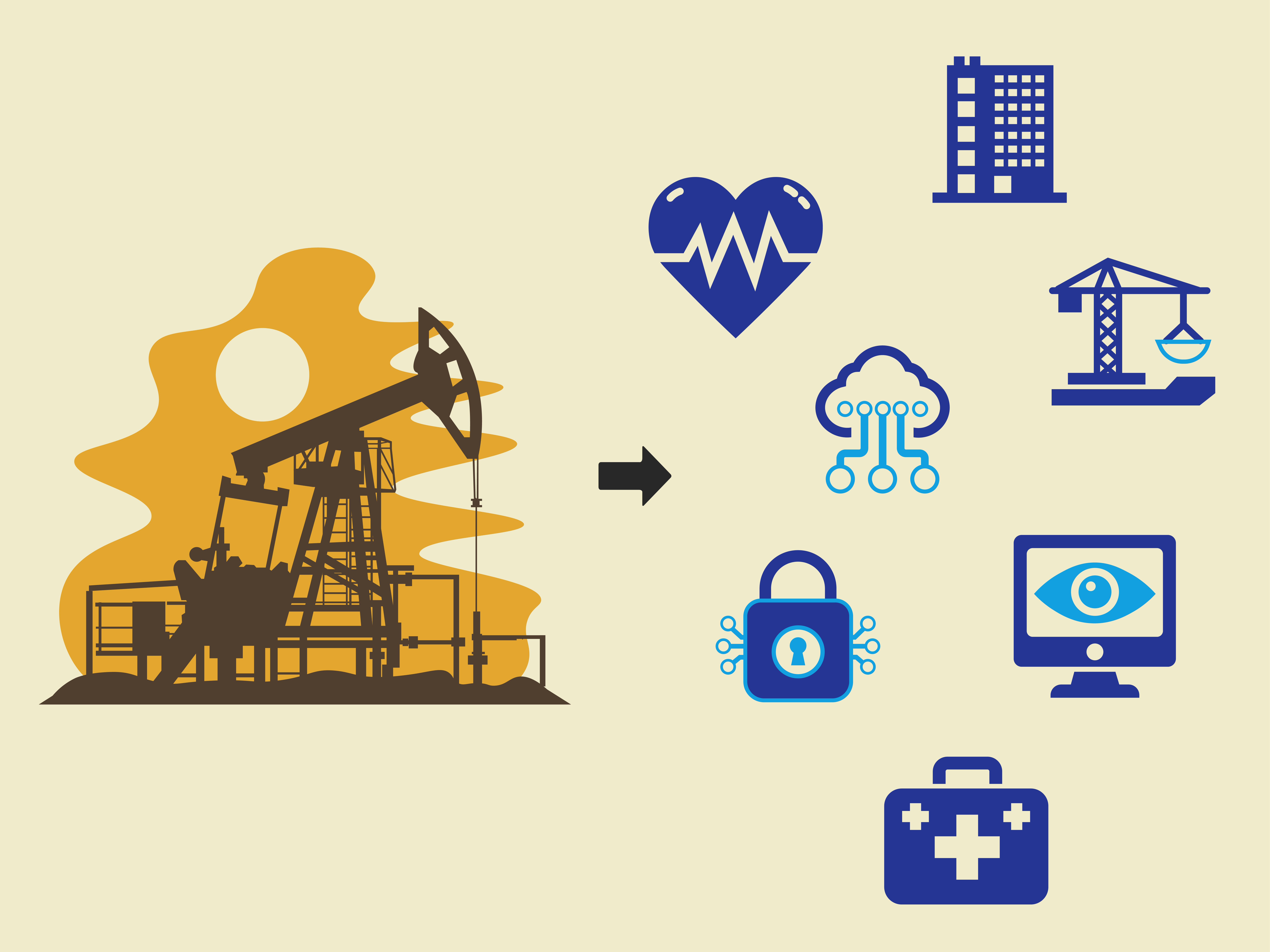
The region is also transforming to focus on a less oil-dependent future. This change is shaping new risks and demand for new insurance solutions.
The region is also transforming to focus on a less oil-dependent future. This change is shaping new risks and demand for new insurance solutions.
Market Dynamics: Context
- Employee Benefits: Most countries in the region have a public healthcare system for their citizens. However, the region has a large population of expatriate residents living there for work—for example, 85% of residents in the emirate of Dubai are expats. These residents tend to use the private healthcare option. In a push to ensure access to healthcare to everyone in the region, countries are increasingly requiring compulsory medical insurance via employers.
In Saudi Arabia and the UAE, all private-sector employees and their dependents must be covered. Qatar requires employers to insure foreign-worker expatriates and their families under a unified scheme overseen by the Ministry of Public Health. In Kuwait, health insurance is mandatory for expatriates, with plans to expand the directive to retirees. Oman and Bahrain are also rolling out mandatory health insurance, focusing on both expatriates and private-sector nationals.
Saudi Arabia’s new Social Insurance Law, which took effect in July 2025, makes several changes to the nation’s social safety net. It primarily applies to new employees without prior retirement contributions. Among other changes, the law gradually increases the retirement age from 58 to 65, while employer and employee pension contributions will rise from 9% to 11% of contributory wages from 2025 to 2028. The law introduces a three-month compensated maternity benefit, regardless of worker nationality. Perhaps most notably, it enables workers to move between public and private sectors without losing benefit entitlements.
In the UAE, the Dubai International Financial Center, a 272-acre special economic zone in the emirate, implements compulsory retirement, with employers paying contributions into approved managed funds. Separately, the UAE in 2023 launched an end-of-service system under which private-sector employers across the emirates can make structured monthly contributions into approved investment funds for their employees instead of the lump-sum retirement system.
- Property and Casualty: The non-life market has expanded steadily in recent years, as shown by growing GWP, driven by the region’s economic diversification, which requires large investments in real estate, major infrastructure projects, tourism, and technology. These new activities generate a wide range of insurable risks, increasing the insurance demand for property, engineering, and other specialty lines, particularly in Saudi Arabia and the UAE.
Major carriers such as Fidelis and Allianz are establishing or enhancing underwriting authority in the region, promoting greater market competition and thus driving some business lines into a softer market cycle. For example, Q3 2025 rates decreased by 5% in property lines, 6% in cyber, 4% in financial lines, and remained flat in casualty.
Market Dynamics: Underwriting
- Employee Benefits: Health underwriting has become more data-driven and compliance-oriented across the region. Regulators in Saudi Arabia, the UAE, and Qatar now require more detailed reporting of claims and pricing assumptions under their respective mandatory health systems, prompting insurers to rely heavily on analytics and health-risk scoring.
- Property and Casualty: Geopolitical tensions have led war risk insurance premiums to double for maritime shipping, especially through the Strait of Hormuz and the Red Sea, where Houthi rebels have attacked passing cargo vessels and where Iranian lawmakers in June voted to shut off some shipping lanes. This signals broader risk sensitivity in marine lines around the region.
Similarly, underwriters have grown more selective on property and climate-related losses, tightening terms and often requiring detailed risk surveys and improved loss-prevention protocols. This is especially true in catastrophe-prone areas like the UAE and Oman, where underwriters are imposing stricter flood and storm sublimits or exclusions. Meanwhile, reinsurance terms have softened due to abundant capacity and a limited number of substantial losses over the recent past.
Middle Eastern markets are experiencing major regulatory changes aimed at bolstering transparency, protecting consumers, and strengthening the financial stability of different players in the insurance sector.
Notable Offerings and Consumer Demand
- Cyber Insurance: The region’s rapid digitization has led to rising cyber threats. Companies recognize the need for financial protection from such risks. Cyber insurance, which was previously limited to financial institutions, is now expanding into energy, aviation, logistics, government, and small and midsize enterprises. Cyber policies are developing from basic third-party liability to offer broader coverage, including the costs of breach response, regulatory fines, crisis communications, and business interruption loss resulting from cyberattacks.
- Takaful Insurance: Takaful (sharia-compliant) insurance is a growing segment of the market in the region, where there is strong demand for financial products that align with Islamic standards. According to sharia principles, conventional insurance is impermissible to many Muslims as it often involves interest, excessive uncertainty, and gambling. Takaful insurance circumvents those concerns by being similar to a captive, where participants in a risk-sharing pool indemnify each other against certain losses by pooling contributions into a common fund to pay for claims.
Regulatory Update
Middle Eastern markets are experiencing major regulatory changes aimed at bolstering transparency, protecting consumers, and strengthening the financial stability of different players in the insurance sector. In addition, governments are encouraging technology investments and insurtech as the region is quickly becoming a global hub for digital and AI infrastructure.
Some examples:
- Kuwait: In August, the nation’s Insurance Regulatory Unit enacted reforms to bolster transparency and fight fraud in mandatory insurance policies. That included a new declaration and pledge clause for policies affirming the client’s understanding of terms, exceptions, and coverage limits.
- United Arab Emirates: Effective Feb. 15, 2025, the UAE’s Central Bank rolled out a revamped insurance brokers regulation intended to enhance transparency, financial integrity, operational efficiency, and customer protection. One new rule prohibits insurance brokers from collecting premiums, which clients must pay directly to insurance companies.
- Saudi Arabia: The nation in 2024 established a unified Insurance Authority (IA) to consolidate industry oversight; it now handles licensing and regulation under a streamlined framework.
Notable Differences from U.S.
- Employee Benefits: In GCC countries, the EB space is dominated by mandatory group health coverage for expatriates, with private health insurance growing for nationals. Life and disability benefits exist, often available via mandatory employer liability arrangements, and their uptake is often influenced by regulatory requirements rather than market competition.
- Property and Casualty: The non-life market is less mature, with a heavy focus on motor, property, and energy-related risks. However, with the GCC’s transition away from oil and an increase in foreign investments, there is increased demand for less traditional business lines such as cyber, non-oil energy programs, and financial lines.
3 Tips for Doing Business in the Middle East
- Ignoring Takaful insurance can limit market access and client trust; getting acquainted with Takaful principles is a must in the region.
- Countries in the Middle East vary widely in political stability, economic development, and regulatory frameworks. The UAE and Saudi Arabia are stable markets with mature regulatory systems, while others may face higher geopolitical risk, currency volatility, or less developed legal structures. Understanding these differences is critical for advising clients with exposures across the region.
- The Middle East market is highly relationship-driven, with a strong emphasis on trust, hierarchy, and personal connections. Understanding and respecting local customs is key to building long-term client relations and successful partnerships.